
Big Goals, Close Range, Both Feet: Shooting and Finishing for Ages 4–6
At ages 4–6, the most important thing a child can do in front of a soccer goal is kick the ball into it — and feel like a hero when it goes in. That's it. That's the entire curriculum. The challenge for coaches and parents isn't teaching finishing; it's building an environment where…
Big Goals, Close Range, Both Feet: Shooting and Finishing for Ages 4–6
At ages 4–6, the most important thing a child can do in front of a soccer goal is kick the ball into it — and feel like a hero when it goes in. That’s it. That’s the entire curriculum. The challenge for coaches and parents isn’t teaching finishing; it’s building an environment where children can’t help but succeed, fall in love with the ball, and want to come back next week.
Why this matters at this age
The window between 4 and 6 is what the Canadian Sport for Life framework calls the fundamental movement skill stage. Kicking — listed alongside running, jumping, and throwing — is a basic motor skill still being acquired, not yet a sport-specific technique. That distinction matters enormously: what looks like a “shooting drill” to a coach is, developmentally, a child still figuring out how the lower body works.
The US Soccer Player Development Framework places this group in “Discovery Phase” — an intentional label. The mandate is exploration and eye-foot coordination, not form correction. Bypassing this stage to rush into technique, the Canadian Sport for Life / LTAD framework warns, is “detrimental to future participation.”
Scoring frequently at this age does something more than teach kids to finish. It builds the emotional hook — joy — that produces the self-driven 10-year-old who wants to practice. The FA’s coaching guidance for this age is direct: the coaching job is organizing fun, safe play environments. Corrections and formal instruction are explicitly de-emphasized.
There is also a real developmental gap hiding inside the label “ages 4–6.” A child who just turned 4 and a child nearly 7 can be radically different in focus, coordination, and social readiness. The younger end of this range needs pure play; the older end can begin to handle a very simple directing concept. Keep that in mind as you design sessions.
Core concepts
Fundamental movement skills (FMS) — the foundational motor abilities (running, jumping, balancing, kicking, throwing) that children must develop before they can reliably learn sport-specific technique. The LTAD framework is clear: FMS first, sport skills second, sport-specific technique third. At 4–6, we’re still building the foundation. Fundamental Movement Skills
ABCs of movement — Agility, Balance, Coordination, and Speed. The FA identifies these as the physical development priority for 4–6-year-olds. They are built through movement games, including non-soccer activities like tag and chase — not through shooting repetitions. Abcs Of Movement
Active Start / Discovery Phase — The LTAD stage covering roughly birth through age 6, where the mandate is unstructured play, physical exploration, and making movement joyful. US Soccer’s Discovery Phase framework sits inside this window. There is no formal technique coaching at this stage. Active Start Discovery Phase
Play-based discovery — Children 4–6 learn motor skills through exploration and experimentation, not listening to explanations. A coach’s instructions work best when they’re baked into the game design (big goals, short distances, small numbers) rather than delivered as verbal corrections mid-activity.
High-touch environments — The idea that development comes from each child having the ball at their feet as often as possible. Small-sided games (1v1, 2v2) on tiny pitches give every child constant contact with the ball. Long queues waiting for a single turn do the opposite.
Progression
Stage 1 — Ball Discovery (Ages 4–5)
What to do: Give every child a ball in open space. Let them roll it, stop it, and kick it — in any direction, with either foot, with no target. The goal is the intrinsic pleasure of making the ball move.
Key cues (for the coach, not the child): Watch that every child is active. Rotate activities every 3–4 minutes. Resist the urge to correct foot position or swing mechanics.
Duration: 5–8 minutes per activity block.
Ready to advance when: The child is consistently making contact with the ball and showing delight in kicking it. No technical standard required.
Stage 2 — Kicking at a Big Target (Ages 4–6)
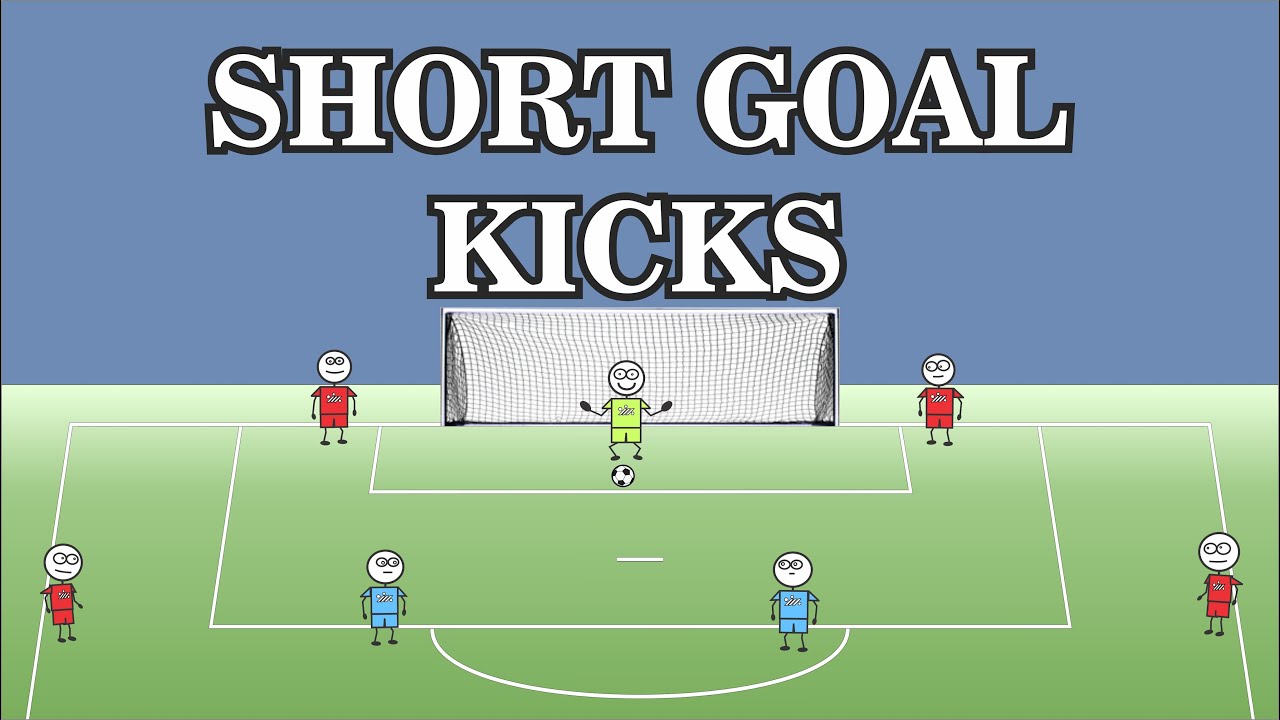
What to do: Introduce a large, low-profile goal (pop-up goal, cones, or flat target) at close range — 3 to 5 yards. Child kicks a still ball and tries to put it into the goal. Celebrate every contact and every goal, regardless of how it went in.
Key cues: “Kick the ball into the net!” is the entire instruction. No mention of which part of the foot to use. No commentary on the swing.
Duration: 5–8 minutes. Rotate children between this and other activities; don’t run it as a single-file queue.
Ready to advance when: The child is regularly making contact and actively trying to aim toward the goal (even roughly). Interest and confidence are the signals — not technical form.
 ▶ Watch on YouTube
Short Goal Kicks for Youth Soccer — by Soccer Dots on YouTube.
Stage 3 — Mini Shooting Games (Ages 5–6)
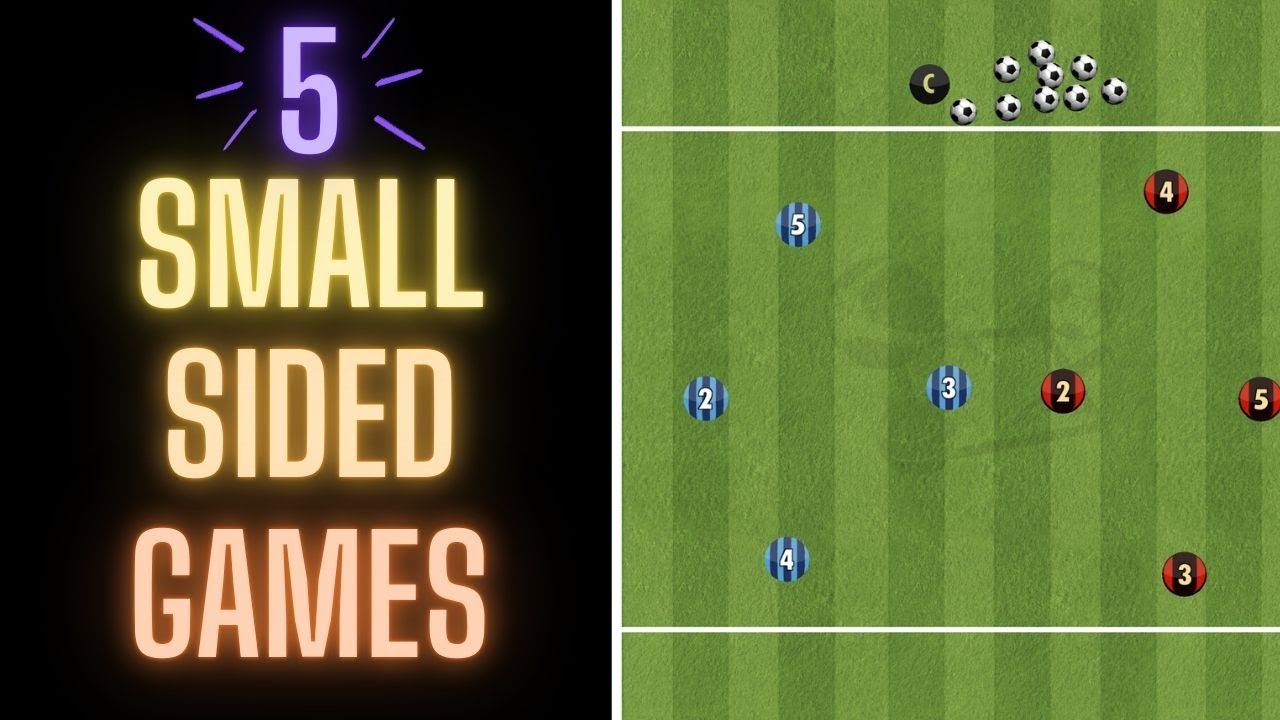
What to do: Set up tiny pitches — think 10 x 15 yards — with oversized goals and no goalkeeper. Play 1v1 or 2v2. Let children naturally find themselves near goal and kick the ball toward it. The game teaches the concept of “shoot when close”; the coach doesn’t have to.
Key cues: Keep score enthusiastically. Restart quickly after each goal. Keep the game moving.
Duration: 10–12 minutes. This is the core of a U5/U6 session.
Ready to advance when: Children are recognizing shooting opportunities in game flow (even loosely) and making attempts on goal. Cooperative and competitive awareness beginning to show.
 ▶ Watch on YouTube
Small Sided Games | 5 Variations | Football/Soccer — by KS Performance on YouTube.
Stage 4 — Light Target Awareness (Age 6, Optional)
What to do: Introduce one very simple concept — framed as a game challenge, not a correction: “Can you kick the ball to stay low and go into the goal, not over the top?” Use this as a fun puzzle, not a technical lesson.
Key cues: Frame everything as a challenge or game. “Let’s see if you can keep it below the crossbar — how many can you do?” No instruction on foot surface, plant foot placement, or swing mechanics.
Duration: Only introduce this with children demonstrating readiness (typically age 6+). Run it as one activity among several, not the session’s centerpiece.
Suggested program / schedule
A sample 30-minute U5/U6 session — no formal technique instruction, maximum touches:
| Block | Activity | Duration | Notes |
|---|---|---|---|
| Arrival / free kick | Every child has a ball, kicks freely in a safe zone | 5 min | Stage 1 — delight in the ball |
| Movement game | Tag variant (e.g., “tail tag” with a bib tucked in shorts) | 6 min | Builds ABCs; non-soccer movement is soccer prep |
| Big goal strike | Stage 2 — still ball, 3–5 yards, pop-up goal, no queue | 7 min | Rotate 2–3 children at a time at multiple goals |
| Mini game | 1v1 or 2v2 on tiny pitch, no keeper, oversized goals | 10 min | Stage 3 — the game teaches finishing |
| Cool-down / fun challenge | “Stopball” — can you stop the ball on a line? | 2 min | Keeps coordination work joyful |
Equipment checklist: Size 3 balls (one per child if possible), pop-up or cone goals anchored at child height, bibs/vests for games. Ensure all goals are weighted or staked to prevent tipping.
Mistakes to avoid
- Teaching laces or instep technique at this age. The motor pattern for a clean instep strike isn’t reliably available to most 4–6-year-olds yet. Correcting foot surface turns a joyful kick into a failure moment.
- Running long shooting queues. Six children waiting in line means five children standing still. Every child should be active and touching a ball nearly every minute of the session.
- Praising the hardest kick. Telling children to “kick it as hard as you can” embeds a power-over-placement habit that takes years to undo — and strains hip flexors and hamstrings in young children shooting from long range.
- Using full-size or adult goals. A regulation goal is cognitively and spatially overwhelming for a 5-year-old. Pop-up goals or small coned targets at child height are the right environment.
- Introducing a goalkeeper. A keeper blocking shots is discouraging at this age. According to the age-group frameworks, children need to score — frequently. Save the goalkeeper introduction for ages 7–9.
- Running technique-heavy sessions. Extended demonstrations, stop-and-correct moments, and re-demonstrations are not how 4–6-year-olds learn motor skills. They learn by doing, experimenting, and discovering.
- Treating a 4-year-old and a 6-year-old the same. A child nearly 7 can handle Stage 4’s simple directional challenge. A child who just turned 4 needs Stage 1’s pure exploration. Check the individual, not just the age bracket.
- Using size 4 or 5 balls. Balls that are too large and heavy promote poor movement habits and can increase impact stress on developing joints. Size 3 is the correct ball for this age group.
When to advance
Advancement at this age is about confidence and readiness — not technical benchmarks. Here’s how to read the signals:
- Stage 1 → Stage 2: Child is consistently making purposeful contact with the ball and showing enjoyment in kicking. No specific form criteria.
- Stage 2 → Stage 3: Child is making contact with a still ball, showing interest in directing it toward the goal (even roughly), and engaging socially enough to participate in a simple 1v1 game.
- Stage 3 → Stage 4: Child (typically age 6) is actively choosing to shoot in game situations and is ready to engage with a simple game-challenge concept. Emotional regulation is stable enough to receive a gentle challenge without frustration.
- Into the 7–9 framework: Child is consistently participating in small-sided games, naturally choosing to shoot near goal, and beginning to show early competitive awareness. This is when deliberate technique introduction — foot surface, plant foot, follow-through — becomes developmentally appropriate.
Further reading
- Fundamental Movement Skills — What FMS are, why they come before sport technique, and how to assess them informally
- Abcs Of Movement — Agility, Balance, Coordination, and Speed in youth sports contexts
- Active Start Discovery Phase — The LTAD Active Start stage and what “coaching” actually looks like at this age
- Mini Sided Shooting Game — Setup, variations, and progressions for 1v1 and 2v2 on tiny pitches
- High Touch Training Environment — Why touches-per-minute matter more than drill sophistication at young ages
Sources
- US Soccer Player Development Framework — Age Group Learning Plans — governing-body — https://bigwalnutsoccer.com/wp-content/uploads/2025/03/us-soccer-player-development-framework-age-group-learning-plans.pdf
- How to coach 4 to 6 year olds — governing-body (England Football / The FA) — https://learn.englandfootball.com/articles-and-resources/coaching/resources/2023/How-to-coach-4-to-6-year-olds
- US Soccer Grassroots Player Development Framework (4v4, Ages 6–8) — governing-body — https://static.ussdcc.com/users/227808/519072/us-soccer-grassroots-4v4-player-development-framework.pdf
- Developing Physical Literacy — Canadian Sport for Life / LTAD — academic — https://sportforlife.ca/wp-content/uploads/2016/12/DPL_ENG_Feb29.indd_.pdf
- US Youth Soccer Player Development Model — governing-body — https://www.usyouthsoccer.org/wp-content/uploads/sites/160/2023/09/Player-Development-Model-Oct-2013.pdf