
Youth Soccer Shooting and Finishing: A Parent and Coach Guide for Every Age
Your kid just broke through on goal — and ballooned it over the bar. Or froze. Or toe-poked it wide. How you respond to that moment, and how you train for it, should look very different depending on whether that kid is five years old or fifteen. This guide walks through what youth…
Youth Soccer Shooting and Finishing: A Parent and Coach Guide for Every Age
Your kid just broke through on goal — and ballooned it over the bar. Or froze. Or toe-poked it wide. How you respond to that moment, and how you train for it, should look very different depending on whether that kid is five years old or fifteen. This guide walks through what youth soccer research and governing-body frameworks actually say about developing finishing ability — and why the approach at each stage isn’t just different in degree, it’s different in kind.
Why this matters
Finishing is the most celebrated skill in soccer, which means it’s also one of the most over-coached and badly coached. Well-meaning parents cheer the hardest kicks. Coaches run long shooting lines where kids wait three minutes to tap one ball. Five-year-olds get corrected on foot surface before they’ve had a chance to just enjoy striking a ball. The result: players who associate shooting with pressure rather than joy, who’ve drilled power over placement, and whose non-dominant foot was quietly ignored for six years.
The good news: every age group has a specific developmental lever. Pull the right one at the right time, and finishing ability compounds. Pull the wrong one, and you’re spending later years undoing habits that should never have been formed.
How the picture shifts with age
At ages 4–6, children are still acquiring fundamental movement skills — running, jumping, kicking — not sport-specific technique. The Canadian Sport for Life / LTAD framework is explicit: bypassing movement skill development to jump straight to sport-specific technique is “detrimental to future participation.” Kicking at this stage is the same category as throwing and jumping. The goal isn’t a clean instep strike; it’s joyful contact with the ball.
By ages 7–9, the nervous system enters a highly receptive window for motor pattern acquisition. This is the time to groove the basic mechanics of side-foot placement and the instep drive — not to perfect them, but to introduce them with clean cues. Repetition still needs to live mostly inside games, but deliberate technical coaching becomes genuinely useful here in a way it simply wasn’t at age five.
At 10–12, the US Soccer Coaching Curriculum describes pre-pubescent players as having a “special ability to learn.” This is the golden age for sport-specific technique. Players can now handle two-stage decisions (“where is the keeper, and where should I aim?”), receive slightly more complex coaching points, and begin to integrate finishing into combination play. The technical foundation laid here will be very hard to rebuild after puberty.
From 12 onward, the picture becomes more layered. Puberty introduces a real complication — coordination can temporarily regress during peak height velocity (the growth spurt phase), and growth plates at the hip and knee become more vulnerable to overuse. At the same time, the range of finishing techniques expands: volleys, chips, curl, crossing-and-finishing. And the mental dimension — composure, scanning before receiving, decision quality under pressure — becomes as important as the technical one.
Age-specific guidance
Ages 4–6: Let them score. A lot.
The entire finishing curriculum for this age group can be summarized in one sentence: set up conditions where children can’t help but score, and celebrate every single goal.
US Soccer’s Player Development Framework places 4–6-year-olds in “Discovery Phase I and II” — the emphasis is eye-foot coordination, movement exploration, and ball discovery. The FA’s framework calls this the “Play Phase,” and the coach’s job is organizing safe, fun play environments, not delivering technical instruction.
What to actually do:
Start with
 ▶ Watch on YouTube
Learn David Beckham Free kick STRskillSchool curve ball football Tutorial YouTubevia torchbrowse — by Akid Phoenix on YouTube.
— every child has a ball, open space, kick in any direction with either foot. No target needed. The delight of making the ball move IS the session objective. Progress to kicking at a large pop-up goal from 3–5 yards. No goalkeeper — ever, at this age. No technique instruction. Celebrate every contact.
By age 5–6, introduce tiny 1v1 or 2v2 small-sided games on mini pitches with oversized goals. The game naturally teaches “kick it toward the net.” If a 6-year-old shows readiness, you can frame a single concept as a game challenge: “Can you kick it into the goal instead of over it?” — but that’s the ceiling of technical input.
Common mistakes to avoid:
- Correcting foot surface (laces vs. instep) at this age is developmentally premature. Most 4–6-year-olds’ motor systems can’t yet reliably access a clean instep strike. Correction turns joy into failure.
- Long shooting queues where five children wait for one turn destroy the session. Maximum touches, minimum waiting.
- Using full-size or adult-height goals overwhelms young children cognitively and spatially. Pop-up goals or coned targets at child height only.
- Introducing a goalkeeper opponent is developmentally discouraging. Children this age need to score frequently. Save keeper introduction for ages 7–9.
- Praising the hardest kick plants a power-over-placement habit that will take years to undo — and risks joint strain in pre-schoolers.
Safety note: Use size 3 balls only. No heading (both US Soccer and the FA prohibit heading practice under age 11). Anchor or weight all goals to prevent tipping.
Ages 7–9: Two techniques, both feet, every session
This is where real technical coaching begins — carefully, and with clear limits on complexity.
The US Youth Soccer Skills School Manual is explicit: accuracy with the inside of the foot must be established before power is added. Two techniques belong in every session at this age:
*Side Foot Placement* (inside-of-foot finish): Plant foot alongside the ball — roughly six inches away — toes pointed toward target, knee slightly bent. Strike through the center of the ball. “Pass it into the corner” is the mental model that works best here. It removes the urge to blast and produces better mechanics.
*Instep Drive*: Plant foot beside the ball, knee over the ball, ankle locked and toes down, strike the center-horizontal axis of the ball, follow through with the knee raising to keep the ball low. At ages 7–9, the emphasis is on clean contact, not power.
A U9 session plan aligned with the FA framework consistently uses these coaching points across all activities: head down, eyes on the ball at contact; body over the ball; non-kicking foot alongside (not behind) the ball.
Progression (7–9):
 ▶ Watch on YouTube
Kindergarten SOCCER skills (Lesson 2): Ball control ⚽️ — by Prime Coaching Sport on YouTube.
— stationary ball, side-foot into a large goal, one coaching cue, clean contact is the goal 2.
 ▶ Watch on YouTube
Improve Ball Control & Quick Feet | Youth Soccer Training | Soccer Footwork Drills for Youth — by FOOTBALL WITH ZAINAB COACH on YouTube.
— repeat Stage 1 systematically with the non-dominant foot; normalize it by making it a routine part of every shooting sequence, not an afterthought 3.
 ▶ Watch on YouTube
How to Shoot a Soccer Ball for Kids & Beginners (Power & Accuracy) — by Progressive Soccer on YouTube.
— stationary ball, laces technique, knee over ball, ball stays low — not power 4.
▶ Watch on YouTube
Kindergarten SOCCER skills (Lesson 2): Ball control ⚽️ — by Prime Coaching Sport on YouTube.
— coach or partner rolls ball across; player times approach and side-foots into the corner; introduces movement without high complexity 5.
 ▶ Watch on YouTube
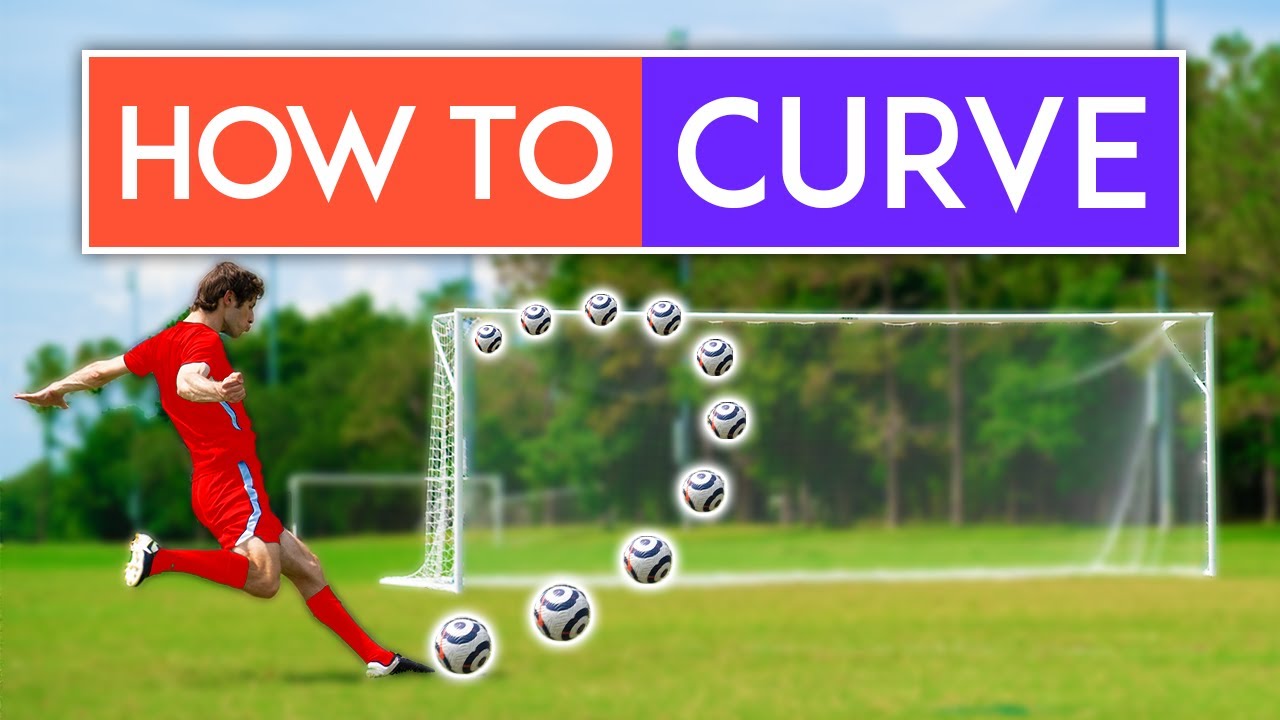
How to Shoot with CURVE in Soccer — by AllAttack on YouTube.
— short dribble, then finish; both feet required 6. Small-sided 3v3 or 4v4 with large goals and a goalkeeper — finishing happens inside the game
Common mistakes: - Plant foot placed behind rather than alongside the ball is the most common technical error at this age — it makes the body lean back and shots balloon high. - Breaking eye contact with the ball just before contact (“looking up too early”) reduces accuracy dramatically. “Head down, eyes on the ball” is the top cue. - Giving four or five technical points per repetition overwhelms 7–9-year-olds. One or two cues per activity block is the maximum. - Dominant-foot-only sessions. Without deliberate weaker-foot practice, asymmetry becomes entrenched. Build both feet in from the start.
Ages 10–12: The golden window — technique, decisions, both feet, every session
The US Soccer Coaching Curriculum calls pre-pubescent players in this band people with a “special ability to learn.” This is the single best window you’ll ever have to build finishing technique that sticks. Don’t waste it on shooting lines at an empty net.
The accuracy-before-power principle remains central — the US Youth Soccer Skills School Manual states it explicitly. But the finishing toolkit expands at this age. Alongside side-foot placement and the instep drive, players are ready for:
- First-time finishing: Striking without a controlling touch; body orientation before the ball arrives is the key cue.
- Near post vs. far post decision-making: Read the goalkeeper’s position and aim away from their body. Keep it binary: “Where is the keeper? Shoot to the other side.”
- 1v1 with the goalkeeper: Composure over rushing. The US Soccer Curriculum rates 1v1 attacking at high workload for U10–U12. Options — open-side placement, dribbling around, or a composed dink — should be practiced progressively, not as a prescribed choice.
Session structure (10–12):
Move along this chain within a single session:
- Technical isolation — still ball, inside-foot and instep on both feet, coaching points for contact and plant foot
- Finishing from a served ball — coach rolls or pushes ball into path; player finishes first or second touch
- First-time finishing — passes from different angles; player strikes without controlling touch; body shape must be set before the ball arrives
- Near/far post target awareness — cone targets in goal corners; player chooses placement based on where the “keeper” (cone or coach) is positioned
- 1v1 with goalkeeper — live keeper, varying angles; read keeper stance before deciding
- Small-sided games with finishing theme — 2v1, 3v2, or multi-goal SSG; composure and decisions under fatigue
Common mistakes: - Static-only shooting practice (long lines, empty net) produces technique divorced from any decision. Progress to game context in every session. - Rushing in 1v1 situations with the keeper — shooting too early from a poor angle rather than committing the keeper and executing. - Knee behind the ball on the instep drive causes shots to balloon over the bar. Knee must be over and through the ball at contact. - Only coaching the striker. Finishing is a whole-team skill; rotate all field players through finishing activities.
Ages 12+: Composure, range, and the mental game
The finishing toolkit at 12+ includes everything from Stage 10–12 plus volleys, half-volleys, chip finishes, curl, crossing-and-finishing, and finishing in transition. The US Soccer Coaching Curriculum rates shooting at maximum workload continuously through U18 — technique refinement is never finished.
But the biggest shift isn’t technical. The US Youth Soccer Player Development Model identifies the “Mental” pillar as the dominant developmental emphasis at ages 15–18. Composure, pressure-handling, and decision quality under stress become as important as the mechanics of striking.
One complication: puberty. During peak height velocity — typically 12–14 for females, 13–15 for males — coordination can temporarily regress. If a player’s finishing technique appears to go backward during a growth spurt, that’s biology, not a coaching failure. Be patient; maintain the habit of correct reps rather than loading new complexity.
Progression (12+):
- Technical consolidation (12–13): Instep drive and side-foot placement from served passes; first-time finishing; both feet required in all repetitions
- Finishing with movement (12–13):
 ▶ Watch on YouTube
5 BEST CROSSING TECHNIQUES in Football or Soccer — by AllAttack on YouTube.
— near-post and far-post runs to a served cross; arriving onto the ball in stride, not standing still 3. 1v1 vs. goalkeeper, game-realistic (13–14): Live keeper; player reads keeper stance and decides — far post, near post, chip, or dribble around — based on what the keeper gives, not a rehearsed answer 4. Volleys and half-volleys (13–14+): Start with
 ▶ Watch on YouTube
DISTRIBUTION PRACTICE: Side-Volleys, Half-Volleys, Drop Kicks, Goal Kicks, Overarm Throws & Passing — by Henry Save-All on YouTube.
— player drops ball and strikes as it rises no more than two inches off the ground; progress to struck volleys from crossed balls 5. Finishing under defensive pressure (14–15): Defender closes from behind or blocks the shooting lane; player must maintain composure, shift body shape, and shoot under physical challenge 6. Combination play to finish (14–16): Wall pass to finish, overlap and cut-back finish, third-man run finish — the combination is the practice, the shot is the reward 7. Finishing in transition (15+): High-intensity small-sided games where a finish must happen immediately off a turnover; players cannot reset 8. Full game integration (16+): Near-post, far-post, and pressing-to-finish patterns rehearsed inside 9v9 or 11v11 team sessions
Common mistakes: - Leaning back on contact causes shots to go high. Knee over the ball, body weight forward. - Failing to scan before receiving a pass — not knowing the goalkeeper’s position when the ball arrives leads to aimless shots. - Ignoring crossing-and-finishing as a distinct technical category. Meeting a ball while running across goal is a fundamentally different skill from central finishing, and needs dedicated reps. - Over-coaching technique during live competitive drills. Interrupting a game-realistic rep for a correction breaks the decision-making loop. Pause the activity, demonstrate, then restart. - Dominant-foot default. By 12+, the motor pattern window for weak-foot development is narrowing. Actively create bilateral reps; don’t treat weak-foot work as optional.
Core concepts that apply across ages
*Accuracy Before Power*: Clean contact and placement must be established at every new technique before power is added. This applies whether you’re introducing the side-foot finish to a 7-year-old or the instep drive to a 13-year-old.
*Bilateral Finishing*: The weaker foot must be explicitly coached and built into every finishing activity, at every age. It doesn’t develop by accident.
*Game Realistic Finishing*: Technique developed only in static, unopposed shooting lines doesn’t transfer to game decisions. Every session should move toward game-realistic contexts — served passes, small-sided games, live opposition.
*Stretch Shortening Cycle*: The muscular loading pattern in a kicking action involves rapid pre-stretch then contraction. Understanding this helps coaches appreciate why high-volume, maximum-effort repetition carries overuse risk in growing athletes.
*Ltad Fundamental Movement Skills*: The Long-Term Athlete Development framework sequence — fundamental movement skills first, then sport-specific skills — explains why technical coaching before age 6 can actually slow development rather than accelerate it.
Common mistakes (any age)
- Shooting lines. Six children waiting in a queue means five children are standing still. Use multiple small goals and small groups to maximize repetitions.
- Praising power over placement. “Kick it harder” is the wrong cue at every age. “Pass it into the corner” is usually the right one.
- Ignoring the non-dominant foot. Without deliberate bilateral practice, asymmetry becomes permanent. Build both feet in from the start; don’t add weak-foot work as an optional bonus.
- Adding defensive pressure before technique is stable. The FA advises holding off defenders until players are ready. Introducing opposition before the technique is groomed builds composure into a broken action.
- Too many coaching cues at once. Children 7–9 can process one to two cues per activity block. Even older players don’t absorb five technical points per repetition. Pick the most important one and use it consistently.
- Static-only practice. Unopposed, stationary-ball shooting is a useful starting point for introducing technique — it’s not a finishing session. Move toward served passes, movement, and small-sided games in every session.
- Correcting foot surface before the motor pattern is available. Instep technique requires coordination that simply isn’t reliably present in most children under 7. Correcting it early registers as failure and erodes confidence.
- Keeping the same children as strikers. Finishing is a whole-squad skill. Rotate all field players through finishing activities at every age.
When and how to advance
Age bands in player development are guides, not gates. Use behavior, not birthday, as your signal.
- 4–6 → 7–9 protocol: The child is reliably making intentional contact with a still ball, shows some awareness that the ball should go into the goal (not just anywhere), and can handle a simple one-sentence instruction without losing engagement.
- 7–9 → 10–12 protocol: Player can consistently execute a side-foot finish with correct plant-foot position (alongside the ball, toes to target) for at least 5 of 7 repetitions with a still ball, and shows stable mechanics with the non-dominant foot on still-ball work. Can follow a two-step coaching point.
- 10–12 → 12+ protocol: Player finishes from a rolling/served ball with consistent body shape (head down, knee over the ball) on both feet; can make a basic near post/far post decision when the keeper’s position is obvious; completes a composed finish in a 1v1-vs-keeper scenario at least occasionally without rushing.
- Within the 12+ band: Progress through stages when the player executes the previous stage cleanly under light pressure — not just unopposed. A half-volley from a self-drop is ready to progress to a crossed ball when the player can strike it cleanly and low 4 out of 5 times.
If a player shows hip, knee, or ankle pain during or after finishing sessions, do not progress volume or intensity. Refer to a qualified sports medicine or physiotherapy professional.
Further reading
- Accuracy Before Power
- Bilateral Finishing
- Ltad Fundamental Movement Skills
 ▶ Watch on YouTube
How To Play Striker in Football (Ultimate Guide) — by ZTH Training on YouTube.
 ▶ Watch on YouTube
How to DOMINATE 1v1s - Goalkeeper Tutorial — by Conor O'Keefe on YouTube.
Sources
- US Soccer Player Development Framework — Age Group Learning Plans — governing-body — https://bigwalnutsoccer.com/wp-content/uploads/2025/03/us-soccer-player-development-framework-age-group-learning-plans.pdf
- How to coach 4 to 6 year olds — England Football Learning (The FA) — governing-body — https://learn.englandfootball.com/articles-and-resources/coaching/resources/2023/How-to-coach-4-to-6-year-olds
- US Soccer Grassroots Player Development Framework (4v4, Ages 6–8) — governing-body — https://static.ussdcc.com/users/227808/519072/us-soccer-grassroots-4v4-player-development-framework.pdf
- Developing Physical Literacy — Canadian Sport for Life / LTAD — academic — https://sportforlife.ca/wp-content/uploads/2016/12/DPL_ENG_Feb29.indd_.pdf
- US Youth Soccer Player Development Model — governing-body — https://www.usyouthsoccer.org/wp-content/uploads/sites/160/2023/09/Player-Development-Model-Oct-2013.pdf
- US Youth Soccer Skills School Manual (2017) — governing-body — https://www.usyouthsoccer.org/wp-content/uploads/sites/160/2023/09/2017-Skills-School-Manual.pdf
- U.S. Soccer Coaching Curriculum (Full) — governing-body — https://cdn2.sportngin.com/attachments/document/0073/5091/Full_U.S._Soccer_Coaching_Curriculumnew.pdf
- How to coach players on finishing in football — England Football Learning (The FA) — governing-body — https://learn.englandfootball.com/articles-and-resources/coaching/resources/2022/How-to-coach-shooting-in-football
- Football Association of Singapore National Football Curriculum U8–U12 — governing-body — https://fas.org.sg/wp-content/uploads/2024/01/National-Football-Curriculum-U8-to-U12.pdf
- Scottish FA Phase Three Coaching Sessions for Children and Young People — governing-body — https://www.scottishfa.co.uk/media/6779/phase-three-coaching-sessions-for-children-young-people.pdf
- Shooting U9 — Technical Session — practitioner — https://www.sportsessionplanner.com/s/oqpgb/Shooting-U9.html?interface=en
- Official US Youth Soccer Coaching Manual — governing-body — https://www.usyouthsoccer.org/wp-content/uploads/sites/160/2023/09/Official-US-Youth-Soccer-Coaching-Manual-1.pdf
- England Football Learning — Finishing Sessions (FA Coach Development) — governing-body — https://learn.englandfootball.com/sessions
- Developing U8–U12 Players — practitioner — https://playerdevelopmentproject.com/developing-u8-u12-players
- Youth Soccer Finishing Drills — Mastering the Art of Scoring Goals — practitioner — https://www.risefcsoccer.com/youth-soccer-finishing-drills
- US Soccer Player Development Initiatives (PDI) — governing-body — https://static.ussdcc.com/users/148963/897090_eng-october2017pdi.pdf
- US Youth Soccer Player Development Model (PDM) — governing-body — https://www.usyouthsoccer.org/wp-content/uploads/sites/160/2023/09/Player-Development-Model.pdf
- Soccer Attack! 80 Shooting & Finishing Drills — practitioner — https://cloud.rampinteractive.com/westsideyouthsoccer/files/SoccerattackHR.pdf
- 4 Soccer Shooting Drills for Youth Players — practitioner — https://soccer-coaches.com/4-soccer-shooting-drills-youth-players