
Pass It Into the Corner: Teaching Shooting and Finishing to U10–U12 Soccer Players
At ages 10–12, your players are sitting in one of the most valuable windows in their entire athletic lives — a pre-pubescent stretch where motor skills stick faster and cleaner than they will after puberty begins. The U.S. Soccer Coaching Curriculum calls it a "special ability to…
Pass It Into the Corner: Teaching Shooting and Finishing to U10–U12 Soccer Players
At ages 10–12, your players are sitting in one of the most valuable windows in their entire athletic lives — a pre-pubescent stretch where motor skills stick faster and cleaner than they will after puberty begins. The U.S. Soccer Coaching Curriculum calls it a “special ability to learn” and flags it as the right time to establish specific soccer techniques. For finishing, that means one clear priority: build accurate, composed strikers now, or spend the next four years trying to un-teach bad habits.
Why this matters at this age
The Official US Youth Soccer Coaching Manual describes ages 11–12 as “the dawning of tactical awareness.” For the first time, players can genuinely read the goalkeeper’s position, choose a corner, and execute toward it. Coordination is improving noticeably, and with a size #4 ball in their feet, they can strike with both distance and direction with some consistency. The window is open — but it doesn’t stay open forever.
The U.S. Soccer Coaching Curriculum rates shooting at maximum workload (5/5) across every age group from U6 through senior. It never gets de-prioritized. That means you can’t bank on a later age to fix what you skip now. If an 11-year-old only ever practices blasting the ball as hard as possible, that pattern becomes muscle memory. Reversing it at 14 is a much harder job.
Two risks compound this if you ignore proper technique early. First, growth-plate vulnerability: repetitive high-force kicking in the pre-pubescent and early-pubescent window is a loading risk factor at the calcaneal apophysis and tibial tubercle (the growth plates at the heel and just below the knee, common sites for Sever’s disease and Osgood-Schlatter). Any heel, knee, or hip pain during this age band should be flagged immediately to a qualified healthcare professional — don’t increase kicking volume during pain episodes. Second, the cognitive piece: the tactical decision-making capacity that’s just emerging at 11–12 is binary and fragile. Overload it with complex reads and players default to instinct — which at this age usually means “hit it hard and hope.”
The US Youth Soccer Skills School Manual is explicit: accuracy must be established before power is added to a pre-adolescent player’s repertoire. That’s not a suggestion. It’s the organizing principle for everything in this article.
Core concepts
*Accuracy Before Power* — Placement before pace. The goal is the corner of the net, not the back of it. Teach players to “pass it into the corner” before they’re ever asked to strike with pace.
*Side Foot Finish* — The inside-of-foot (side-foot) finish is the most reliable technique at this age. Plant foot alongside the ball, toes pointing at target, knee slightly bent; lock the ankle of the kicking foot and strike firmly through the center of the ball. The shoulder on the kicking side stays firm for direction. Think: a crisp, short-distance pass driven into the corner.
*Instep Drive* — The laces finish, used for power shots from distance. Plant foot beside the ball, get the knee over and through the ball at contact, strike at or just above the ball’s midline with the laces, and follow through toward the target. The forward lean is critical — it keeps the ball down. The instep drive comes after the side-foot finish is clean, not before.
*First Time Finishing — Striking without a controlling touch as the ball arrives. The key is body orientation before* the ball gets there, not reaction after. Introduce this at this age group once the static technique is competent.
*Keeper Position Reading — In a 1v1 or angled shot, the choice of where to place the ball is keeper-led*, not habit-led. Players learn to look up briefly, identify where the keeper is shading, and pick the open space. This is a binary decision: the keeper is covering one side or the other.
*Two Footed Finishing* — The non-dominant foot must be explicitly coached from the start of this age band. The US Soccer curriculum reinforces shooting on both feet throughout the pre-pubescent stage. A player who only finishes with one foot is half a finisher.
*Movement Before Finish* — Finishing isn’t just the strike. The near-post run, the run in-behind the defensive line, arriving onto a pass at pace — these are the movements that create the chance. At 11–12, players can begin to connect movement patterns to finishing opportunities.
Progression
Stage 1 — Technical isolation: the still ball
Start here with every new group, even at U12. Side-foot finish, both feet, into corner targets (cones in the corners of the goal work perfectly). Coaching cues: plant foot six inches from the ball, toes to the target, watch the foot make contact, follow through. Instep drive: knee over the ball, lean forward, laces through the midline. This is your technique reference point. Don’t rush past it.
 ▶ Watch on YouTube
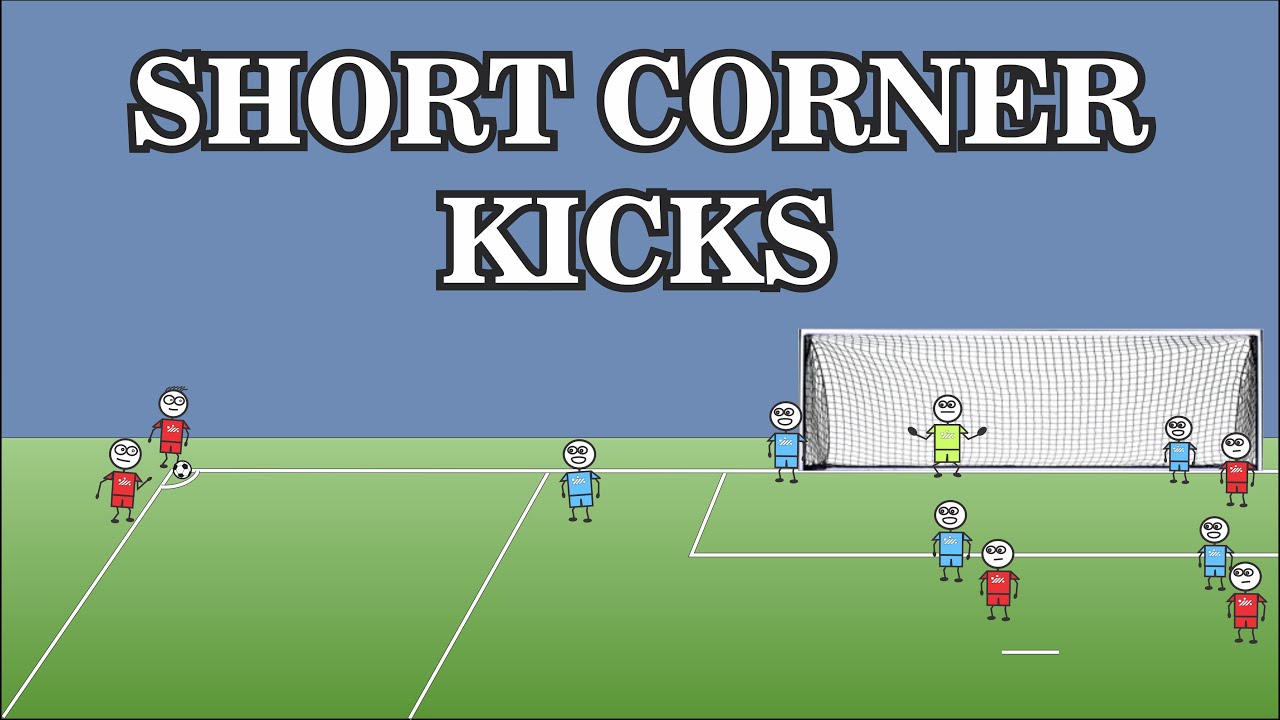
Short Corner Kicks for Youth Soccer — by Soccer Dots on YouTube.
 ▶ Watch on YouTube
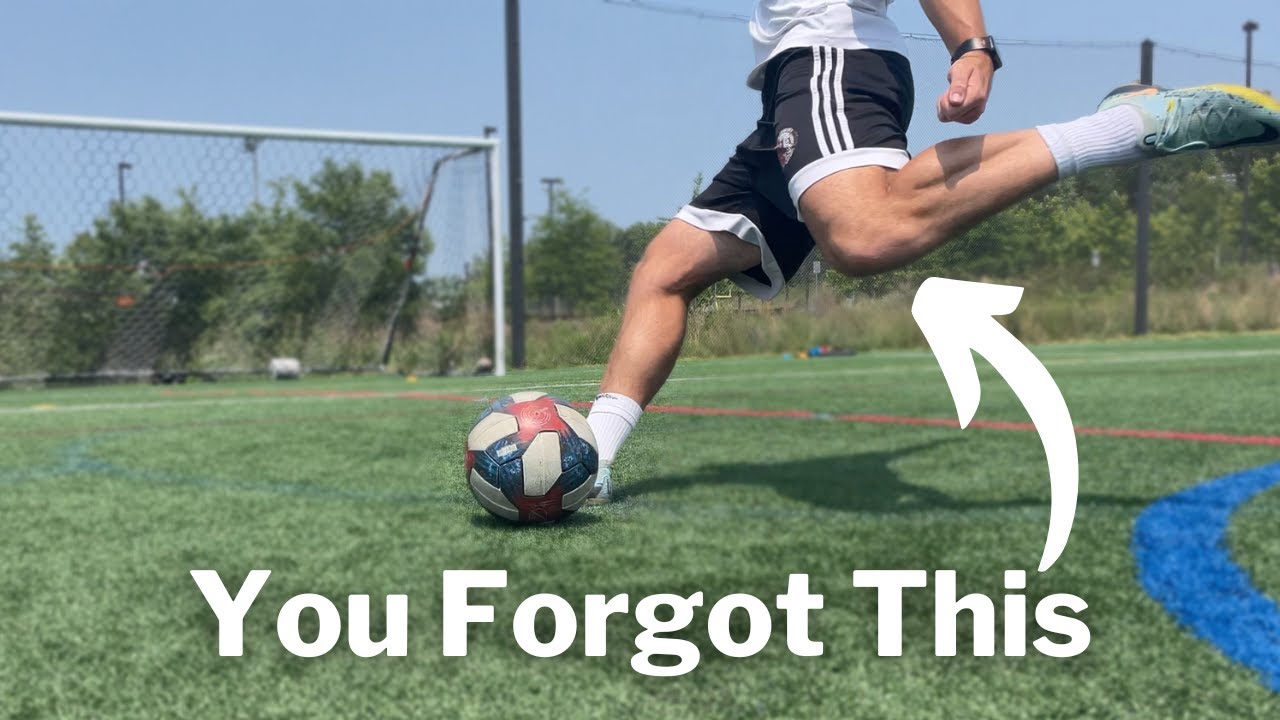
The Ultimate Guide to Shooting with Power and Accuracy in Football — by Kreider Academy on YouTube.
Stage 2 — Finishing from a served ball
A coach or partner rolls or push-passes the ball into the player’s path from 5–8 yards away. The player takes one touch to set and finishes. This introduces timing and footwork, and is closer to game reality than the still ball. Keep the serving angle simple (straight-on first, then slight angles). Both feet, every rep.
 ▶ Watch on YouTube
The Ball Goes Rolling ⚽ World Cup Party With BOOGIE BUGS | Kids Songs — by The Children's Kingdom Nursery Rhymes on YouTube.
Stage 3 — First-time finishing from a moving pass
Partner or coach plays passes from varying angles. Player strikes without a controlling touch, emphasizing body shape before the ball arrives. If the player’s hips aren’t already open to the target when the ball arrives, the technique falls apart. Cue: open your body early, not late.
 ▶ Watch on YouTube
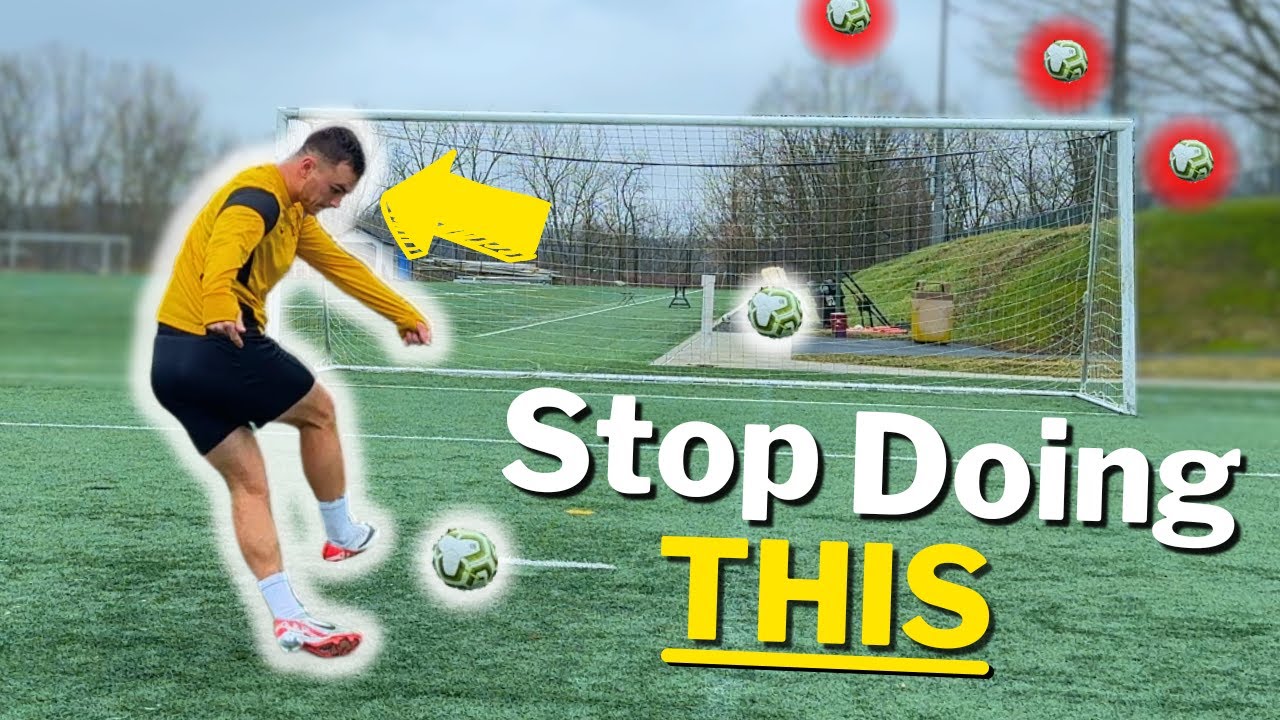
Stop Making these Finishing Mistakes and You Will Score Goals — by Kreider Academy on YouTube.
Stage 4 — Near/far post placement with keeper-position awareness
Place target cones or hang targets in the corners of the goal. Introduce a static goalkeeper or a mannequin shading one side. Players choose the open corner based on what the keeper is covering. Keep the decision binary and clear. This is where the tactical layer lands — don’t introduce it before Stage 3 is competent.
 ▶ Watch on YouTube
Far Post Shooting Drill — by Bay Area Soccer Academy on YouTube.
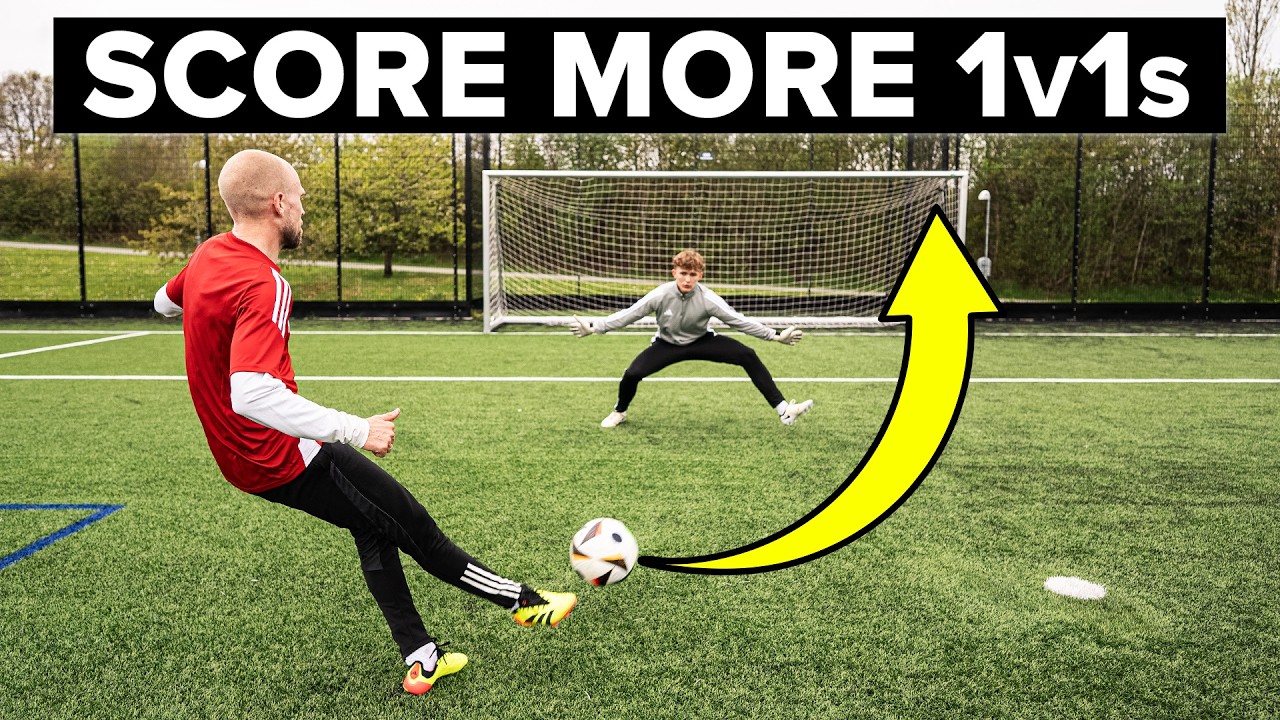
Stage 5 — 1v1 with the goalkeeper
Player versus a live keeper from varying distances and angles inside the penalty area. The player reads the keeper’s stance: Which side is open? Is the keeper off the line? Options practiced: open-side placement with the inside foot, going around the keeper, and — for upper-end U12 — a composed chip (dink). Cue: slow down, look, choose. Composure over pace. The US Soccer Coaching Curriculum rates 1v1 attacking at high workload (4–5/5) for this age band — this is developmentally on-point. Protect the goalkeeper: emphasize placement-based finishing, not blasted drives, in these sessions.
 ▶ Watch on YouTube
How to ALWAYS SCORE 1v1 against goalkeeper — by Unisport on YouTube.
Stage 6 — Finishing off movement
Player makes a timed run — near-post diagonal, in-behind run — to receive a pass and finish. The coach or a partner triggers the run with a call or pass. This is the link between the movement that creates the chance and the finish that converts it. Cue: time your run so the ball arrives as you arrive.
 ▶ Watch on YouTube
Between the Lines: The Near Post Run — by Major League Soccer on YouTube.
 ▶ Watch on YouTube
Teach Youth Soccer Players to Finish!! — by Coach Rory Soccer on YouTube.
Stage 7 — Small-sided games with finishing emphasis
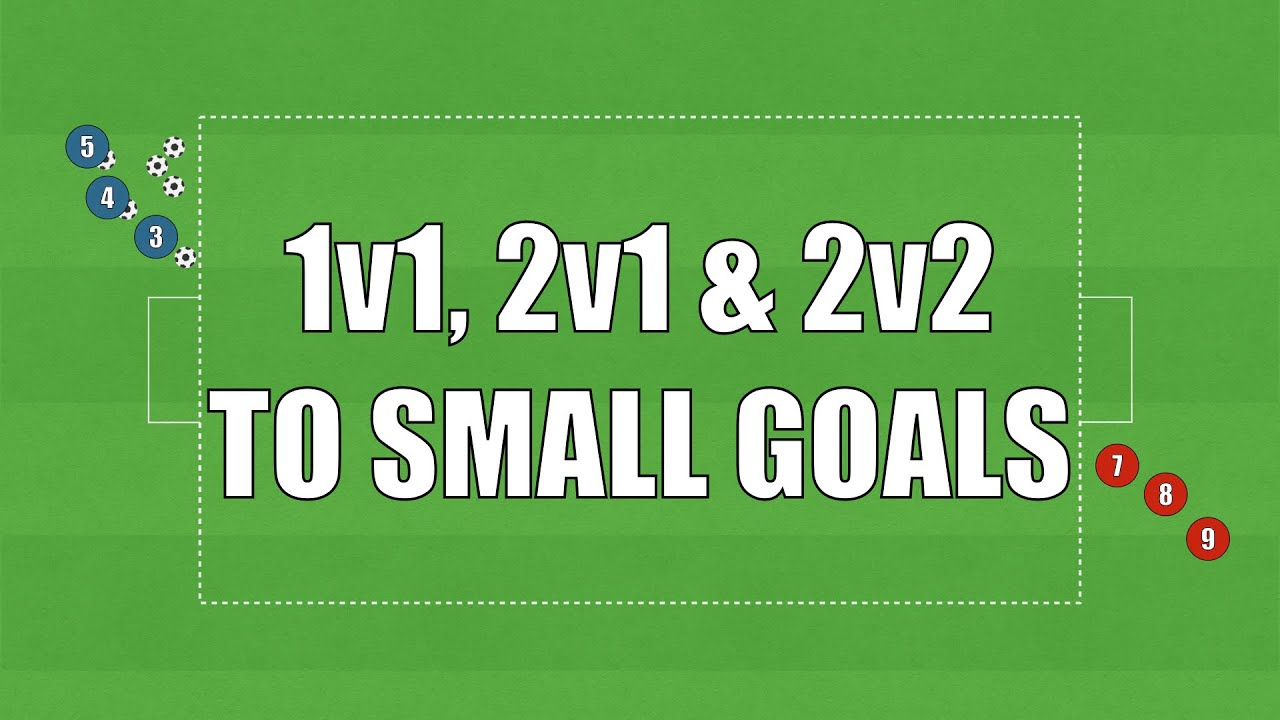
2v1, 3v2 to goal; multi-goal small-sided games (SSGs); games with bonus points for weak-foot goals or near-post finishes. This is where decision-making, composure under fatigue, and technical execution get fused together. The England Football Learning sessions — including designs like “five goals, five ways” and combination play into a finish — make this the payoff layer of a well-designed session. The Player Development Project describes this as moving along a “practice spectrum” toward game-realistic problem-solving. Without this layer, technique stays isolated from decisions.
 ▶ Watch on YouTube
1v1, 2v1 & 2v2 To Small Goals Drills | Football/Soccer — by Onside - Training on YouTube.
Suggested program / schedule
This assumes two training sessions per week. Shooting of some nature appears at every session — as the US Youth Soccer Skills School Manual specifies.
| Day | Focus | Content | Duration |
|---|---|---|---|
| Session A | Technical + Served Finish | Stage 1 warm-up (both feet, side-foot corners, 5 min) → Stage 2 roll-and-finish (10 min, both feet) → Stage 3 first-time finish (10 min, angles) | 25 min finishing block |
| Session A | Game application | Stage 7 SSG: 3v2 or multi-goal game with finishing emphasis | 15–20 min |
| Session B | Decision-making + 1v1 | Stage 4 keeper-position targeting (10 min) → Stage 5 1v1 vs. keeper (10–12 min) | 20–22 min finishing block |
| Session B | Movement + Game | Stage 6 near-post/in-behind runs (8 min) → Stage 7 SSG with positional scoring bonus | 20–25 min |
Distribute finishing reps across the session — don’t cluster 40 shots in the first 15 minutes and then move on. Observe for limping or compensation in running mechanics as a signal to reduce volume.
Mistakes to avoid
- Prioritizing power over placement. Players blast balls over the bar because coaches celebrate hard shots. Accuracy first, always — the curriculum is unambiguous on this. Praise the corner, not the pace.
- Static-only shooting practice. Long lines at an empty net, no pass, no movement. This produces technique without decisions. Reserve still-ball work for warm-up and technique isolation only; finish every session in a game-realistic context.
- Ignoring the weaker foot. Sessions drift to the dominant foot by default. If you’re not explicitly cueing, assigning, and repeating weak-foot finishing, you’re building a one-footed player. Include both feet in every stage, every session.
- Rushing in 1v1 situations with the keeper. Players charge and shoot early from a bad angle. Coach the pause: see the keeper, pick the side, then finish. Practice this in Stage 5 before putting it in game situations.
- Poor plant-foot positioning. Too far from the ball causes a scooped miss; too close causes a mis-hit; toes not pointing at target cause misdirection. This is the most coachable technical error — and the most commonly overlooked. Watch every player’s plant foot, not just their kicking leg.
- Head coming up before contact. Players look at the goal before they’ve struck the ball, causing missed contact and poor direction. Cue: watch your foot and the ball make contact. The goal isn’t going anywhere.
- Knee behind the ball on instep drive. The ball goes straight over the crossbar. The fix is posture: lean forward, get the knee over and through the ball. Demonstrate the difference visually — players understand it immediately when they see it.
- Only coaching the designated striker. The US Soccer curriculum requires position rotation; all field players should practice finishing. Finishing is a whole-squad skill.
When to advance
Use these as real checkpoints, not estimates:
- Stage 1 → Stage 2: Player lands 4 of 5 side-foot finishes in a target corner (cones or hanging target) from 8 yards with both feet, clean contact and follow-through on each attempt.
- Stage 2 → Stage 3: Player finishes cleanly first or second touch from a rolling pass at three different angles — straight, 45°, and lateral — with both feet.
- Stage 3 → Stage 4: Player consistently orients hips to target before the ball arrives on first-time finishes; fewer than 2 in 5 shots go centrally (easy for keeper).
- Stage 4 → Stage 5: Player correctly identifies and executes the open corner (away from keeper) at least 3 out of 5 times with static keeper or mannequin.
- Stage 5 → Stage 6: Player slows into the 1v1, reads the keeper, and chooses placement over power at least 4 of 6 opportunities against a live but cooperative keeper.
- Stage 6 → Stage 7: Player times near-post or in-behind run successfully (ball and player arrive together) on 3 of 5 attempts and finishes with clean contact.
Further reading
- Accuracy Before Power — Why placement precedes pace in pre-adolescent technique development
- Stretch Shortening Cycle — The mechanics behind explosive kicking and why it develops post-puberty
- 1V1 Live Keeper Finishing — Full session design: 1v1 composure and keeper-reading progressions
- Near Post Run And Finish — Timing near-post and in-behind runs: movement patterns for U10–U12
- Small Sided Games Finishing — How SSG design creates game-realistic finishing repetition
Sources
- Official US Youth Soccer Coaching Manual — governing-body — https://www.usyouthsoccer.org/wp-content/uploads/sites/160/2023/09/Official-US-Youth-Soccer-Coaching-Manual-1.pdf
- US Youth Soccer Skills School Manual — governing-body — https://www.usyouthsoccer.org/wp-content/uploads/sites/160/2023/09/2017-Skills-School-Manual.pdf
- U.S. Soccer Coaching Curriculum (Full) — governing-body — https://cdn2.sportngin.com/attachments/document/0073/5091/Full_U.S._Soccer_Coaching_Curriculumnew.pdf
- England Football Learning — Finishing Sessions (FA Coach Development) — governing-body — https://learn.englandfootball.com/sessions
- Developing U8–U12 Players — practitioner — https://playerdevelopmentproject.com/developing-u8-u12-players
- Youth Soccer Finishing Drills — Mastering the Art of Scoring Goals — practitioner — https://www.risefcsoccer.com/youth-soccer-finishing-drills