
Every Kid in Goal: Goalkeeping Fundamentals for Ages 4–6 (U5/U6)
At ages 4–6, the most important thing a goalkeeper can do is not make a save — it's have fun. How a young child first experiences standing between the posts shapes whether they'll ever want to be there again at 12. The good news: the right approach requires no specialist goalkeeper…
Every Kid in Goal: Goalkeeping Fundamentals for Ages 4–6 (U5/U6)
At ages 4–6, the most important thing a goalkeeper can do is not make a save — it’s have fun. How a young child first experiences standing between the posts shapes whether they’ll ever want to be there again at 12. The good news: the right approach requires no specialist goalkeeper knowledge, no cones in a goalkeeper pattern, and no technique drills at all. What it does require is a clear understanding of why this age group is different.
Why this matters at this age
The window between ages 4 and 6 is not the window for building goalkeepers. It is the window for building athletes who aren’t afraid of the ball — and who associate stopping it with joy rather than anxiety. US Youth Soccer characterizes typical U6–U8 potential keepers as “timid, quiet, scared, unsure, nervous, uninterested.” That’s not a flaw in the children; it’s a description of what developmentally appropriate fear looks like when a small person is placed alone in a large space with balls flying at them. The correct response, according to US Youth Soccer’s goalkeeper development guidelines, is reassurance and low-pressure fun — not technique correction.
This age falls squarely within what Long-Term Athletic Development (LTAD) researchers call the FUNdamental Stage — the period where movement literacy (the ability to run, jump, throw, balance, and change direction competently) is the priority. Sport-specific positional skills come later. The US Youth Soccer Player Development Model places this age group in a phase explicitly about fundamental movement, not sport-specific positions.
The stakes of getting it wrong are real and long-lasting. The peer-reviewed research cited in the Health Consequences of Youth Sport Specialization (PMC) is clear that early specialization — including positional specialization within a sport — is associated with increased injury risk, reduced motivation, and burnout before adolescence. Locking a 5-year-old into the goalkeeper role isn’t just developmentally premature; it denies them field-player development, labels them before they’ve explored the game, and concentrates repetitive physical stress on immature growth plates.
Conversely, what you build at this age — comfort with the ball, positive feelings about stopping it, confidence in their own body — forms the foundation that makes genuine goalkeeping development possible from ages 10 onward.
Core concepts
*Long Term Athletic Development* (LTAD): A framework for sequencing athletic training across a child’s development. At the FUNdamental Stage (roughly ages 4–9), the priority is broad movement skill — not sport-specific or position-specific training.
Positional specialization: Assigning a child to one position, in this case goalkeeper, as their primary or fixed role. The AOSSM Early Sport Specialization Consensus Statement treats within-sport positional specialization as carrying the same development risks as single-sport specialization.
*Movement Literacy*: The foundational ability to move confidently and competently — balancing, landing, throwing, catching, and changing direction. This is the genuine training goal for ages 4–6, whether they’re in goal or out of it.
Eye-hand coordination: The ability to track a moving ball and time a hand or body response to meet it. US Youth Soccer identifies this — alongside balance — as the only legitimate physical training outcome for goalkeeping at this age. It develops through play, not drills.
Psychological safety in sport: A child’s sense that they won’t be embarrassed, punished, or isolated. For young goalkeepers, this is not a soft concern — it is a developmental one. Placing a child in goal under pressure without support creates fear-based associations that practitioners note are difficult to reverse.
Progression
Stage 1 — Everyone stops the ball (Ages 4–6 / U5–U6)
This is the stage your players are in now. The entire framework rests on one principle: no child is designated the goalkeeper. Every child rotates through informal goalkeeping experiences embedded in small-sided play.
What to do: Run game-based activities where stopping the ball or guarding a target is part of the fun for everyone. US Youth Soccer’s goalkeeper development resource lists playing catch, bouncing balls, hot potato, ball tag, bowling, and dodge ball-style games as the entire goalkeeping curriculum at this age. The Football Association’s Play Phase for ages 4–6 uses the same philosophy — tag games and small-sided play with no positional structure.
Key cues (keep them simple and playful): - “Be ready!” — feet wide, arms out, knees soft. Don’t call it a ready stance. Just use the cue in the game. - “Watch the ball all the way!” - “Great try — you went for it!” (Reinforce the attempt, not the result.)
Drill ideas — no specialist knowledge required:
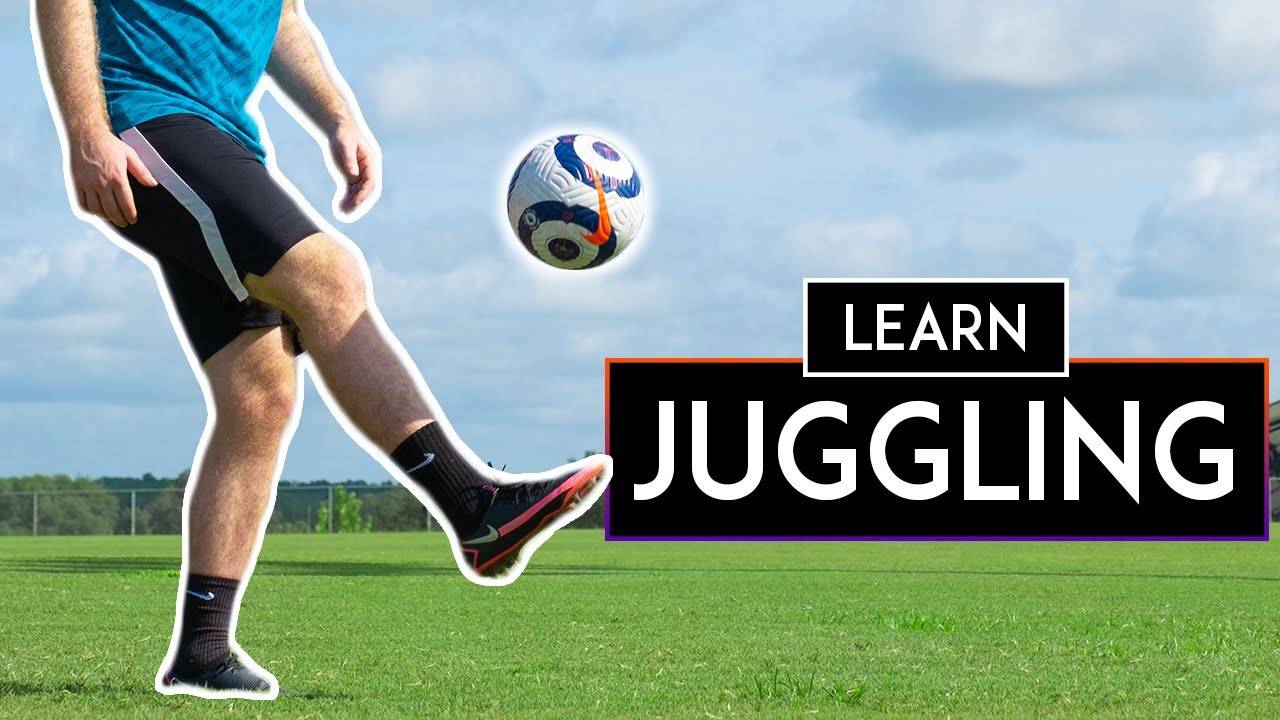 ▶ Watch on YouTube
How to JUGGLE a Soccer Ball for Beginners — by AllAttack on YouTube.
: Roll a soft ball at a child standing in front of two cones and let them stop it any way they can — feet, hands, body. Rotate every 30–45 seconds.
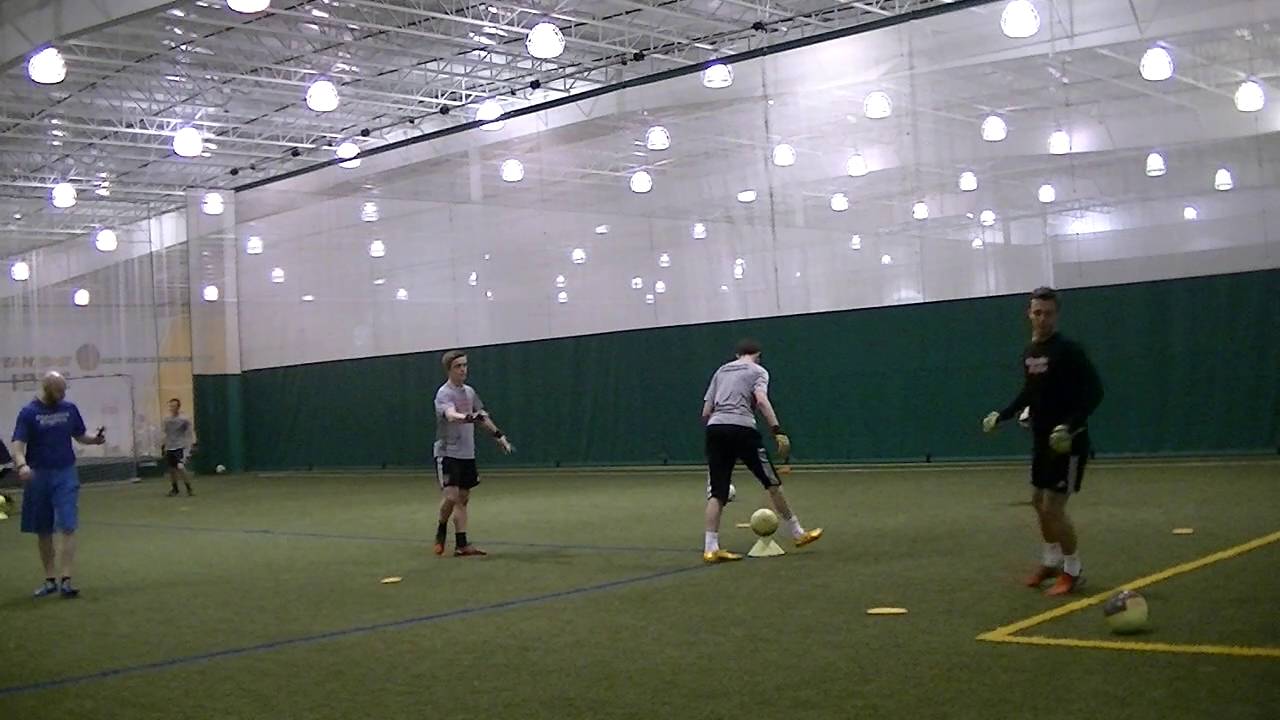 ▶ Watch on YouTube
Guard the Cone — by Michael Flynn GK Coach on YouTube.
: Set up pairs. One child rolls or lightly kicks a ball toward a cone; the other guards it. No technique instruction — let them figure it out.
 ▶ Watch on YouTube
Youth soccer coaching - Throw,Head, Catch drill (age 10+) — by GOLDCOURSE골드코스 on YouTube.
: Simple catch and toss in a circle with a foam or soft ball. This is eye-hand coordination and it’s exactly what the position needs.
 ▶ Watch on YouTube
Coach folded at the end 😭 #futbol #soccer #football #footballvideo #footballmemes #footballskills — by Forza Taktik on YouTube.
In a small-sided game, rotate every child through a brief stint in goal (1–2 minutes maximum). Don’t call it “your turn to be goalkeeper” — frame it as “your turn to be the stopper.”
How long: Keep any single activity under 5 minutes. Attention spans at this age are roughly 2–5 minutes per task. If a child is visibly uncomfortable in goal, rotate them out immediately and without drama.
How to know you can advance: When children in your group consistently engage with ball-stopping activities without visible anxiety, show interest in catching and stopping rather than avoiding, and are developmentally approaching ages 7–8 — you’re ready for Stage 2 concepts.
Suggested program / schedule
This is not a goalkeeper training program. It is a complete U5/U6 soccer session with goalkeeping experiences built in.
| Session segment | Activity | Duration | Notes |
|---|---|---|---|
| Warm-up movement | Tag game (any variety) | 5 min | Run, chase, change direction — pure LTAD movement |
| Ball familiarity | Catch-and-toss circle (foam ball) | 5 min | Eye-hand coordination; no technique cues |
| Game 1 | Guard the cone (pairs) | 8 min | Rotate pairs every 2 min |
| Game 2 | Rolling ball stop (small groups) | 8 min | Celebrate every attempt |
| Small-sided game | 2v2 or 3v3 with shared target | 10 min | Rotate “stoppers” every 1–2 min |
| Cool-down | Seated ball-bounce and share | 3 min | Keep it calm and positive |
Total: ~40 minutes. Two sessions per week is appropriate. The AAP recommends at least 1–2 full rest days per week for youth athletes, even at this age.
Note: This schedule assumes the common U5/U6 format without a designated goalkeeper. If your league uses a format with a fixed keeper, still rotate all players through the role across sessions — never assign it to one child for a full season.
Mistakes to avoid
Designating one child as the goalkeeper for a season. This is early positional specialization. It denies field-player development and labels the child before they’ve explored the game.
Shouting technique cues like “hands up!” or “W-shape!” Children at this age lack the fine motor development and cognitive readiness to apply them. You’ll create anxiety without producing any skill benefit.
Teaching or encouraging diving. Formal diving instruction is inappropriate until at least ages 10–12, on soft surfaces, with established body control and landing mechanics. Growth plates are open and vulnerable; falling in normal play is fine — coached diving is not.
Using the goalkeeper spot as management. Putting a “less active” or “less skilled” child in goal to keep them involved, or as a form of quiet control, damages their relationship with the position permanently. The Veo coaching guide is explicit: children placed in goal without support develop fear and avoidance habits.
Running a goalkeeper-specific training session for U6 players. This age group benefits from all-position, free-play sessions. A dedicated GK session has no developmental justification here.
Using elite goalkeeper videos as a coaching reference. The movement patterns, decision-making, and physical demands shown in professional or high-school goalkeeper footage are completely inappropriate models for a 5-year-old.
Ignoring your league’s game format. Many U5/U6 leagues in the US use 4v4 with no designated goalkeeper by design. Introducing a fixed keeper role works against the sanctioned development model.
Expecting communication or defensive organization. Directing a back four, calling for the ball, organizing a wall — these are U12+ skills requiring cognitive and social maturity that is years away. Don’t plant that seed now.
When to advance
Move toward Stage 2 (basic handling and stance introduction, roughly ages 7–9 / U8–U10) when:
- Players are consistently 7 years old or approaching it
- Children voluntarily seek out the stopping/catching role without prompting
- Ball contact with hands no longer produces flinching or avoidance responses in most of the group
- Players can track a gently rolled or tossed ball visually and move to intercept it — not catch it perfectly, just pursue it
There is no technical benchmark for Stage 1 completion. Comfort and enjoyment are the exit criteria. If those aren’t present, stay in Stage 1 longer and make the games more fun — don’t push forward on the progression.
Further reading
- Long Term Athletic Development — How the LTAD framework sequences youth athletic training from ages 4 through elite competition
- Early Sport Specialization Risks — What the sports medicine consensus says about positional and single-sport specialization before puberty
- Movement Literacy — Why fundamental movement skills are the foundation of all athletic development
- Guard The Cone — Full game setup, variations, and progressions for small-group target-guarding games
- Rolling Ball Stop — Progressions from soft rolling balls to bounced and tossed balls for beginner goalkeeping confidence
Sources
- Development of a Goalkeeper: The Progression from a Beginning Goalkeeper to a College Goalkeeper — governing body — US Youth Soccer
- US Youth Soccer Player Development Model — governing body — US Youth Soccer
- Youth Soccer Goalkeeper Drills: A Coaching Guide — practitioner — Veo
- England Football Learning — Foundation/Play Phase Sessions (Ages 4–6) — governing body — The Football Association
- Health Consequences of Youth Sport Specialization — peer-reviewed — PMC
- AOSSM Early Sport Specialization Consensus Statement — peer-reviewed — American Orthopaedic Society for Sports Medicine