
Pass, Move, Think: Building Smart Soccer Passers at Ages 7–9
At ages 7 through 9, kids' brains and bodies are in a prime window for learning movement patterns that will define their game for years. The habits a player forms now — which foot they default to, whether they move after a pass, whether they face the field or bury their nose in the…
Pass, Move, Think: Building Smart Soccer Passers at Ages 7–9
At ages 7 through 9, kids’ brains and bodies are in a prime window for learning movement patterns that will define their game for years. The habits a player forms now — which foot they default to, whether they move after a pass, whether they face the field or bury their nose in the ball — are genuinely hard to undo later. That makes this the most important phase for passing development, and also the easiest phase to waste with the wrong drills.
Why this matters at this age
US Youth Soccer classifies ages 4–9 as the “childhood” biological stage, where the top priority is building basic skills through varied, game-like repetitions in a friendly environment. The emphasis is on discovery and experimentation — not systems, not formations, not chalk-talk.
The body is laying down blueprints. Movement patterns formed now — how the foot locks at the ankle, which surface makes contact with the ball, how the hips angle when receiving — become automatic over time. That’s a gift: kids this age pick up clean technique quickly. It’s also a risk: bad habits form just as easily, and they calcify.
The specific bad habit most common at this age is the toe-punt. It’s familiar, it feels safe, and it works just well enough to survive. The inside-of-the-foot push pass feels riskier to a 7-year-old. Your job as a coach or parent is to make the correct technique feel safe to try.
The other habit that forms — or doesn’t — right now is moving after the pass. Players who stand and watch their pass travel are everywhere at U8–U10. It’s the single most common technical behavior that limits a team’s ability to keep the ball, and it’s easiest to coach out before it becomes automatic.
Finally, this is the window for building two-footed players. Kids who only use their dominant foot are choosing the safe option. If coaches don’t require the weak foot — not suggest it, require it — players will always default to the strong one. The weak foot develops when it’s coached directly.
Core concepts
Inside-foot push pass Inside Foot Push Pass: The standard ground pass using the flat inner surface of the foot. The US Youth Soccer Skills School Manual describes the mechanics clearly: plant foot alongside the ball, ankle locked, contact on the inside surface, follow through low toward the target. It’s the foundation because that flat surface gives the most control and accuracy.
Weight of pass Pass Weight: How hard or soft you hit the ball. A pass that’s too hard bounces off the receiver’s foot; too soft and a defender steps in front of it. Weight is almost never coached directly at this age — build it into drills by requiring that passes arrive on the ground at the receiver’s feet from a set distance.
Pass and move: After releasing the ball, immediately move to a new spot to give your teammate another option. Standing still and watching the ball is the default behavior at this age — the antidote is making movement part of the drill’s structure, not an afterthought.
Open body shape Open Body Shape: Angling the hips toward the field instead of facing the passer straight on when receiving. The simple coaching question from the 7v7 US Soccer training sessions: “Can you see the whole field when you get the ball?” That question plants the concept without a lecture.
Two-touch rule Two Touch Constraint: A training constraint, not a match tactic. Receive, then pass. It builds the habit that the first touch is really the setup for the next pass — that receiving and passing are one skill, not two separate events.
Triangle shape Passing Triangles: The simplest team concept. The player with the ball needs at least two passing options. Players without the ball move into triangles — not lines, not clusters. This is introduced as a building block, not a formal tactical system.
Rondo Rondo: A possession exercise — typically 3v1 or 4v2 — where the majority keeps the ball from one or two defenders in a small grid. Foundational Rondos describes rondos as the gateway possession exercise: they integrate passing, first touch, body shape, and mild defensive pressure in a single compact activity.
Progression
Stage 1 — Stationary partner pass
Two players, 5–8 yards apart. Inside foot only, both feet required. One coaching point per session: this week, ankle lock; next week, where the planted foot points. Both players pass simultaneously in pairs, not one at a time.
 ▶ Watch on YouTube
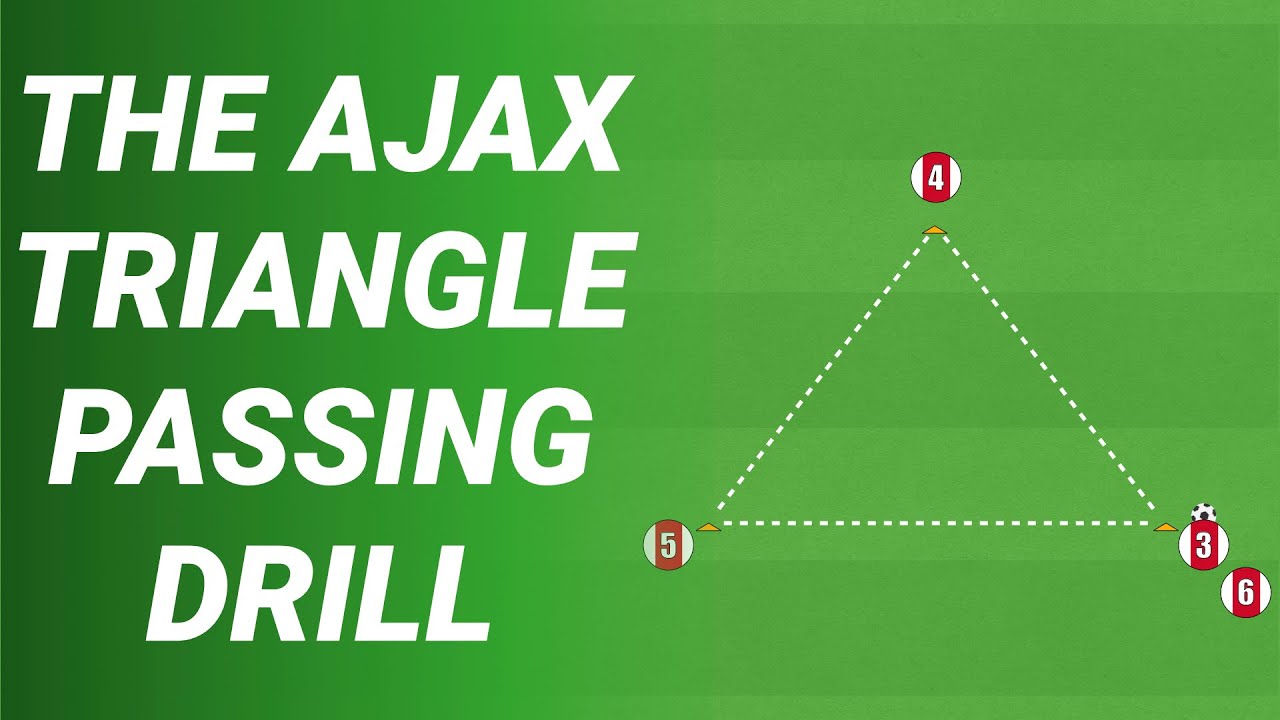
The Ajax Triangle Passing Drill | Football/Soccer — by Onside - Training on YouTube.
Advance when: Ball arrives on the ground, on target, with consistent inside-foot contact — both feet — for the duration of a 5-minute block.
Stage 2 — Moving target
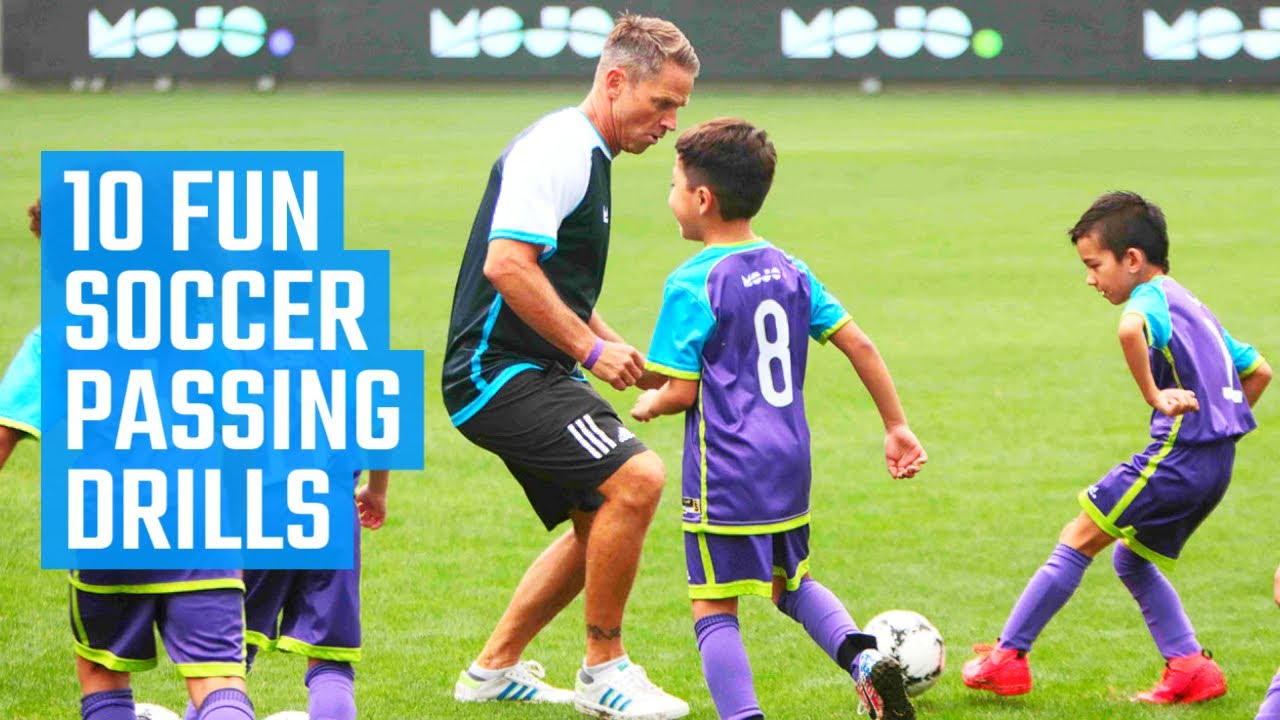
The passer stays still; the receiver walks toward the ball. The focus shifts to weight: the pass should meet the receiver at their feet, on the ground, without requiring them to break stride.
 ▶ Watch on YouTube
10 Best Soccer Passing Drills for U8, U10 and U12 | Fun Soccer Drills by MOJO — by yougotmojo on YouTube.
Advance when: Receiver controls the ball in motion without stopping to retrieve it — three or more consecutive reps each foot.
Stage 3 — Pass-and-move triangle
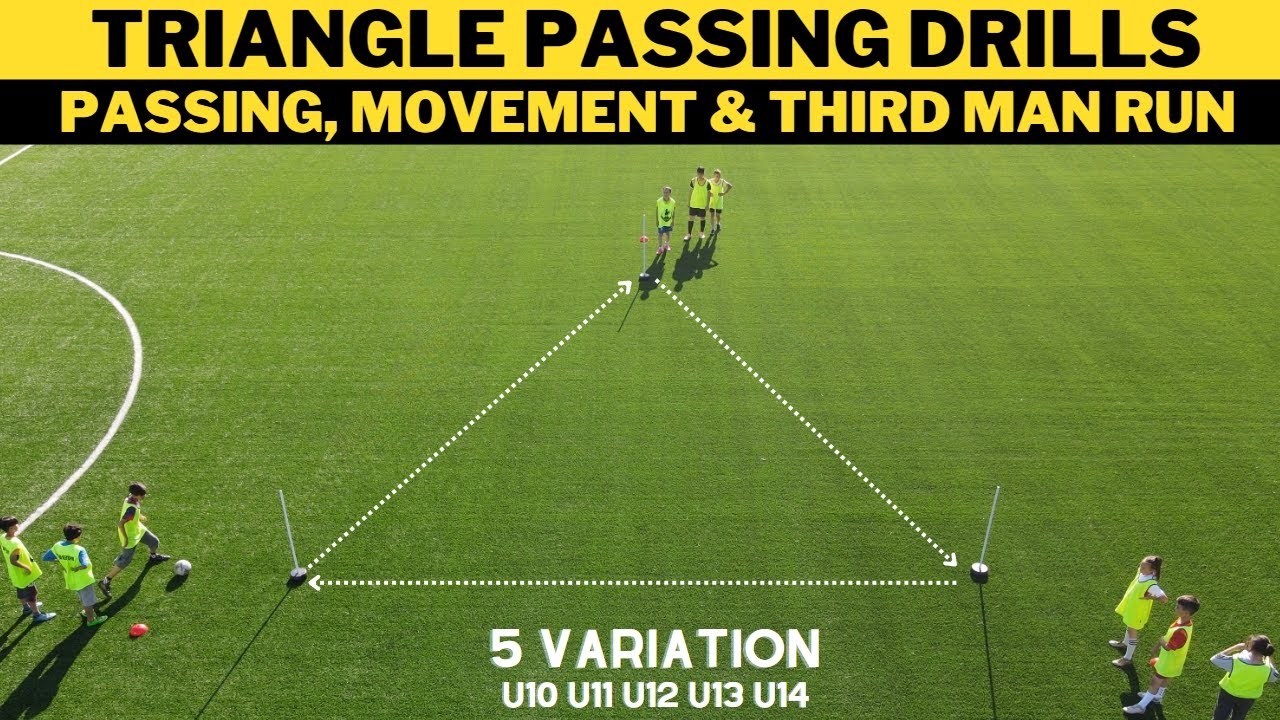
Three players, three cones in a triangle shape. After each pass, the passer runs to a new cone before the ball reaches the next player. This builds the move-after-passing habit before it ever needs a tactical name.
 ▶ Watch on YouTube
Triangle Passing Drills For Soccer/Football | Passing, Movement & Third Man Run | 5 Variation | — by AD Football Training Videos on YouTube.
Advance when: All three players are consistently moving to a new cone before the next pass is made — not reacting after the fact.
Stage 4 — Gate passing game
Set up a grid with several small cone gates scattered across it. Players score by passing through a gate to a teammate. Accuracy, direction decisions, and off-ball movement all emerge naturally from trying to win the game.
 ▶ Watch on YouTube
Game: 'Through the gates' › Pairs | Soccer skills in PE (grades K-6) — by Prime Coaching Sport on YouTube.
Advance when: Players are choosing gates that their teammate can actually reach — not just hitting the nearest gate — and moving after each pass.
Stage 5 — Two-touch passing patterns
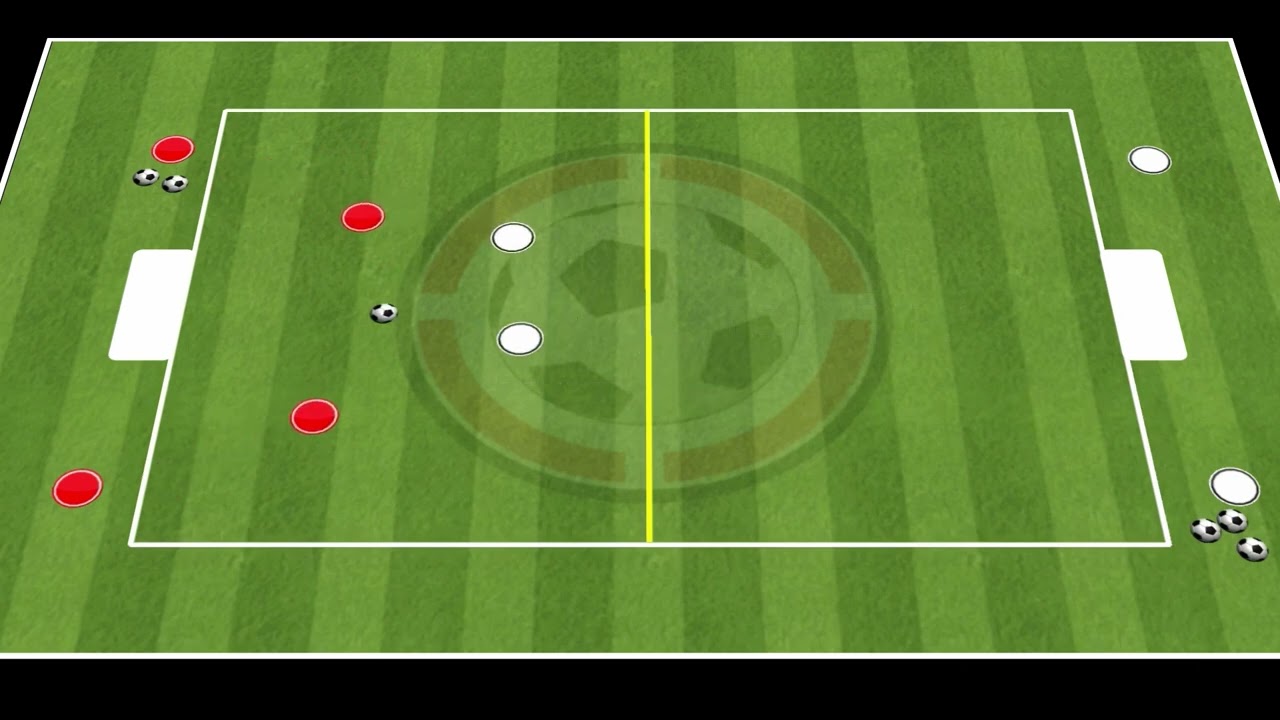
Three or more players in a simple rotation. The rule: receive, then pass. One touch to control, one touch to send. No dribbling. This is a training constraint, not a match rule — it forces players to think about their first touch as the setup.
 ▶ Watch on YouTube
Defending 2v2 With Rotation — by Next Play Soccer Training on YouTube.
Advance when: Players consistently settle the ball into usable space with their first touch — not into their own feet or into a defender.
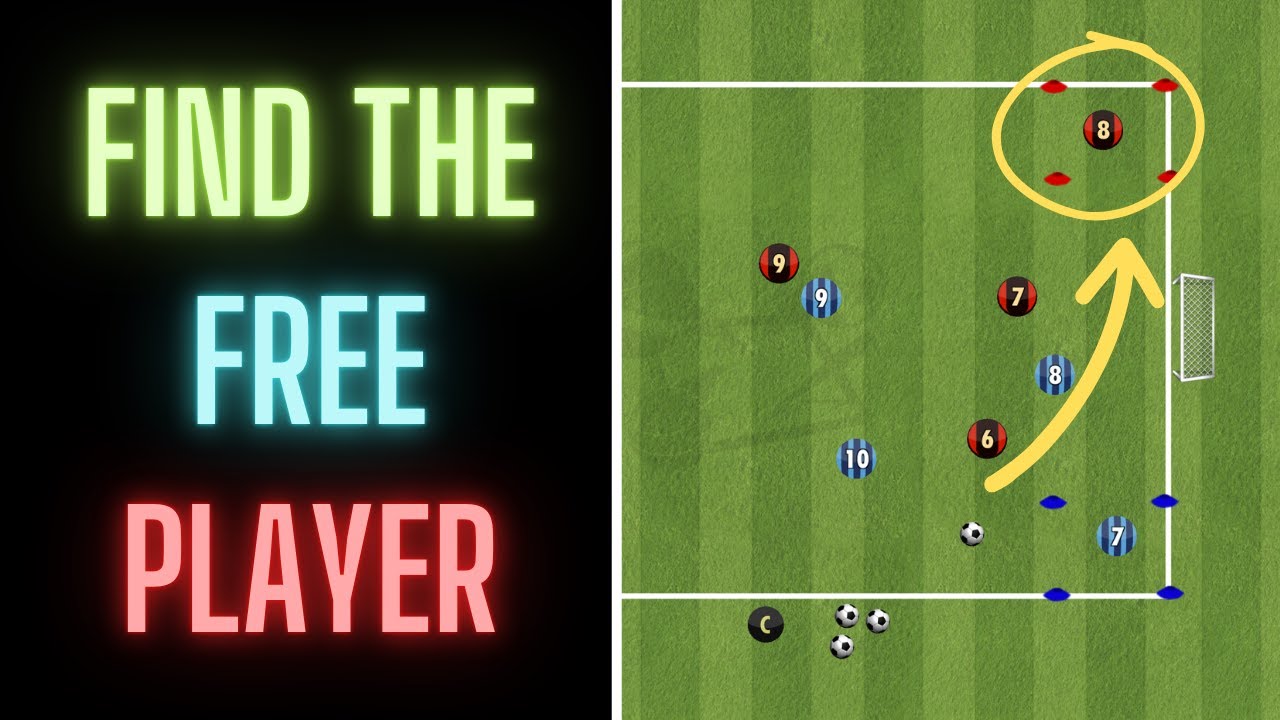
Stage 6 — Rewarded small-sided game (4v4 or 5v5)
Play a regular small-sided game with a modified scoring rule: three consecutive passes before a goal counts double, or a pass through a cone gate earns a bonus point. The game’s incentive does the coaching — passing has real meaning now, not just coach prompting.
 ▶ Watch on YouTube
Find The Free Player | Small Sided Game | Football/Soccer — by KS Performance on YouTube.
Advance when: Players are attempting passes in the game because they see the opportunity, not only when reminded.
Stage 7 — 3v1 rondo
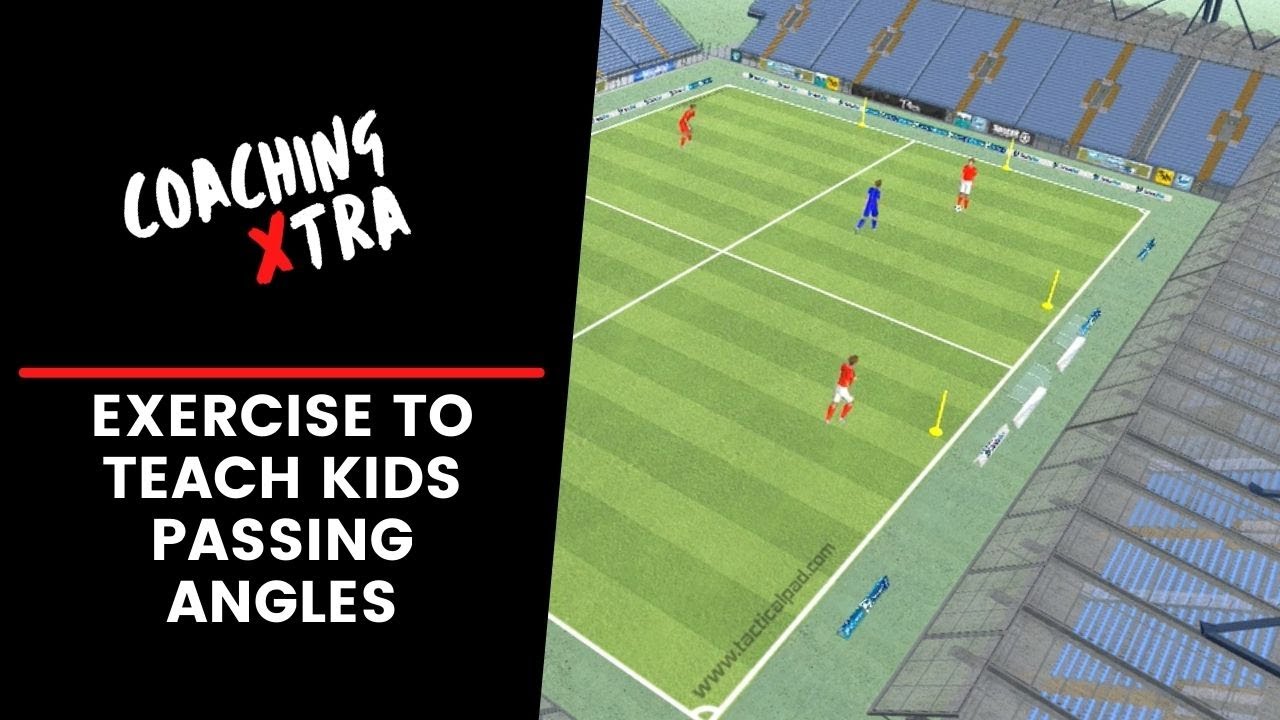
Three attackers keep the ball from one defender in an 8×8 yard grid. Start with generous space. This is the first experience with passing under actual defensive pressure, and it naturally develops body shape and the habit of seeing two teammates at once.
 ▶ Watch on YouTube
Kids 3v1 Rondo With Mini Goals — by Coaching Xtra on YouTube.
Advance when: The three attackers can complete 5+ consecutive passes before the defender wins the ball — consistently across multiple rounds.
Stage 8 — 4v2 rondo
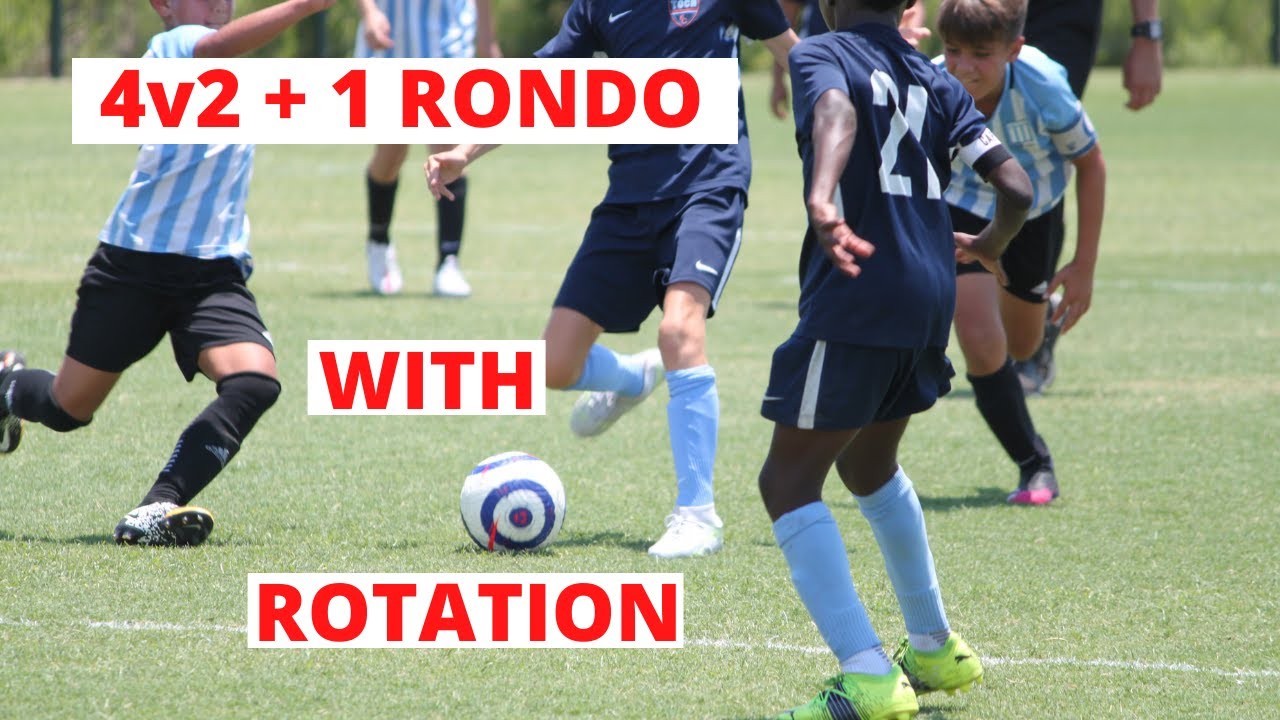
Two defenders, more decisions. Players begin to learn, experientially, the idea of finding the player farthest from pressure. This is the ceiling for ages 7–9. Positional play, switching the field, and lofted balls belong at age 10 and beyond.
 ▶ Watch on YouTube
Soccer Coaching Drills | 4v2 + 1 Rondo with Rotation | Toca FC 2010 MLS — by Purpose Driven Futbol on YouTube.
Suggested program / schedule
This is a 60-minute practice template aligned with US Soccer’s small-sided format requirements for U8–U10.
| Time | Activity | Format | Focus |
|---|---|---|---|
| 0–8 min | Free play with ball — every player has one | 1v1 or solo | Comfort, warmup |
| 8–18 min | Stationary or moving-target pass (Stage 1 or 2) | Pairs, both feet | Technique, ankle lock, weight |
| 18–26 min | Pass-and-move triangle (Stage 3) | Groups of 3 | Move after passing |
| 26–35 min | Gate passing game (Stage 4) | Groups of 4–5 | Accuracy, decision, movement |
| 35–45 min | Rewarded 4v4 small-sided game (Stage 6) | Two teams | Game application |
| 45–55 min | 3v1 rondo (Stage 7) | Groups of 4 | Pressure, body shape |
| 55–60 min | Cooldown free play or team game | Full group | Fun, wind-down |
Water break every 15–20 minutes. Change activities at the 8–12 minute mark — attention spans are short, and long coach speeches kill engagement. Keep instructions to one technical point per activity.
Mistakes to avoid
Letting the toe-punt survive. It feels safe and familiar, so players default to it under pressure. Slow the activity down and make the foot surface visible: “Show me the inside of your foot before you kick.”
Standing and watching after the pass. Universal at this age. Build movement into the drill’s structure — if the activity requires running to a new cone after each pass, standing still breaks the game. Verbal prompts alone don’t fix it.
Passing into a marked teammate. Kids pass to where their teammate is, not where they can receive. Skip the tactical jargon and just say: “Pass to someone who can get it easily.”
Drilling in lines. Parallel passing lines with kids waiting their turn produce almost no learning and teach passivity. Every player should be active. If someone is standing still for more than 30 seconds, the format needs to change.
Only practicing the dominant foot. If you don’t require the weak foot, players will always choose the strong one. Left-foot and right-foot reps belong in every drill — not as an option.
Over-coaching during the game. Stopping play repeatedly, long huddle lectures, correcting every small error — Best Practices for Coaching Soccer in the United States is explicit: the game teaches more than the coach does at this age. Ask questions, don’t lecture. “When is a good time to pass?” gets more traction than a three-minute explanation.
Ignoring weight of pass. Too hard and it bounces off; too soft and it’s intercepted. Build weight requirements into drills — the pass should arrive at the receiver’s feet at a given distance, not behind them or past them.
Skipping the open body shape conversation. Players who receive while facing the passer have the whole field behind them. One question does the work: “Can you see the whole field right now?”
When to advance
Move a player or group to the next stage when they can demonstrate the current stage’s skill consistently — across multiple reps, both feet, in slightly unpredictable conditions. Specific markers:
- Stage 1 → 2: Inside-foot contact with ankle locked, both feet, ball on the ground, 5 of 6 reps.
- Stage 3 → 4: Passer moves to a new cone before the next pass arrives — every rep, for a full 5-minute block.
- Stage 4 → 5: Players choose gate passes based on where their teammate can receive, not just which gate is closest.
- Stage 6 → 7: Players attempt passes in the game because they see the chance — not because a coach prompted them.
- Stage 7 → 8: Three attackers complete 5+ consecutive passes in the 3v1 before the defender wins the ball, across three or more rounds.
- Stage 8 ceiling: 4v2 rondos and rewarded 5v5 possession games are the developmental ceiling for this age group. Positional systems and lofted balls belong at age 10+.
Further reading
- Inside Foot Push Pass — Full mechanics breakdown with common errors
- Rondo — How rondos work, how to set them up, and how to progress them
- Gate Passing Game — Setup diagrams and rule variations
- 3V1 Rondo — Grid sizes, constraints, and coaching questions
- Small Sided Games U8 U10 — The ball-touches data behind 4v4 and why format size matters
Sources
- US Youth Soccer Player Development Model (PDM) — governing-body — https://cdn4.sportngin.com/attachments/document/0026/3035/US_Youth_Soccer_Player_Development_Model.pdf
- Best Practices for Coaching Soccer in the United States — governing-body — https://www.americanfork.gov/DocumentCenter/View/5211/USA-soccer_Best_Practicespdf
- Small-Sided Games — US Youth Soccer — governing-body — https://www.usyouthsoccer.org/wp-content/uploads/sites/160/2023/09/Small-Sided-Games.pdf
- Soccer Coaching 101: Fundamental Lessons for Beginner Coaches — practitioner — https://playerdevelopmentproject.com/soccer-coaching-101/
- Foundational Rondos | Passing Drills 9–11yrs — practitioner — https://www.professionalsoccercoaching.com/soccer-passing-drills-football/foundational-rondos
- US Youth Soccer Skills School Manual — governing-body — https://www.usyouthsoccer.org/wp-content/uploads/sites/160/2023/09/2017-Skills-School-Manual.pdf
- 7v7 Weekly Training Sessions (US Soccer PDI-aligned) — practitioner — https://farmingtonct.myrec.com/forms/5959_rec._soccer_practice_7v7.pdf