
Passing That Actually Works: The U11/U12 Soccer Playbook for Parents and Coaches
At 10–12, something clicks. Kids can genuinely see their teammates — not just the ball, not just the nearest pressure — and start making decisions that benefit the team. The US Youth Soccer Coaching Manual calls this age "the dawning of tactical awareness." That's not a small thing. It…
Passing That Actually Works: The U11/U12 Soccer Playbook for Parents and Coaches
At 10–12, something clicks. Kids can genuinely see their teammates — not just the ball, not just the nearest pressure — and start making decisions that benefit the team. The US Youth Soccer Coaching Manual calls this age “the dawning of tactical awareness.” That’s not a small thing. It means this window is exactly when deliberate passing coaching pays the highest return. Miss it, and you’re not just leaving technique on the table; you’re leaving the foundation of team soccer unbuilt.
Why this matters at this age
U11–U12 players are in late pre-puberty to early puberty, which means coordination and fine motor control are improving fast. The inside-foot pass is ready to be refined — not just drilled — and new techniques like the outside-foot pass and driven ball can be genuinely learned, not just mimicked. The US Youth Soccer Skills School Manual notes that coordination improvements in 11–12-year-olds make this a particularly responsive window for technical work.
The tactical piece is just as important. Players this age can start thinking two passes ahead: if I pass here, I become the third-man option. That kind of thinking is trainable, but it needs explicit coaching cues and environments that reward it — not just free scrimmage.
There’s also a narrow-window reality about non-dominant feet. Motor patterns are still plastic at 10–12. If you don’t build the weak foot now, on purpose, in structured environments, you will get right-footed-only players by U14 and there’s not much you can do about it.
One caveat worth naming: early puberty can cause temporary coordination dips, especially in boys who hit their growth spurt before their peers. If a player who was technically solid suddenly looks clunky, don’t treat it as a ceiling. It’s almost always a growth-related adjustment. Stay patient and keep the reps coming.
Finally, playing time inequality starts to sting emotionally at this age. Structure your passing activities so every player gets equal touches — not just the technically strongest kids.
Core concepts
*Inside Foot Push Pass* — The foundation of all passing. Lock the ankle, plant the standing foot beside and pointing at the target, and use the large flat surface of the foot for maximum accuracy. Both feet, every session — not optional.
*Outside Foot Pass* — A quick redirect with a shorter range that’s hard for defenders to read. Ages 10–12 is the right window to introduce this as a conscious technique, not a happy accident.
*Driven Ball Laces* — The medium-to-long pass: knee over the ball, plant foot beside it, firm follow-through through the laces. This starts showing up in U11–U12 game formats, so players need it. Technique must come before volume — growth plates are still open, and poor driven-pass mechanics put stress on the knee and hip.
*Weight Of Pass* — Matching the speed of the pass to the receiver’s situation. Quick and sharp under pressure. Firm and forward into open space. Leading into stride for a teammate on the run. US Youth Soccer U12 Practice Activities explicitly identifies timing and pace of passes as two of the four key coaching points for this age group. This is the skill that separates a good U12 passer from a great one.
*Open Body Receive — Hips facing the field, not the passer, when receiving. The back-foot receive* means controlling the ball with the foot away from the passer, which naturally opens the player to the field. This is the most neglected habit in U11–U12 passing and needs constant, explicit correction.
*Scanning Shoulder Check — Checking your shoulders in the seconds before* the ball arrives, so you already know where the next pass goes before you touch it. Research on elite adult players shows 6–8 shoulder checks in the 10 seconds before receiving; for youth players this habit is trainable, and it’s one of the clearest markers that separates advanced players at this age from average ones.
*Pass And Move* — After you pass, immediately find a new supporting position. Don’t stand and watch. This is the most common breakdown in U11–U12 possession, and it kills the passing triangle that would have created the next opportunity.
*Support Angles Triangles* — The player on the ball should always have at least two options at different angles. If every teammate is in a line, there’s nowhere to go. Triangles prevent dead ends.
*Rondo* — A possession exercise developed in Spanish football, now standard worldwide. A small group keeps the ball away from one or two defenders in a defined space. Rondos build passing accuracy, first touch, body shape, scanning, and pressure awareness — all at once, in a game-like environment. The Definitive Guide to Soccer Rondos identifies 3v1, 4v1, and 4v2 as the entry formats for this age group.
Progression
Stage 1 — Technical refinement on both feet
Partner passing at close range (5–7 yards), stationary first, then walking. Inside-foot only. Coaching cues: locked ankle, plant foot beside and pointing at the partner, follow through toward the target. After 5–10 minutes with the dominant foot, switch to the non-dominant foot only. Then alternate feet. Get the technique right before worrying about weight or distance.
Stage 2 — Weight and accuracy together
Partner passing at varied distances — 5, 10, and 15 yards. The pass should arrive cleanly at the receiver’s preferred foot without them having to chase it or brake hard. Coach the weight explicitly: “Too hard — they had to stop. Too soft — they had to come get it. Match the speed to where they are.”
Stage 3 — First touch and body shape
Same paired passing, now with explicit attention on the receive. Hips facing the field on every touch. Use the back-foot receive — the ball arrives and is controlled by the foot away from the passer. Coaching cue: “Open your hips before it gets to you.”
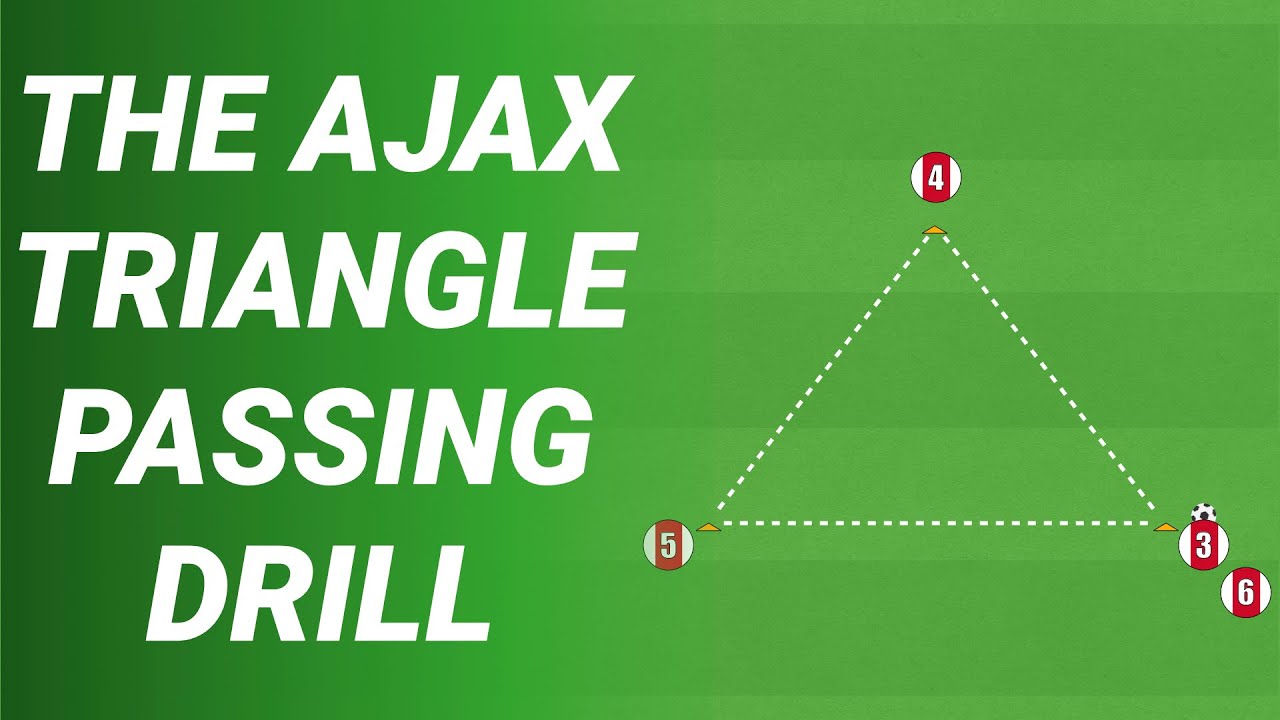 ▶ Watch on YouTube
The Ajax Triangle Passing Drill | Football/Soccer — by Onside - Training on YouTube.
Stage 4 — Scanning before the ball arrives
While the ball is in the air between partners, the coach holds up a colored cone or a number of fingers. The receiver calls out what they saw before they control the ball. This makes the shoulder-check habit explicit and measurable.
 ▶ Watch on YouTube
Soccer Scanning and Awareness Training Tool - 20 Min Color Change and Audio Cues — by SoccerXpert on YouTube.
Stage 5 — Entry rondos (3v1, 4v1)
Small circle rondo. Size the grid so most passes succeed — this is a learning environment, not a pressure cooker. Rotate the defender every 60–90 seconds. Focus: support angles, quick first touch, body shape. Rondos can run 10–12 minutes with small constraint changes rather than constant activity switching — attention spans support it at this age.
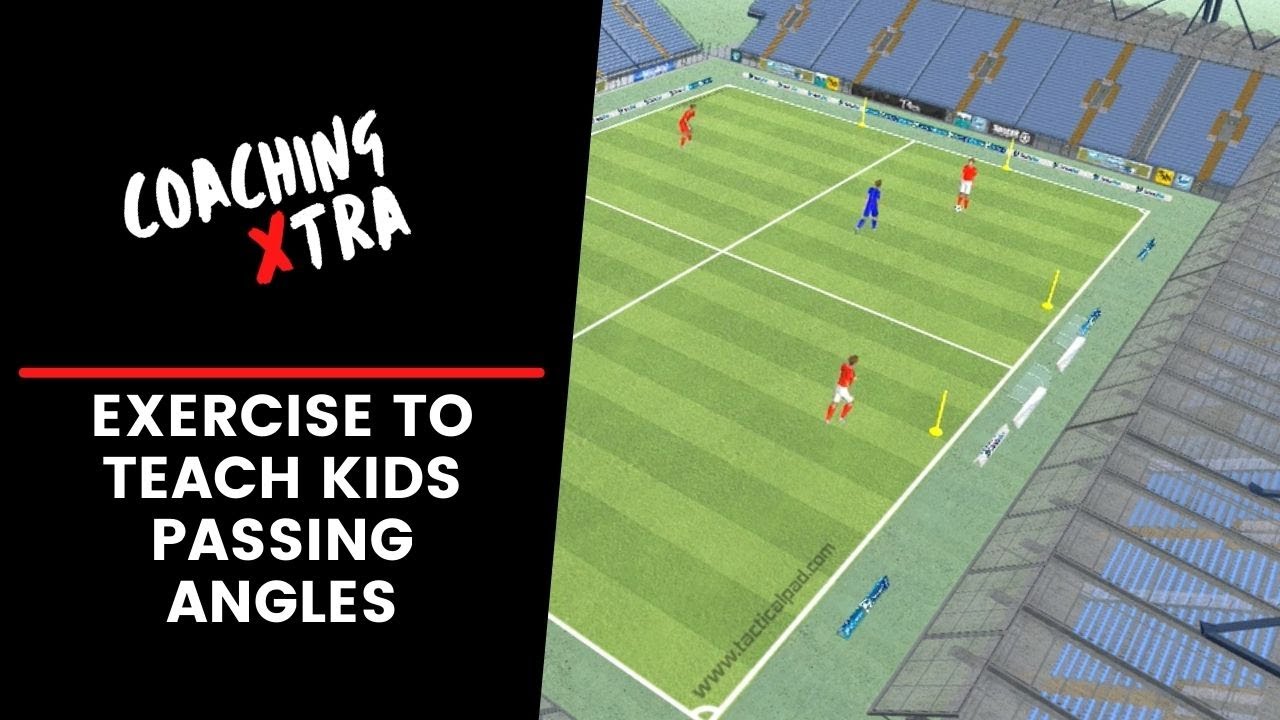 ▶ Watch on YouTube
Kids 3v1 Rondo With Mini Goals — by Coaching Xtra on YouTube.
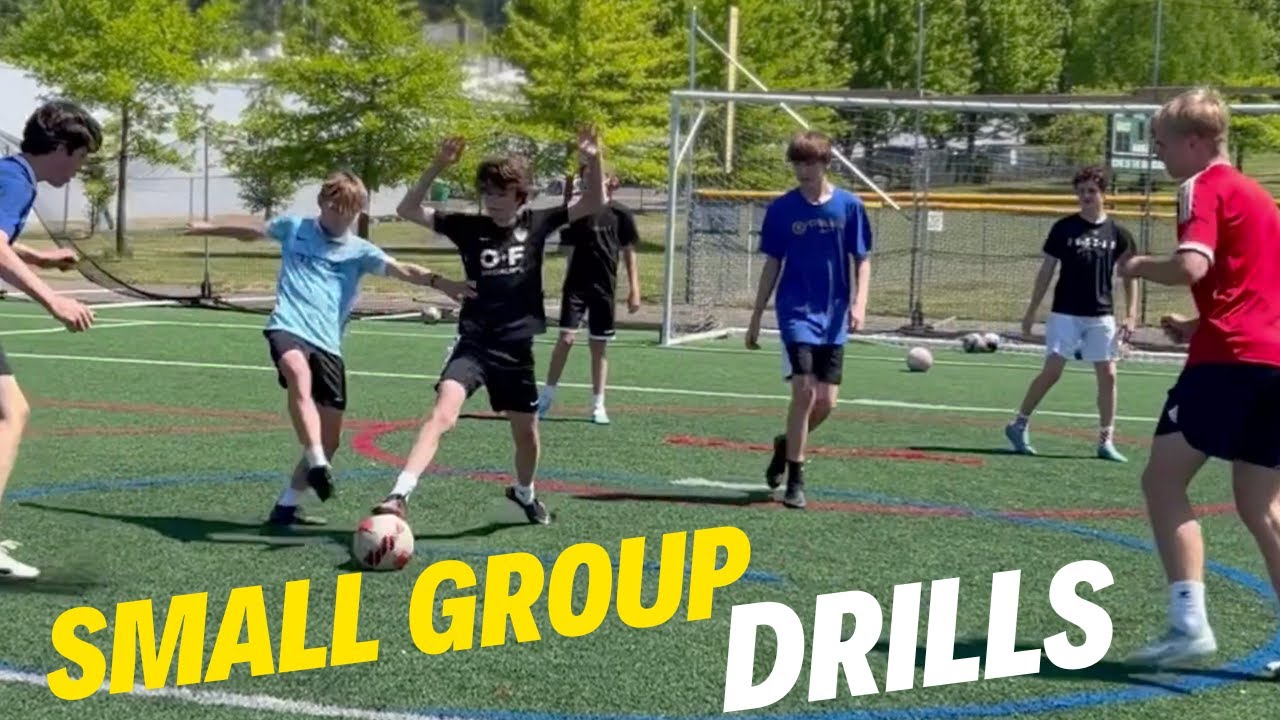 ▶ Watch on YouTube
Tight Space Decision Making | 4v1 Transitional Rondo Drill — by RAIN Soccer Training on YouTube.
Stage 6 — Rondo progression (4v2, 5v2)
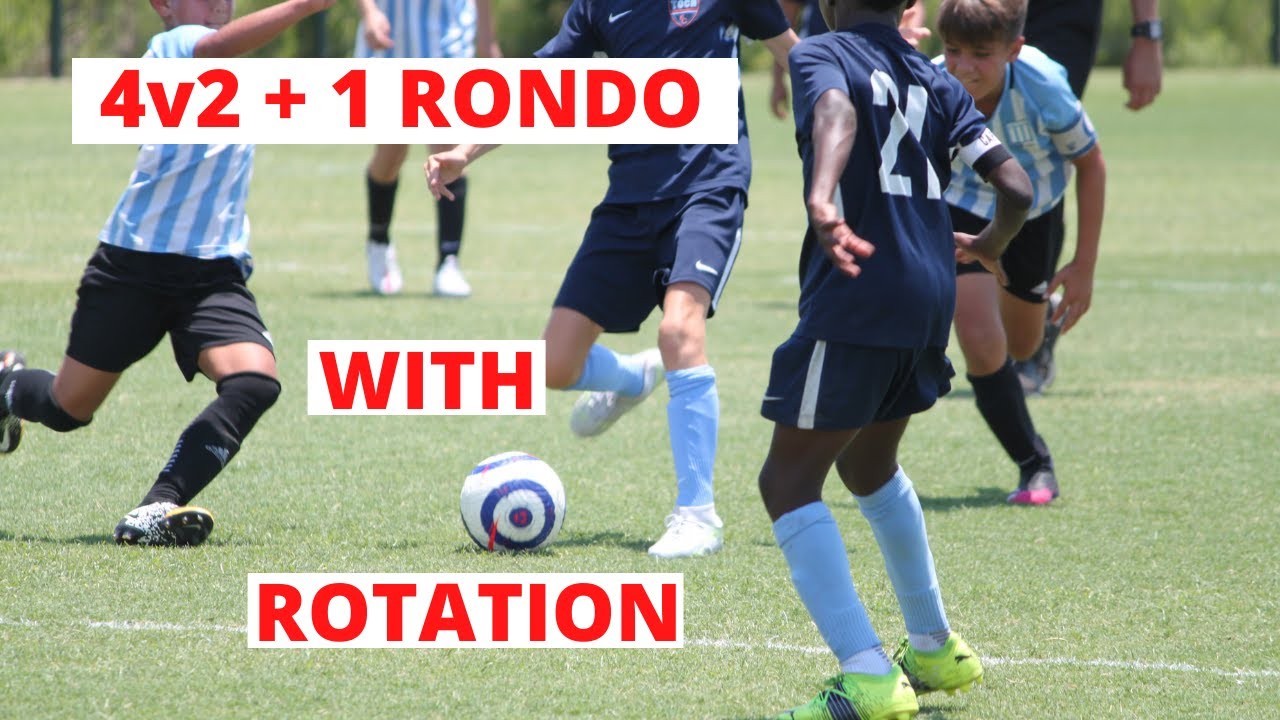
Real defensive pressure and faster decisions. Add touch limits as players improve: start at 3-touch max, move toward 2-touch. Introduce the switch pass — finding the player on the opposite side from the pressure.
 ▶ Watch on YouTube
Soccer Coaching Drills | 4v2 + 1 Rondo with Rotation | Toca FC 2010 MLS — by Purpose Driven Futbol on YouTube.
Stage 7 — Pass-and-move patterns
Triangle and square passing patterns where players follow their pass to the next position. Give-and-go/wall pass with a light defender. Coaching cue: “Don’t stand and watch — find your next position before the ball gets there.”
▶ Watch on YouTube
The Ajax Triangle Passing Drill | Football/Soccer — by Onside - Training on YouTube.
 ▶ Watch on YouTube
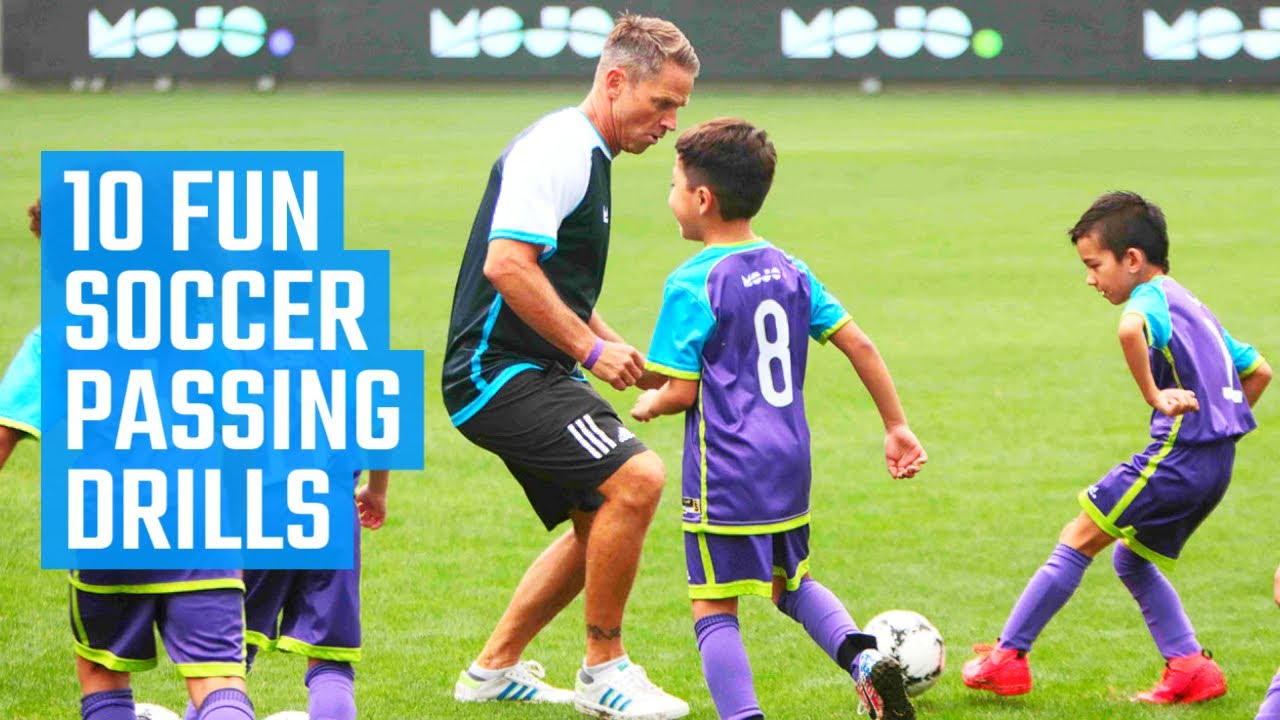
10 Best Soccer Passing Drills for U8, U10 and U12 | Fun Soccer Drills by MOJO — by yougotmojo on YouTube.
Stage 8 — Possession games with scoring constraints
4v4+2 or 5v5 in a defined grid. Score by completing 5 consecutive passes, or by playing through a target gate. Touch limits (3-touch max) force quicker decisions. These games create natural passing choices without scripting them. Alicante Football Academy notes that players who look confident in isolated drills often lose accuracy when a defender appears — this is where you find out if the technique has transferred.
Stage 9 — Third-man runs and switching play (U12 top end)
Inside possession games, occasionally freeze play to point out the third-man option — the player not in the immediate two-man exchange who becomes the forward target. Introduce switching the field when space allows. This is a bridge concept to positional play, not yet a dominant theme.
Suggested program / schedule
This assumes two training sessions per week plus one match. Adjust volume to your team’s schedule — and protect at least one full rest day.
| Day | Activity | Format | Duration |
|---|---|---|---|
| Tuesday | Technical warm-up: inside-foot pairs, both feet | Partners, 5 yd | 8 min |
| Weight-of-pass: varied distance pairs | Partners, 5–15 yd | 8 min | |
| Scanning drill with visual cue | Partners | 6 min | |
| 4v1 rondo | Grid, rotate defender | 12 min | |
| Possession game: 4v4+2, 5-pass scoring | Small grid | 15 min | |
| Scrimmage with coaching cues | 7v7 | 10 min | |
| Thursday | Technical warm-up: non-dominant foot only | Partners, 5–7 yd | 8 min |
| Back-foot receive + body shape coaching | Pairs | 8 min | |
| 4v2 rondo (3-touch max) | Grid | 12 min | |
| Triangle pass-and-follow pattern | 3+ players | 8 min | |
| Possession game: 5v5, touch limit | Grid | 15 min | |
| Scrimmage: wall-pass/give-and-go encouraged | 7v7 | 10 min | |
| Saturday | Match | 7v7 format | Per schedule |
Mistakes to avoid
Passing to a stationary teammate who’s under pressure. Players default to the teammate they see, not the space. Teach them to lead teammates into open ground, not into defenders.
Facing the passer when receiving. This closes off the entire field and is the most common technical flaw at U11–U12. Name it, demonstrate it, correct it at every session.
Pass and admire. Standing still after passing kills the next passing triangle. Every pass should trigger a movement to a new support position — make this a non-negotiable habit.
Dominant-foot-only passing. Many U11–U12 players will default to their strong foot unless you build non-dominant-foot environments on purpose — for example, a rondo where only the weak foot is allowed to pass.
Ignoring pass weight, coaching only direction. Players who learn only accuracy and direction can’t pass into stride or play through pressure. Weight is the key refinement at this age; don’t skip it.
Over-coaching during small-sided games. US Soccer’s position is that coaching interventions during game-form activities should be kept to a minimum. Constant stoppages reduce the touches and decisions that actually build the skill.
Passing drills with no context or pressure. Lines of players passing back and forth in isolation build no scanning, no decision-making, no awareness of pressure. Keep these to a minimum — a short technical warm-up is fine, but the bulk of passing work belongs in game-like environments.
Teaching possession for its own sake. The ball is meant to move toward goal. Sideways and backward passes are tools, not the objective — make sure players understand the difference between a smart reset and a purposeless one.
When to advance
Move a player or group from one stage to the next when:
- Stage 1 → 2: Player completes 10 consecutive inside-foot passes on each foot with correct ankle lock and plant foot, in motion, without breaking technique.
- Stage 2 → 3: Pass arrives at partner’s preferred foot, without them adjusting, at all three distances (5, 10, 15 yards) — 8 out of 10 reps.
- Stage 3 → 4: Player demonstrates open-hip receive (hips to the field, not the passer) on 80% of receptions across two sessions without a reminder cue.
- Stage 4 → 5: Player correctly identifies the visual cue (colored cone, fingers) during at least 7 out of 10 passes across two sessions.
- Stage 5 → 6: In 4v1 rondo, team successfully completes 8+ consecutive passes without defender winning the ball, maintaining correct support angles.
- Stage 6 → 7: In 4v2 rondo with 3-touch limit, player regularly switches the ball to the weak side under pressure (not just playing the safe nearby option) over two sessions.
- Stage 7 → 8: Player consistently moves to a new support position before the next pass is played (not after watching it) in pattern drills across two sessions.
- Stage 8 → 9: Team scores via completed-pass target in possession games with regularity, and pass-and-move is habitual without coach reminders. Individual players begin identifying the third-man option unprompted.
If a player hits an early puberty growth spurt and coordination dips, step back one stage. That’s not regression — that’s good coaching.
Further reading
- Rondo Progressions Youth
- Weight Of Pass Coaching Cues
- Open Body Receive Technique
 ▶ Watch on YouTube
Soccer first touch drill: Rondo with rotations inside and out (soccer drill video for youth) — by YouCoach on YouTube.
- Third Man Run Positional Play
Sources
- The Official US Youth Soccer Coaching Manual — governing body — https://www.usyouthsoccer.org/wp-content/uploads/sites/160/2023/09/Official-US-Youth-Soccer-Coaching-Manual-1.pdf
- US Youth Soccer Skills School Manual — governing body — https://www.usyouthsoccer.org/wp-content/uploads/sites/160/2023/09/2017-Skills-School-Manual.pdf
- US Youth Soccer U12 Practice Activities — governing body — https://bathme.myrec.com/forms/5964_usyouthsoccer_u12_practice_activities.pdf
- The Definitive Guide to Soccer Rondos (With 7 Proven Drill Variations) — practitioner — https://www.360player.com/blog/7-fun-competitive-rondo-variations
- Foundational Rondos | Passing Drills 9–11yrs — practitioner — https://www.professionalsoccercoaching.com/soccer-passing-drills-football/foundational-rondos
- Beginner Rondos & Youth Soccer Passing Drills for Foundational Possession Soccer — practitioner — https://www.youtube.com/watch?v=C2E4cgJ6Rq8
- Soccer Passing Drills That Build Accuracy, Speed, and Team Play for Real Football Situations — practitioner — https://alicantefootballacademy.com/best-simple-socer-passing-drills-football-games/