
Soccer at 7–9: Build the Ball Habit Before Anything Else
At ages 7–9, your child is sitting inside one of the most important windows in their entire athletic career — not for tactics, not for winning, but for learning how to actually move with a soccer ball. What gets wired in during these years sticks. What gets skipped is genuinely hard to…
Soccer at 7–9: Build the Ball Habit Before Anything Else
At ages 7–9, your child is sitting inside one of the most important windows in their entire athletic career — not for tactics, not for winning, but for learning how to actually move with a soccer ball. What gets wired in during these years sticks. What gets skipped is genuinely hard to recover later. If you’re coaching or parenting a U7, U8, or U9 player, here’s what the game should look like right now, and why.
Why this matters at this age
Pre-puberty brains are remarkably good at picking up movement patterns. The US Soccer Player Development Framework describes this phase explicitly as “skill before tactics” — individual technique developed inside game play. That’s not a philosophy preference; it reflects how motor learning actually works at this developmental stage.
The two-footed problem is real and urgent. A strong preference for the dominant foot is already forming by age 7, and it gets harder to reverse the longer it goes untrained. If your U8 player only ever uses their right foot in training, you’re not just leaving a skill on the table — you’re actively building a habit that will limit them at 12, 14, and beyond.
Attention spans at this age are short — activities should shift every 5–8 minutes — and self-centered play is developmentally normal at 7–8. Genuine combination play and willingness to involve teammates emerges more reliably at 9. That’s not a character flaw; it’s where kids are. Design sessions accordingly.
The US Soccer Player Development Initiatives (PDI) state clearly that formal rosters and standings are not recommended at the U7–U8 level. Tracking wins and losses at this age doesn’t accelerate development — it shifts the incentive toward size and physical dominance and can push out late developers who haven’t hit their growth spurt yet.
Core concepts
Ball mastery Ball Mastery: The ability to manipulate the ball at will using all surfaces of both feet. Think sole rolls, toe taps, inside and outside touches — repeated daily until they feel automatic. This is the foundation everything else is built on.
First touch / receiving: Stopping a rolling ball cleanly with the sole or inside of the foot, body positioned behind it. A reliable first touch makes every subsequent action easier.
Inside-of-foot push pass: The foundational passing technique. Ankle locked, non-kicking foot alongside the ball, pass along the ground. Introduced gradually at U8–U9 after dribbling technique is solid.
Instep drive: The standard shooting technique — laces into the ball, toe pointed down, follow through. The US Youth Soccer PDI confirms this is an appropriate skill target beginning at U8.
1v1 defending: Closing the attacker’s space, staying on your feet, slowing them down rather than diving in. Team defensive shape is not a priority at this age.
Small-sided games (SSGs): Structured games with fewer than 11 players per side. Fewer players means more touches per player, more decisions per minute, and more learning per hour. The US Soccer PDI and US Youth Soccer both set 4v4 (no goalkeeper) as the correct format for U7–U8, and 7v7 (with goalkeeper) for U9.
*Relative Age Effect*: The developmental disadvantage faced by players born later in the registration year. Bigger kids at U8 aren’t necessarily better; they may just be older. Assess technique, not outcomes.
Progression
Stage 1 — Ball Familiarization (U7 focus)
Pure exploration. The goal is maximum time on the ball, zero pressure, lots of variety.
- **
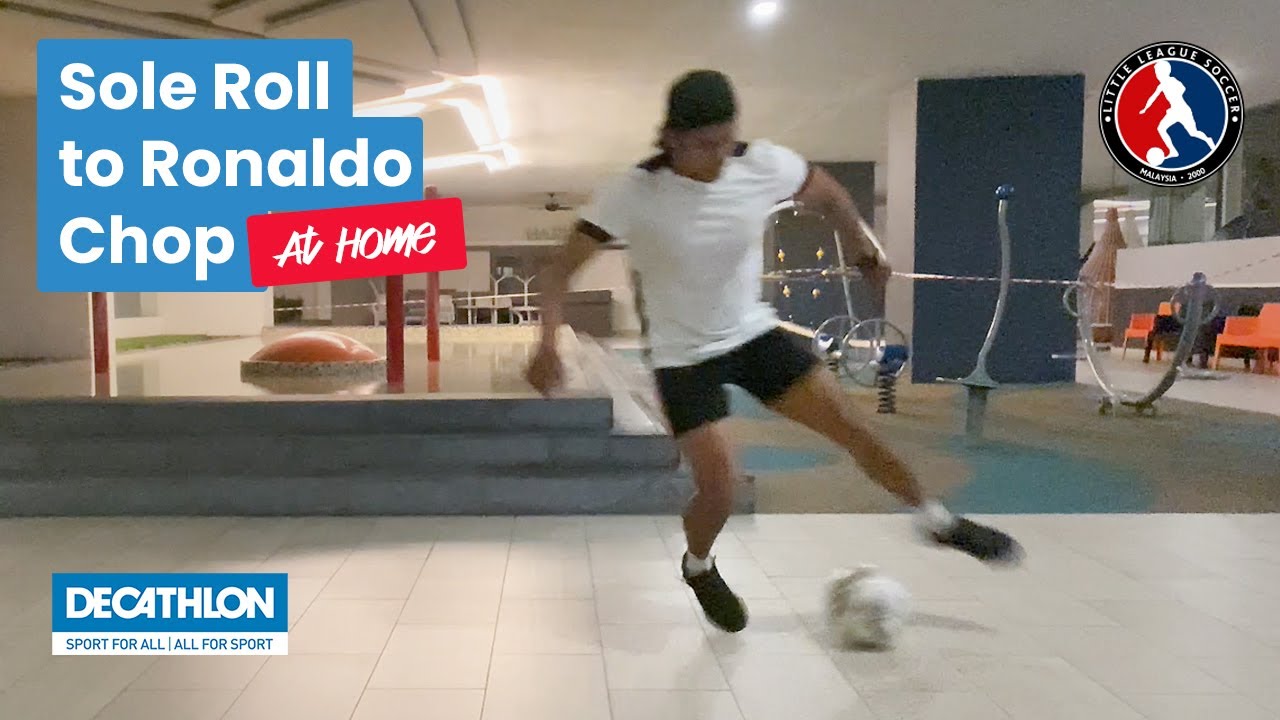 ▶ Watch on YouTube
Sole Roll Chop Turn like Ronaldo! | Little League Essential Skills — by Little League Soccer on YouTube.
**: Players dribble freely in a grid; when tagged, they stop the ball with their sole and start again. No elimination — just constant moving. - **
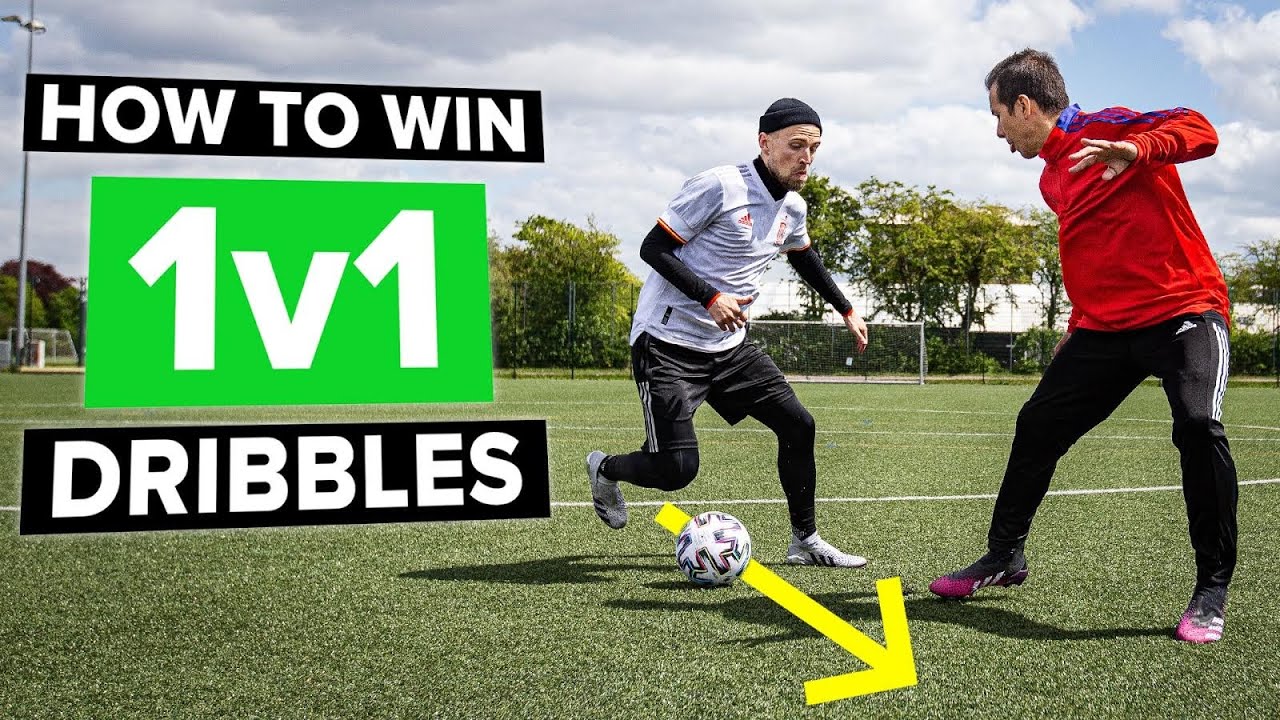 ▶ Watch on YouTube
How to win 1v1 situations | dribble the defender — by Unisport on YouTube.
: Cones set up as targets across a 20-yard grid. Players dribble and touch each cone. Use both feet. - Cues: “Show me the bottom of your shoe on top of the ball.” “Try it with your other foot.” - Duration: 5–7 minutes per activity. Change the game, not the concept. - Advance when: Players can move in multiple directions without stopping to look at the ball.
Stage 2 — 1v1 Attacking (U7–U8)
Dribbling under light pressure. Simple feints and changes of direction with the inside and outside of both feet.
- **
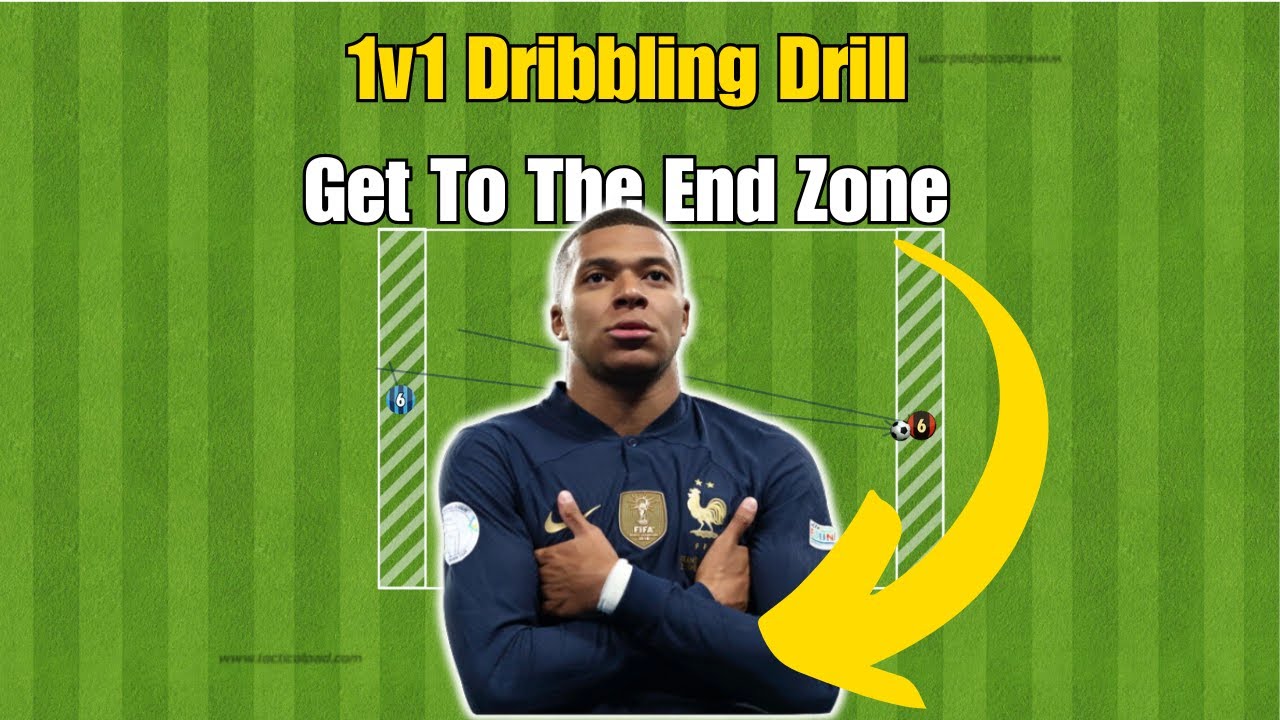 ▶ Watch on YouTube
1v1 Dribbling Soccer/Football Drill | Get To The End Zone ⚽️ — by Soccer Source Coaching on YouTube.
**: Small grid (10×15 yd). Attacker scores by dribbling over the far end line. Defender tries to win the ball. Keep it short — 45 seconds, then rotate. - **
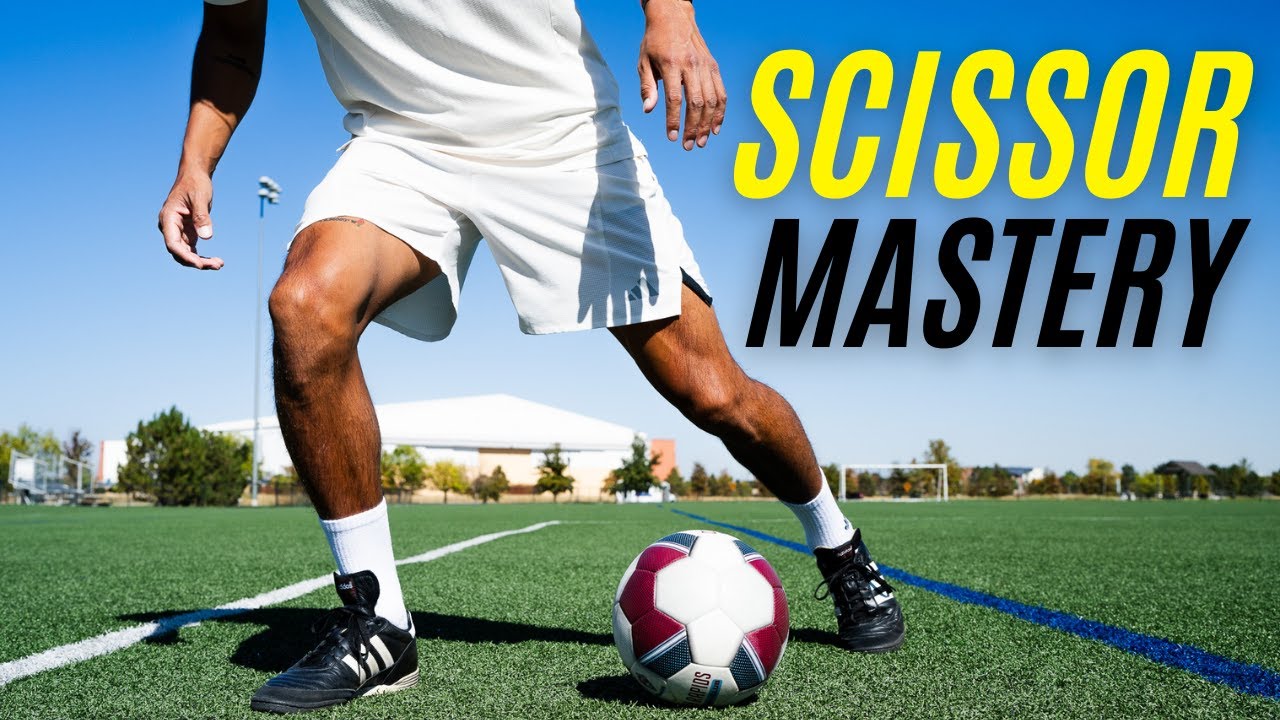 ▶ Watch on YouTube
How to Do the Scissors in Soccer: The ONLY Guide You Need — by LB Performance on YouTube.
: Teach the scissors feint with a stationary partner before introducing it in a live 1v1. Cue: “Step over, look at their feet, go the other way.” - Advance when: Players attempt a change of direction under pressure (even if it doesn’t succeed) and use their weaker foot at least occasionally without being prompted.
Stage 3 — Ball Control and Short Passing Introduction (U8)
First touch with the inside of the foot, sole control, and the push pass over short distances. US Soccer’s PDI explicitly sequences this after solid individual technique is in place.
- **
 ▶ Watch on YouTube
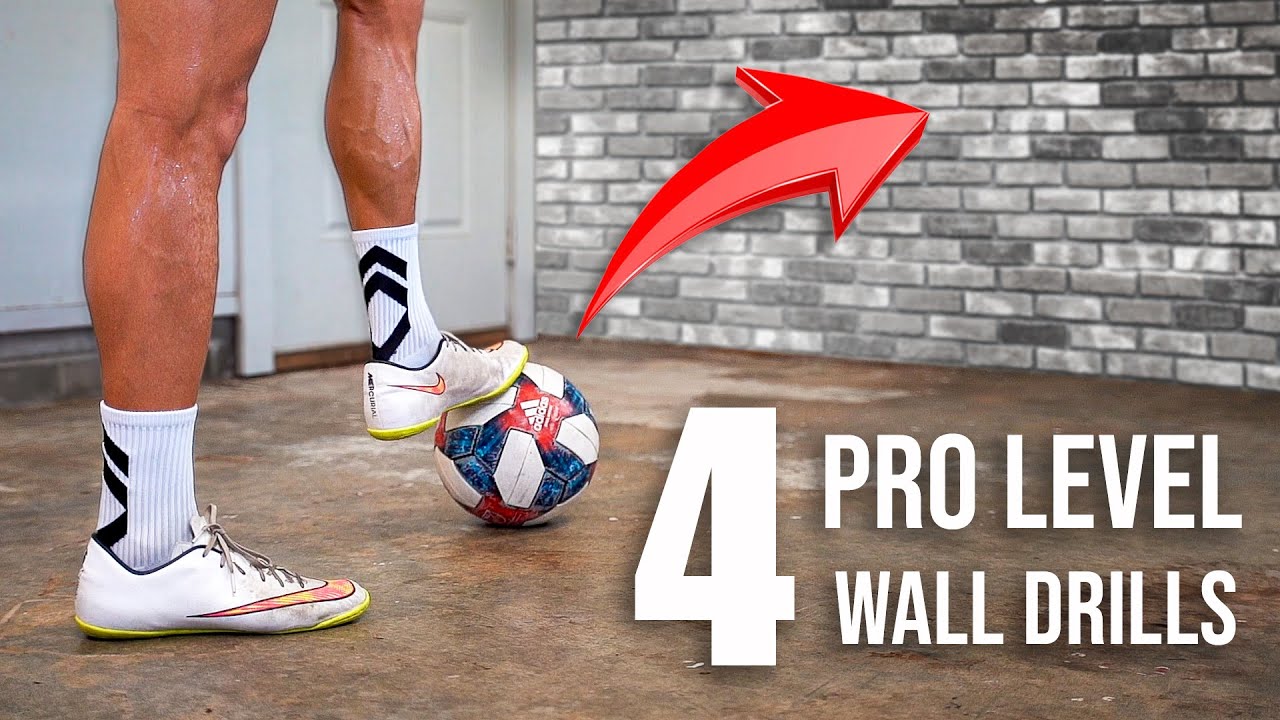
Professional Level Wall Passing and First Touch Drills | VERY DIFFICULT — by Become Elite on YouTube.
: Player passes against a wall (or rebounder) and controls the return. Cue: “Soft foot to receive — let the ball come to you.” - **
 ▶ Watch on YouTube
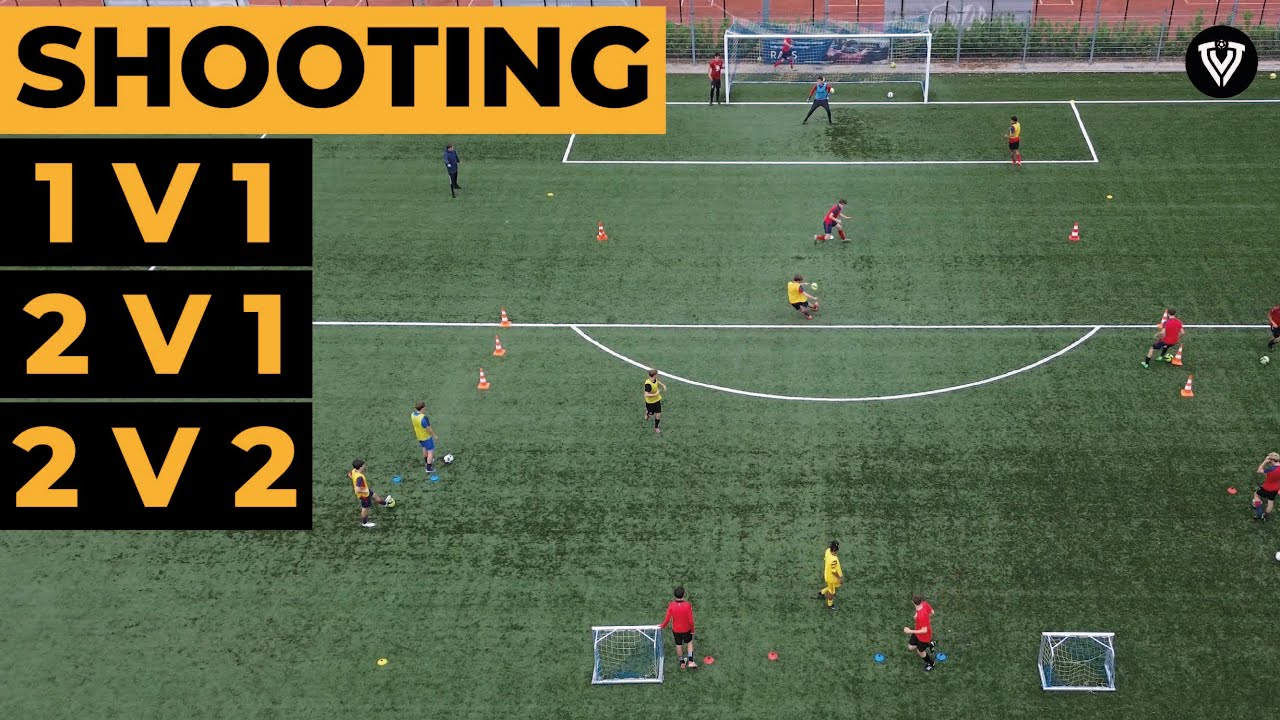
Fun Finishing Games | Shooting - 1V1 - 2V1 - 2V2 | Soccer Drills - Football Exercises — by Coach Thomas Vlaminck on YouTube.
**: 2v2 on a 20×15 yd grid. Bonus point for a completed pass before scoring. Teaches why passing can be useful without drilling it abstractly. - Advance when: Players can receive a rolling ball cleanly with the inside of the foot and play a push pass on target 3 out of 5 attempts.
Stage 4 — Combine Individual and Support Play (U9)
Scanning before receiving (looking around), opening the body on the first touch, and the simple give-and-go. Instep shooting introduced from close range.
- **
 ▶ Watch on YouTube
Soccer Drills for Kids to Teach Aggression (Intensity & Effort) — by Progressive Soccer on YouTube.
: Servers play balls to a central player who must check their shoulder, control with an open body, and play forward. Cue: “Check your shoulder before it arrives. Where’s the space?” - **
 ▶ Watch on YouTube
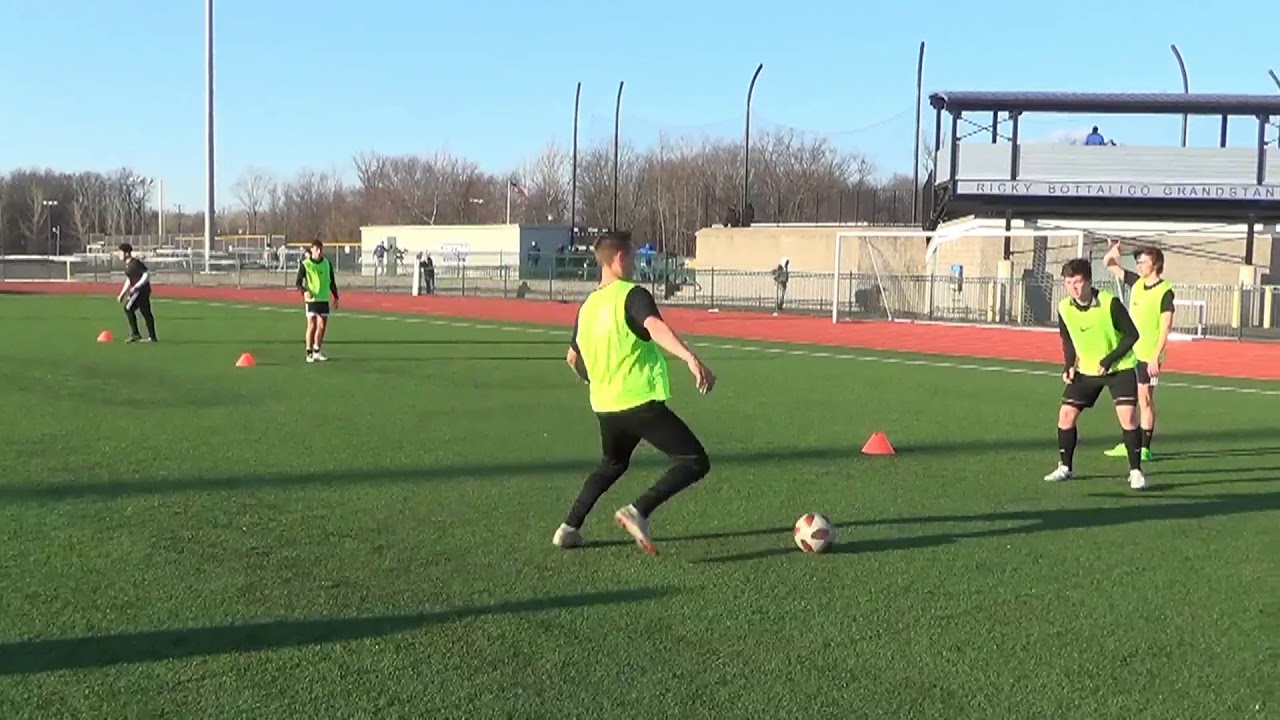
SoccerCoachTV.com - Belgium Give and Go Passing Drill. — by SoccerCoachTV on YouTube.
**: Two players, no defender. Player A passes to B, overlaps, receives the return. Do it walking first, then at pace. - **
 ▶ Watch on YouTube
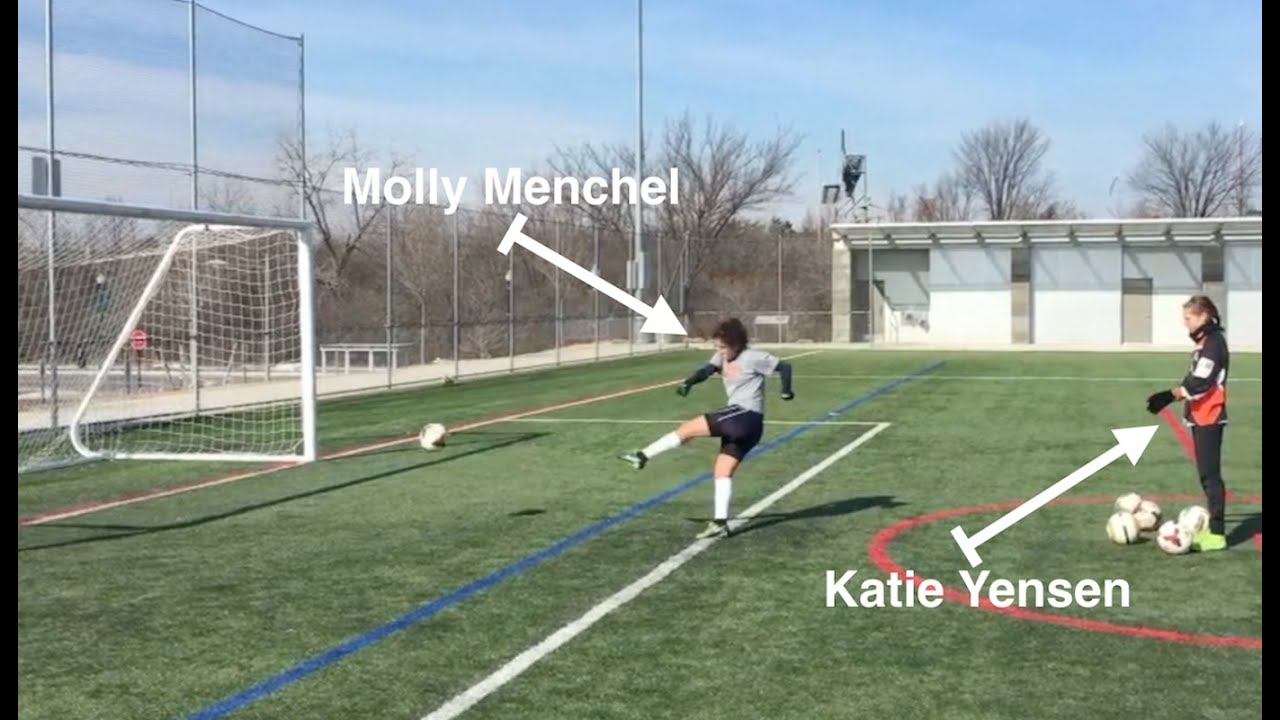
Train Like the Pros | Close-Range Soccer Finishing — by Yael Averbuch West on YouTube.
: Ball played across from the side of the goal, 5–8 yards out. Instep drive on goal. Cue: “Toe down, laces through, follow through to the target.” - Advance when: Player scans before receiving consistently and attempts a wall pass in a live game.
Stage 5 — Defending Awareness (U9)
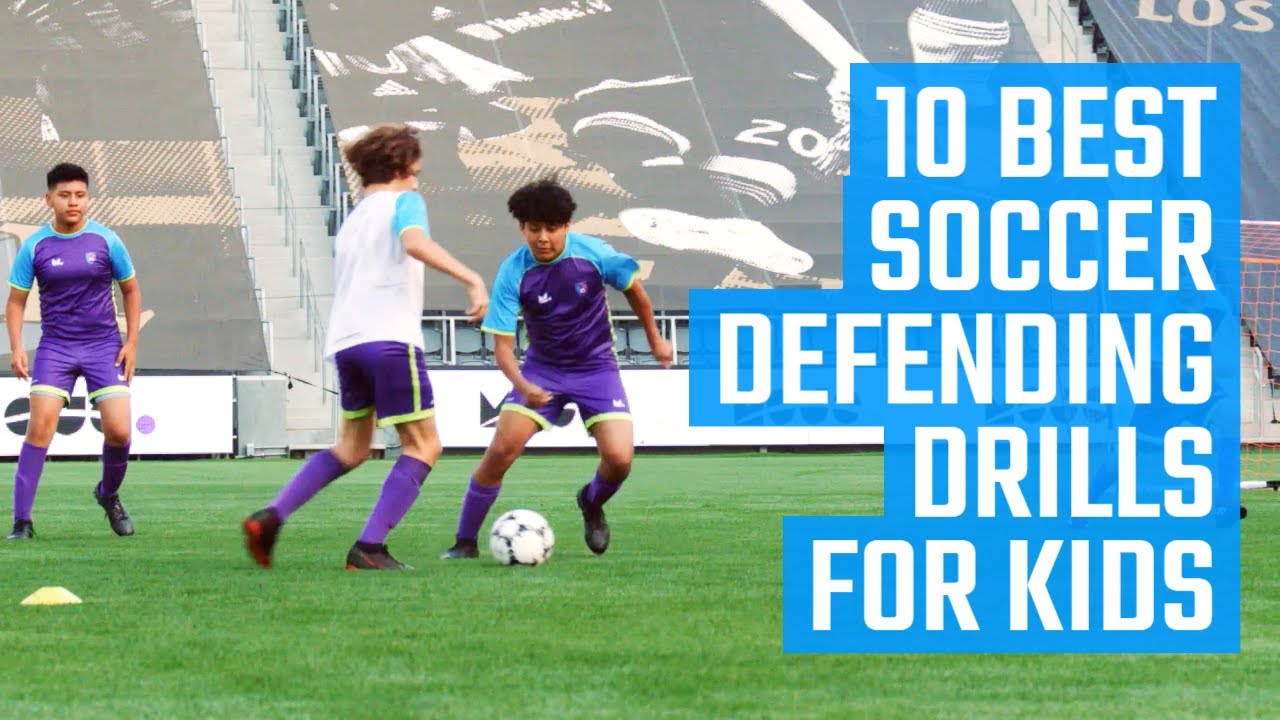
Frame this as “winning the ball back” rather than a defensive lecture. 1v1 closing and 2v2 compactness.
- **
 ▶ Watch on YouTube
10 Best Soccer Defending Drills for Kids | Youth Soccer Defense Drills | Fun Soccer Drills by MOJO — by yougotmojo on YouTube.
: Defender mirrors the attacker’s movement across a 10-yard channel without making contact. Cue: “Stay between them and the goal. Stay on your feet.” - Advance when: Defender slows the attacker, forces a direction, and doesn’t lunge on first contact.
Suggested program / schedule
The US Soccer PDI and LTAD guidance point to 1–2 sessions per week plus one game as appropriate volume at this age. Here’s a workable 60-minute session template for U8:
| Segment | Activity | Time |
|---|---|---|
| Arrival / free dribble | Players dribble freely as others arrive | 5 min |
| Warm-up game | Dribble tag, both feet required | 8 min |
| Ball mastery block | Sole rolls, inside/outside touches, L-turns — self-paced in grid | 7 min |
| Skill focus | Stage-appropriate drill (e.g., 1v1 end-zone game) | 12 min |
| Small-sided game | 4v4, no GK, no offside, minimal coaching during play | 20 min |
| Cool-down / chat | Seated, coach asks 1–2 questions (“What move did you try?”) | 5 min |
| Water breaks | Minimum every 15–20 minutes in warm weather | — |
For game day (U7–U8): Four 10-minute periods, 4v4, no goalkeeper, Size 3 ball, 25–35 yd × 15–25 yd field. For U9: Two 25-minute halves, 7v7 with a goalkeeper, Size 4 ball, 55–65 yd × 35–45 yd field.
Mistakes to avoid
- Running 9v9 or 11v11 at U7–U9. Every extra player means fewer touches and fewer decisions per kid. The US Soccer PDI sets these formats for a reason — ignore them and you’re training spectators.
- Using a Size 4 or Size 5 ball with U7–U8 players. The wrong ball weight hurts technical development and stresses developing joints. Size 3 through U8; Size 4 at U9.
- Coaching non-stop during game flow. Small-sided games teach through problem-solving. Interrupting every 30 seconds removes the exact mechanism that makes them valuable. Coach during natural stoppages only.
- Prioritizing team tactics and formations. The US Soccer Player Development Framework is explicit: skill before tactics. Tactical frameworks don’t fit this age and crowd out the technical development window.
- Locking one child in as goalkeeper at U7–U9. A child stuck in goal misses the ball-contact repetitions that define this phase. Rotate everyone through all roles and positions.
- Training one foot only. A dominant-foot habit formed by age 7 is hard to reverse after age 12. Two-footed training is non-negotiable from day one.
- Allowing heading, even “just to introduce technique.” US Soccer’s 2015 policy bans heading in training and games for all players 10 and under — that covers every age in this group. Coaches must enforce this, not work around it.
- Year-round single-sport specialization. Multi-sport participation is specifically encouraged at this age, both for movement skill development and as a protection against overuse injury and burnout.
When to advance
Move a player toward the next stage’s material when they show these observable markers — not just when the calendar says so:
- Ball mastery: Can dribble in multiple directions for 30 seconds using inside, outside, and sole of both feet without watching the ball.
- Stage 2 → 3: Attempts directional change under defensive pressure and uses the weaker foot unprompted in a game.
- Stage 3 → 4: Receives a rolling ball cleanly 3 of 5 attempts and completes a push pass on target to a moving partner.
- Stage 4 → 5: Scans before receiving consistently in game play and has attempted a give-and-go in a live small-sided game.
- Overall: Completes a stage for a minimum of 3 sessions with clean mechanics before introducing the next layer. Never advance based on outcomes (goals scored, games won) — evaluate movement quality and decision-making.
Further reading
- Ball Mastery Foundations
- Small Sided Game Design
- Motor Learning Windows Youth
 ▶ Watch on YouTube
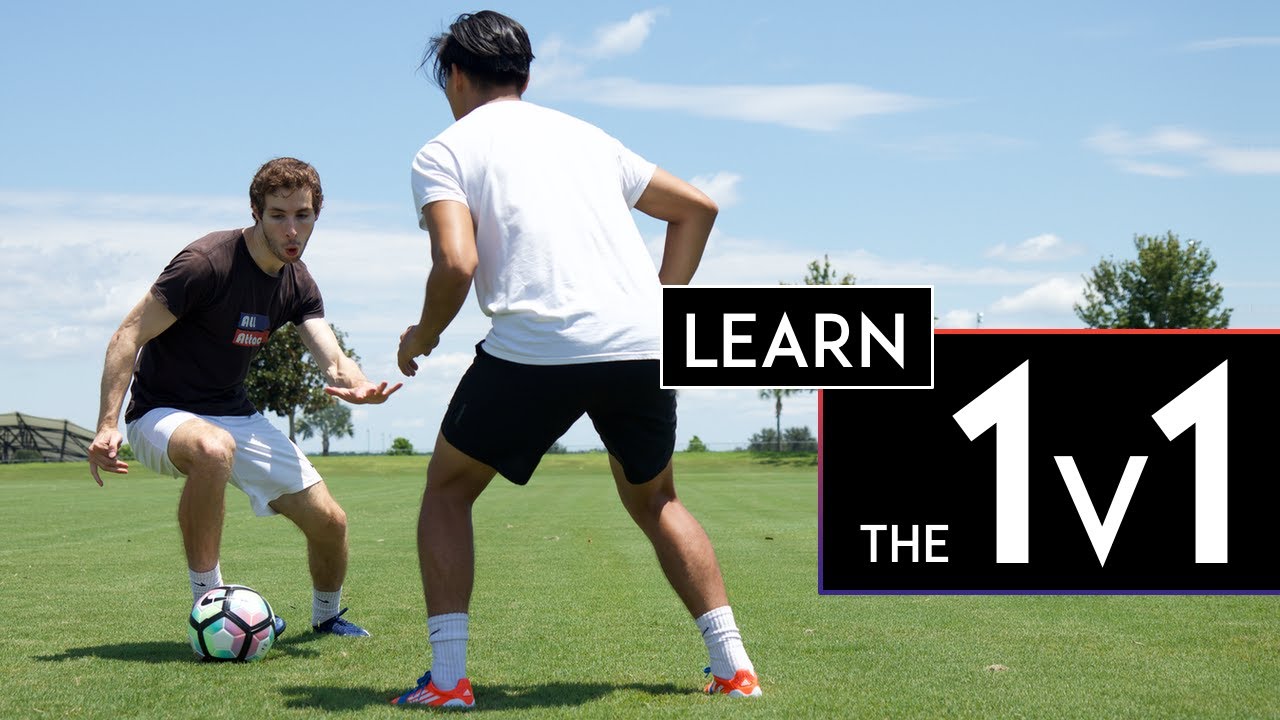
How To Beat EVERY Defender 1v1 — by AllAttack on YouTube.
- Multi Sport Development Youth
Sources
- US Soccer Player Development Initiatives (PDI) — October 2017 Official Document — governing-body — https://static.ussdcc.com/users/148963/897090_eng-october2017pdi.pdf
- US Soccer Player Development Framework — Age Group Learning Plans (2023) — governing-body — https://bigwalnutsoccer.com/wp-content/uploads/2025/03/us-soccer-player-development-framework-age-group-learning-plans.pdf
- Small-Sided Games: A New Reality — US Youth Soccer — governing-body — https://www.usyouthsoccer.org/wp-content/uploads/sites/160/2023/09/Small-Sided-Games-A-New-Reality.pdf
- Player Development Initiatives 2017 — US Youth Soccer Implementation Guide — governing-body — https://www.usyouthsoccer.org/wp-content/uploads/sites/160/2023/09/Player-Development-Initiatives-2017.pdf
- Effects of small-sided games and dribbling circuit training on physical and technical skills in youth soccer players — peer-reviewed — https://pubmed.ncbi.nlm.nih.gov/41381777/
- The effectiveness of differential learning in small-sided soccer games for skill development in U20 amateur male players — peer-reviewed — https://pubmed.ncbi.nlm.nih.gov/41668942/
- Small Sided Games | Coaching American Soccer — practitioner — https://coachingamericansoccer.com/tactics-and-teamwork/soccer-small-sided-games/