
Step First, Dive Last: A Complete Guide to Youth Soccer Goalkeeping at Ages 12–16
The window between ages 12 and 16 is when a goalkeeper either builds the habits that carry them to their ceiling — or cements the ones that quietly cap it. Bodies are changing fast, decision-making is finally sophisticated enough to handle real tactical demands, and the modern game is…
Step First, Dive Last: A Complete Guide to Youth Soccer Goalkeeping at Ages 12–16
The window between ages 12 and 16 is when a goalkeeper either builds the habits that carry them to their ceiling — or cements the ones that quietly cap it. Bodies are changing fast, decision-making is finally sophisticated enough to handle real tactical demands, and the modern game is asking more of keepers than at any point in the sport’s history. This guide is for the coaches and parents working with those keepers right now.
Why This Matters at This Age
Goalkeeping at 12–16 sits at a genuine developmental crossroads. According to the Long-Term Athlete Development (LTAD) Methodology, this is the “Train to Train” stage — roughly ages 11 to 16 — when the body is highly responsive to speed, agility, and sport-specific skill training. The habits that form here become the default settings a keeper carries into adulthood.
At the same time, early puberty creates real complications. Two 13-year-olds can differ by two to three years of biological maturity, producing performance gaps that have nothing to do with talent. Rapid growth spurts can temporarily disrupt motor coordination — what LTAD literature calls “adolescent awkwardness” — and coaches who don’t understand this risk mislabeling a growing keeper as low-potential when they’re actually in a transient regression.
The FA and UEFA frame ages 12–16 as the “Youth Development Phase,” where the emphasis shifts from pure technique acquisition toward principles of play and decision-making under pressure. That’s not a reason to skip fundamentals — it’s a reason to build them fast and then put them under realistic challenge.
And the game itself has changed what it demands from the position. The UEFA Goalkeeper Coaching Manual frames the keeper as a team function in both attacking and defending phases. A keeper who can only stop shots is already behind the curve.
Core Concepts
Ready (set) stance Ready Stance Goalkeeper: feet shoulder-width apart, weight forward on the balls of the feet, knees soft, hands at hip height in front of the body. This position must be fully reset before every shot or new action. A keeper who drifts out of it between actions is gambling.
Set position: the keeper must be balanced and still at the moment the shot is struck. A moving keeper is a beaten keeper. Footwork exists to deliver the keeper to a set position — not to carry them through the save.
Hand shape W Catch And Scoop Catch: the W-catch (also called contour catch) is used for balls above the waist — thumbs close together behind the ball, not spread and stabbed outward. The basket/scoop catch is for ground balls. Both finishes bring the ball to the chest to kill rebounds. Barca Residency Academy USA notes that rebounds directly increase opponents’ scoring chances, so technique here has a measurable match-outcome effect.
Footwork Goalkeeper Footwork: small, quick lateral shuffle steps — not crossovers — to stay square to the ball. The first movement to any ball is always a step toward it. Not a lunge, not a collapse sideways.
Angle play and arc positioning Angle Play Arc: rather than parked on the goal line, the keeper moves forward along an imaginary arc between the posts relative to the ball. Correct arc positioning makes shots to corners smaller and saves more reachable without requiring a dive.
Diving technique Diving Technique Goalkeeper: lead with the hand closest to the ball, land on the side of the body. Not flat on the back. Not on an outstretched wrist. Diving is a last resort — after all step-save options have been exhausted. US Youth Soccer specifically flags the outside-of-hip as a documented injury site for 12–16 year olds who use the hip as a landing platform on dives.
Sweeper-keeper role Sweeper Keeper: reading balls played in behind the defensive line and stepping out to clear them. Requires positioning sense, communication with defenders, and the composure to hold when the ball isn’t truly in behind.
Playing out from the back: receiving back-passes with the feet, staying composed under pressure, distributing to fullbacks or switching play. FootballGPT, drawing on FA framework guidance, recommends approximately a 50/50 hands-to-feet training split for this age group. Neglecting foot skills is no longer optional.
Progression
Stage 1 — Foundation (U10/U12 prerequisite)
Before any of the 12+ work applies, the following must already be clean habits: ready stance, W-catch, scoop catch, basic set position, lateral shuffle, and rudimentary angle play. If these aren’t solid, start here regardless of age.
Stage 2 — Entry 12+: Technique Consolidation Under Light Pressure
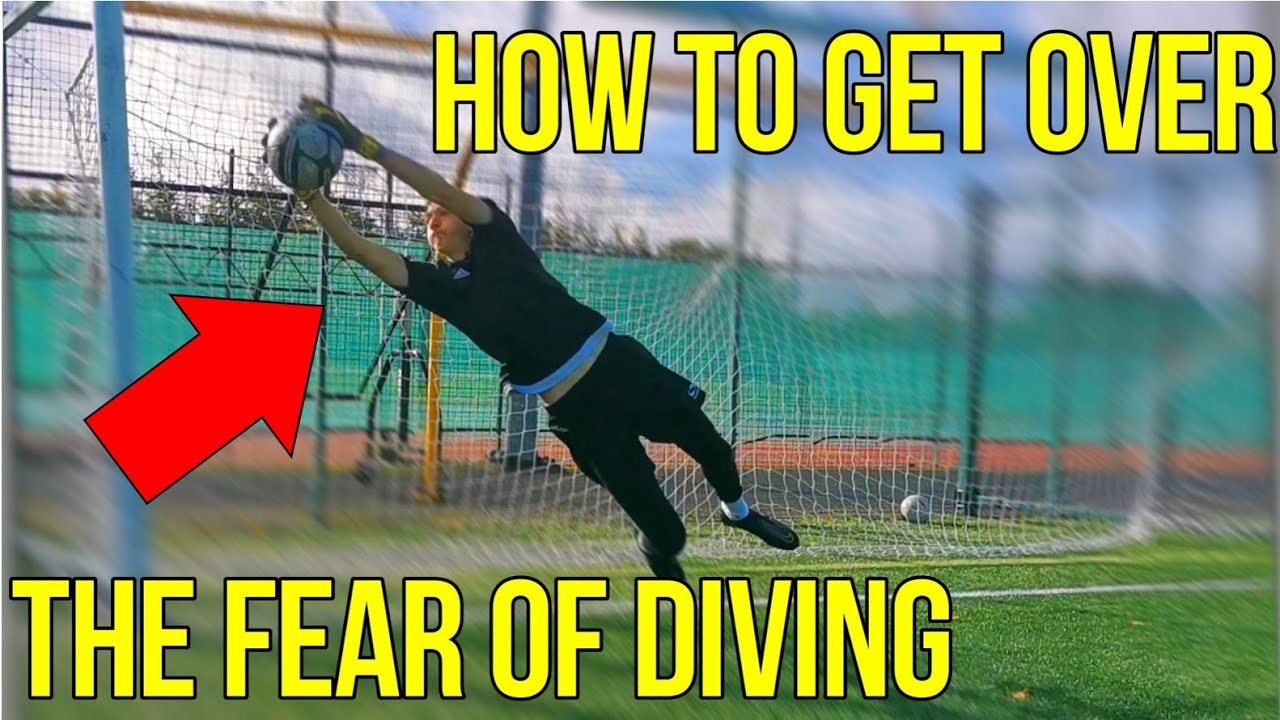
- Dive to the side
 ▶ Watch on YouTube
How To Get Over The Fear Of Diving For Goalkeepers - Goalkeeper Tips and Drills - Dive Tutorial — by OP1GK on YouTube.
Begin stationary on a soft surface or grass. Fall sideways from a crouch, leading with the hand, landing on the side of the hip and ribs — never on a wrist or the back. Reps: 5 each side, slow and deliberate. Advance when the landing is consistently on the body’s side with no arm bracing. - Shuffle-and-set footwork
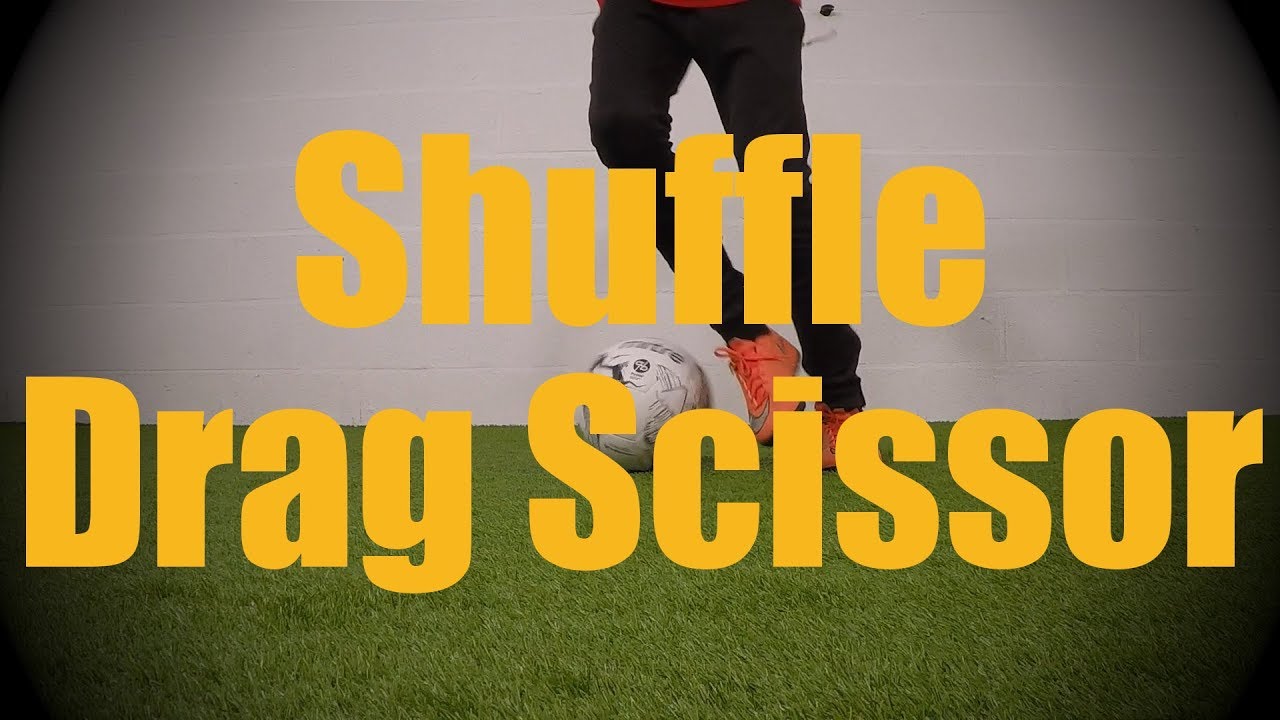 ▶ Watch on YouTube
Shuffle Drag Scissor - Fast Footwork Drills - Soccer Coerver Training for U12-U13 — by Ultimate Soccer Moves Collection on YouTube.
Keeper shuffles laterally between two cones 4–5 meters apart, must achieve a still, balanced ready position before a coach delivers a served ball. Cue: “Set before it’s struck.” 3 sets of 6 reps. - Cone-arc positioning walk-through
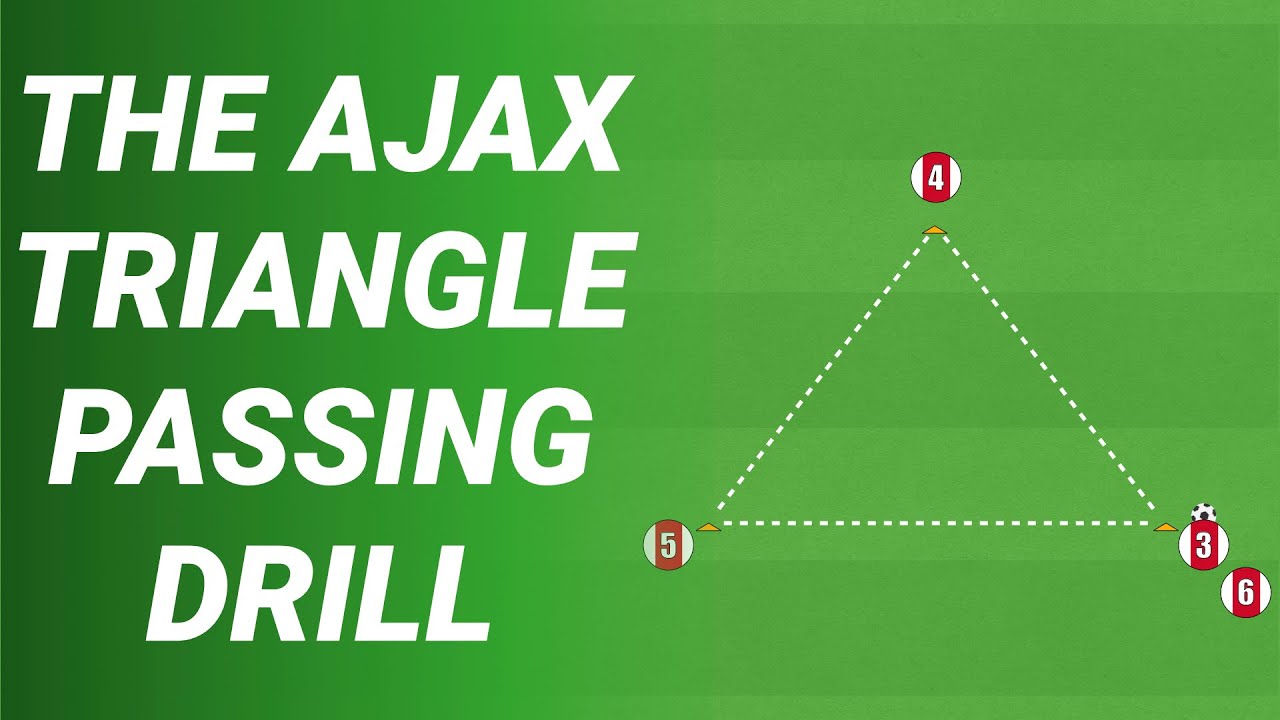 ▶ Watch on YouTube
The Ajax Triangle Passing Drill | Football/Soccer — by Onside - Training on YouTube.
Place cones on the arc for three ball positions (central, wide left, wide right). Keeper walks to correct arc position for each, holds the set position. Low-speed service follows. No pressure yet. - Roll-and-javelin distribution: Short-range underarm roll for accuracy; javelin throw for medium range. Focus on footwork and release mechanics before distance. 10 reps each.
Stage 3 — Building: Technique Under Moderate Game-Realistic Pressure
- Shot-stopping combinations
▶ Watch on YouTube
The Ajax Triangle Passing Drill | Football/Soccer — by Onside - Training on YouTube.
Keeper makes a save, returns immediately to set position, faces a second delivery. Cue: “Save — up — set.” This is where recovery speed becomes habitual. - Cross-claiming with passive then active striker: Start with a server and no pressure. Keeper calls “KEEPER!” clearly and claims at the highest point with two hands. Progress to a passive striker in the box, then a lightly active one. The decision rule: claim when you have space and position; punch with two fists when contact is contested or risky. - Back-pass receiving under proximity pressure: A defender plays a firm back-pass; keeper receives with the foot and distributes under a coach or mannequin creating light pressure. Cue: “Keeper’s feet — first touch away from pressure.”
Stage 4 — Applied: Realistic Match Pressure
- Full shot-stopping sequences from varied service, requiring both footwork-to-set and reaction saves.
- Cross decisions — claim or punch — with competitive strikers in the box. The decision must be made and committed to before contact.
- Distribution decisions under pressure: when to go short to a fullback vs. switching play long. Build the habit around reading where the press is coming from.
- Verbal organization in small-sided games: the keeper calls defensive shape, calls “KEEPER!” on crosses, gives “early” or “hold” cues to defenders. Communication is a drill condition here, not an afterthought.
Stage 5 — Integrating (14+ / Train to Compete transition)
- Set-piece wall organization, sweeper-keeper reads in 7v7 or 9v9 contexts, post-to-post movement in combination with the defensive line, and full playing-out-from-the-back sequences under a high press. The keeper functions as the first attacker in build-up — the UEFA Goalkeeper Coaching Manual identifies direct and possession-based distribution as required capabilities at this level.
Suggested Weekly Program
This is a starting point for a keeper receiving 2–3 dedicated GK sessions per week alongside regular team training.
| Day | Focus | Content |
|---|---|---|
| Session 1 | Technique + footwork | Warm-up: arc positioning walk-through (5 min). Shuffle-and-set footwork drill (3×6). W-catch and scoop catch repetition with varied service (10 min). Side-landing dive progression on grass (5 each side). |
| Session 2 | Decision-making + distribution | Back-pass receiving and distribution (10 min). Cross-claiming progression — passive to active striker (15 min). Short game: 4v4 or 5v5 where keeper must use feet on every back-pass. |
| Session 3 | Match pressure + communication | Shot-stopping combinations (block + recovery, 3 sets). Cross decisions in open box (competitive). Sweeper-keeper reads with defensive line. Communication emphasized throughout — keeper must organize defenders verbally. |
Rotate field-player time into at least some sessions. US Youth Soccer explicitly states that players through U14 should not specialize in any single position; exposure to outfield play builds spatial awareness and ball skills that make the keeper better.
Mistakes to Avoid
- Diving as the first movement. Young keepers collapse sideways before taking any step toward the ball. Every session, reinforce: step first, dive last. The step-save is always the goal; diving is the backup.
- Not being set when the shot is struck. A keeper still moving laterally when the ball is hit cannot transfer power into a reaction save. Footwork’s job is to deliver the keeper to stillness before the shot arrives, not to carry them through it.
- Flat-back and outstretched-arm landings. This is how wrist, elbow, and back injuries happen — and it commonly develops when diving is first learned on hard indoor surfaces without proper progression. Start on grass or mats. Always.
- Stabbing at high balls with stiff fingers. The W-catch requires thumbs close together behind the ball, forming a window. Spread, rigid fingers lead to hyperextensions. Check this habit every session.
- Claiming every cross. At 12+, keepers can overcommit out of eagerness. Teach the rule explicitly: confident position and space equals claim; contested contact equals two-fisted punch.
- Staying glued to the goal line. Parking on the line rather than stepping out to cut angles is one of the highest-cost positional habits in youth goalkeeping. The Youth Soccer Goalkeeper Drills guide from Veo identifies ready position and footwork as the two highest-leverage habits to build — angle play is inseparable from both.
- Silence during play. Quiet keepers create confusion. Communication doesn’t emerge naturally — it must be coached deliberately, made a drill condition, and rewarded during training.
- Panicking on back-passes. A keeper who hasn’t practiced receiving the ball with their feet will hoof it under pressure. Foot skills must be trained as intentionally as shot-stopping. The 50/50 hands/feet split isn’t a suggestion to minimize handling — it’s a mandate to elevate the other half.
When to Advance
Move a keeper from Stage 2 to Stage 3 when they can: - Consistently land on the side of the body (hip and ribs, not wrist or back) for 5 of 5 dives at slow service speed - Reset to a balanced set position before each served ball across a full 6-rep footwork set, without prompting - Demonstrate correct arc positioning for three ball locations without guidance
Move from Stage 3 to Stage 4 when they can: - Complete block-and-recovery combinations (save + reset + second save) for 3 sets with clean mechanics at moderate service speed - Make and commit to a claim-or-punch decision on crosses with a passive striker present — no hesitation, no adjustment mid-flight - Receive a back-pass under proximity pressure and distribute cleanly in 4 of 5 reps
Move from Stage 4 to Stage 5 (typically 14+) when they can: - Organize defenders verbally in small-sided games without being prompted - Make distribution decisions based on the press shape — not just serving the nearest player - Demonstrate sweeper-keeper positioning reads in semi-structured play
Note: biological maturity matters more than age. As LTAD methodology makes clear, a 13-year-old who is developmentally 15 and a 15-year-old going through a PHV growth spurt require different demands. Adjust accordingly.
A Note on Concussions and Medical Concerns
If your keeper takes a head impact, follow your governing body’s concussion protocol and consult a qualified medical professional immediately. If a keeper reports joint pain around a growth area during a growth spurt, reduce volume and defer to a sports medicine physician. These decisions are not coaching calls.
Further Reading
- Angle Play Arc — How arc positioning works and how to teach it with cones
- Stretch Shortening Cycle — Why explosive lateral footwork is trainable at this age
- Peak Height Velocity — Managing technique regression during puberty growth spurts
- Block And Recovery Sequence — Full breakdown of combination save training
 ▶ Watch on YouTube
First Sound: Progressions and the Y-Cross (Jared Goff) — by Inside the Pylon on YouTube.
— Step-by-step from solo claiming to contested situations
Sources
- Lifetime Development of a Goalkeeper — US Youth Soccer (governing body) — https://www.usyouthsoccer.org/wp-content/uploads/sites/160/2023/09/Lifetime-Development-of-a-Goalkeeper.pdf
- UEFA Goalkeeper Coaching Manual — UEFA (governing body) — https://editorial.uefa.com/resources/0285-190a81f7e091-323e8bfbc968-1000/uefa_goalkeeper_coaching_en.pdf
- Youth Soccer Goalkeeper Drills: A Coaching Guide — Frederik Hvillum, Veo (practitioner) — https://www.veo.com/en-us/article/soccer-goalkeeper-training-youth
- Long-Term Athlete Development: Trainability in Youth Sport — Istvan Balyi / US Youth Soccer / USOC (academic) — https://mostblessedsacramentschool.com/app/uploads/2021/04/LTAD-Methodology.pdf
- Modern Goalkeeper Training: Drills for Distribution and Defence — FootballGPT, FA-framework-aligned (practitioner) — https://footballgpt.co/guides/modern-goalkeeper-training-drills-for-distribution-defence
- 7 Essential Skills for a Youth Soccer Goalkeeper — Barca Residency Academy USA (practitioner) — https://barcaresidencyacademyusa.com/7-essential-skills-for-a-youth-soccer-goalkeeper