
The 4v4 Revolution: How to Run U8/U9 Soccer Practice the Right Way
At ages 7–9, the single best thing you can do for your players' development is also the simplest: get them a ball, shrink the field, and let the game teach. US Soccer's framework for this age group isn't built on complicated tactics or coach-led drills — it's built on maximizing the…
The 4v4 Revolution: How to Run U8/U9 Soccer Practice the Right Way
At ages 7–9, the single best thing you can do for your players’ development is also the simplest: get them a ball, shrink the field, and let the game teach. US Soccer’s framework for this age group isn’t built on complicated tactics or coach-led drills — it’s built on maximizing the moments each child spends solving real soccer problems. Here’s how to put that into practice every session.
Why this matters at this age
The research case for rethinking how we coach 7–9 year olds is surprisingly concrete. The Why Small-Sided Games for American Soccer? report by US Youth Soccer cites a Manchester Metropolitan University comparison of 4v4 versus 8v8 formats: smaller-sided play generated 135% more passes, 260% more shots, and 500% more goals. Those aren’t small differences — they represent a fundamentally different learning environment.
Players in this age window are in what developmental psychologists call the Concrete Operational stage (roughly ages 7–11). The Official US Youth Soccer Coaching Manual describes this as the period when cooperative play first begins to emerge — but egocentric patterns are still very much present. Expecting a 7-year-old to execute a switching-the-field combination isn’t a stretch goal; it’s developmentally inappropriate. What they can do is make real decisions in small, manageable situations.
These are also the “sampling years” per the US Youth Soccer Player Development Model — ages 6–12 when foundational movement skills, basic soccer technique, and above all fun are the development targets. Fun isn’t a secondary concern here. Research cited throughout the US Youth Soccer framework consistently identifies enjoyment as the primary reason kids stay in sport. A session that isn’t enjoyable is a retention problem, not just a vibe problem.
The window is short. Habits around practice structure, coaching behavior, and competitive pressure get established early. Get this age group right and you build players who love the game and keep playing. Get it wrong with line drills, joystick coaching, and premature tactics, and you’ll see kids disappear before they hit U12.
Core concepts
*Game Centered Learning* — Teaching through small-sided games rather than isolated repetitive drills. The US Soccer Player Development Framework puts it simply: the game is the teacher. Players learn decision-making when they’re actually making decisions, not when they’re waiting in a cone-dribble line.
*Constraints Led Approach — Modifying field size, player numbers, rules, or scoring to produce specific behaviors without* stopping play. Want players to switch the ball? Widen the goals. Want combination play? Add small end-zones players must dribble through to score. The environment does the coaching.
*Four Moments Of The Game* — Attacking, defending, transition to attack, and transition to defend. These don’t need to be lectured — they appear naturally in every small-sided game. A coach’s job is to make sure the session design doesn’t accidentally exclude some of them (running only attacking drills is the most common failure).
*Maximize Ball Contacts — Every player should have a ball during warm-up and most technical work. No waiting in lines. The Why Small-Sided Games* report’s U10 touch study found that 4v4 generated over 205 touches per player in 48 minutes, compared to dramatically fewer in larger formats.
*Coaching To The Play* — Watching, asking questions, and using freeze-frames sparingly rather than narrating every decision. The US Soccer Player Development Framework specifically calls out “guided discovery over direct instruction” — asking “What did you see before you received the ball?” instead of shouting “Turn! Pass! Shoot!”
Progression
Stage 1 — Arrival and Free Play (5 minutes)
Players arrive and play freely with a ball. The coach watches and does not step in. This isn’t wasted time — the US Soccer PDI and US Youth Soccer both identify unstructured, choice-rich play as a genuine development tool and a powerful motivation signal. Let them mess around.
Stage 2 — Warm-Up With a Ball (8–10 minutes)
Every player has their own ball. No static stretching, no lines. Good options: dribbling at speed through a defined grid, 1v1 tag games where the defender tries to kick the ball away while the attacker protects it, or skill challenges framed as questions (“Can you do three toe-taps and then accelerate?”). The US Soccer Player Development Framework describes this as “deliberate play with the ball.” The coach circulates and gives brief, positive, specific feedback.
Stage 3 — Small-Sided Activity / Theme Introduction (12–15 minutes)
A focused
 ▶ Watch on YouTube
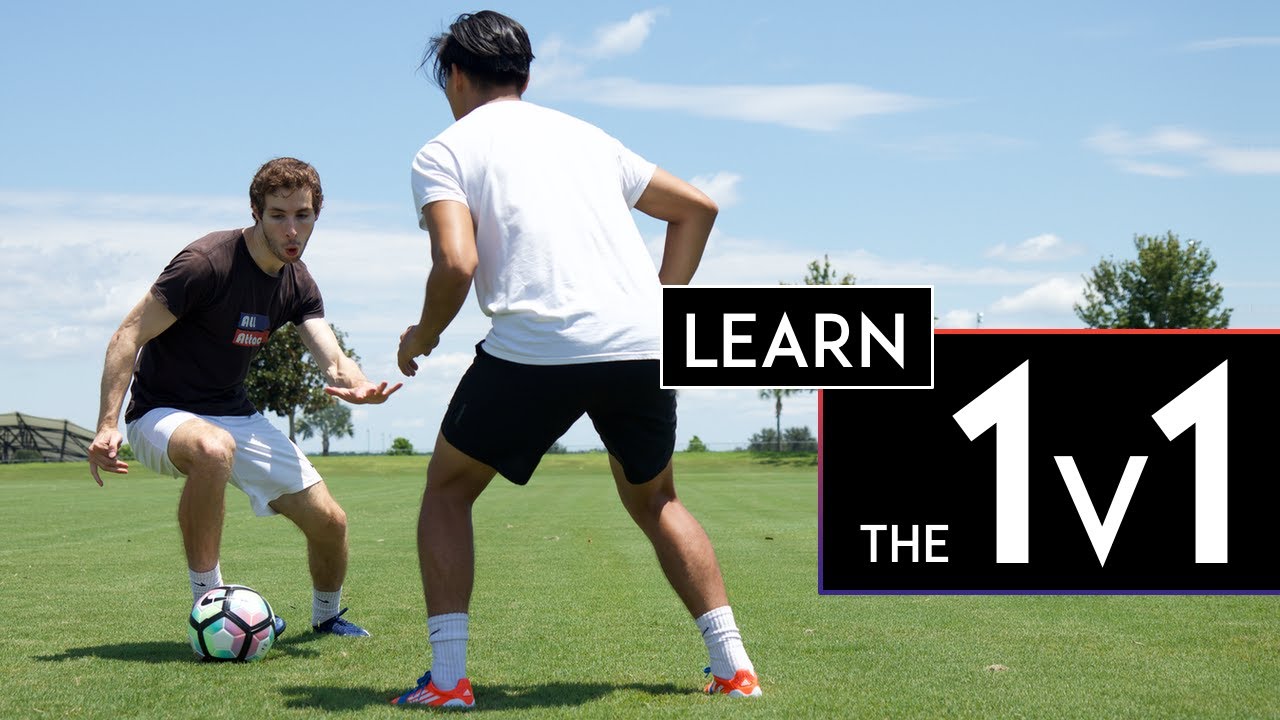
How To Beat EVERY Defender 1v1 — by AllAttack on YouTube.
or
 ▶ Watch on YouTube
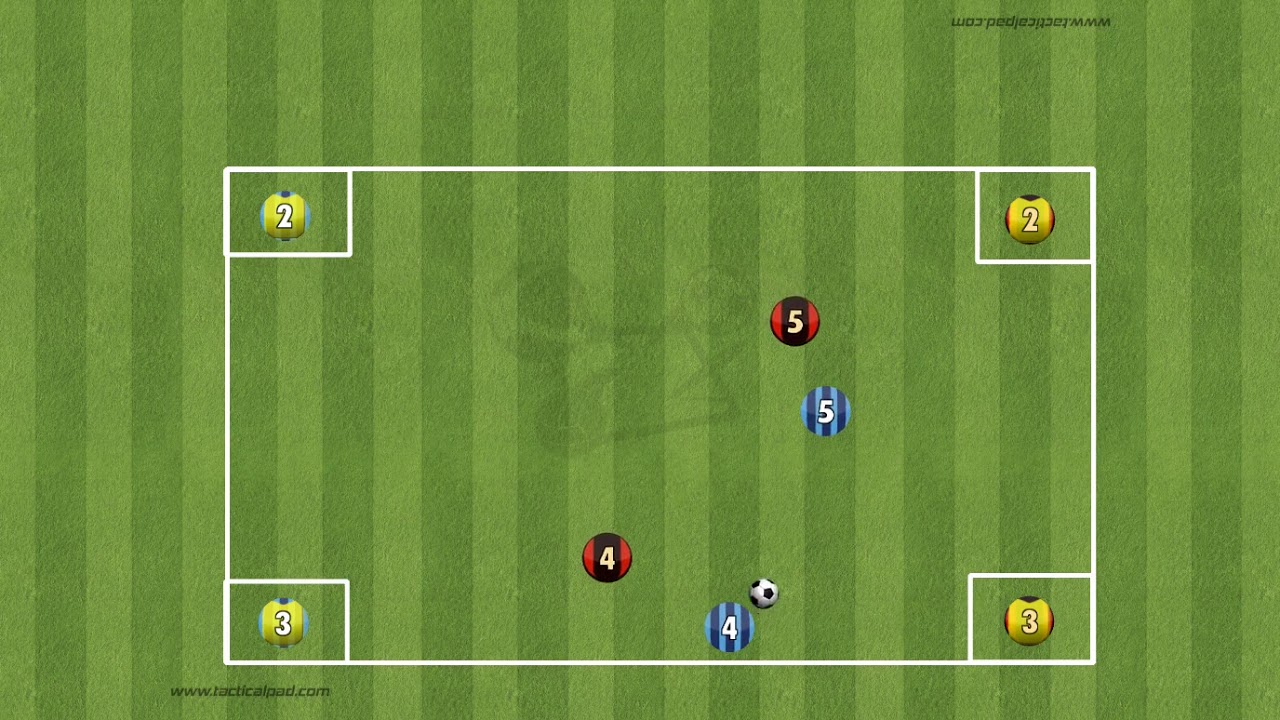
Easy Soccer Drill - Passing and receiving 2v2 - 4 corners — by Easy Footy Drills on YouTube.
activity that targets the session’s technical theme. Field is small. Coach adjusts constraints — tighten the space to encourage quick first touch, add a rule that only a dribble past the defender scores — rather than stopping play to lecture. Per the US Soccer Player Development Framework, coaching interactions should be brief and use guided questions.
Key cue for coaches: If you find yourself talking more than the players are playing, the ratio is wrong.
Stage 4 — Expanded Small-Sided Game (12–15 minutes)
3v3 or 4v4 that brings the theme into a more realistic game context. The US Soccer PDI prescribes 4v4 as the main competitive format for U9; 3v3 works well for intra-practice activities and younger U8 players. Here’s where the constraints-led approach pays off most — one rule change can shift the entire character of the game without a single coaching interruption.
How to know players can advance to Stage 5: They’re making decisions within the game (even imperfect ones) rather than freezing and looking to the sideline.
Stage 5 — Match / Free Game (10–15 minutes)
4v4 or 5v5 with minimal coaching. This is the players’ game. The coach stays off the field, encourages effort and creativity, and avoids sideline instruction. Per the US Soccer Player Development Framework, no specific tactical goals for the match — this is about spontaneous expression.
Suggested program / schedule
The session below is a 60-minute U9 practice built around the theme of dribbling to beat a defender. It follows the US Soccer session structure exactly.
| Phase | Activity | Duration | Setup |
|---|---|---|---|
| Arrival / Free Play | Players arrive, play freely with a ball | 5 min | Full grid, every player has a ball |
| Warm-Up With Ball |
 ▶ Watch on YouTube
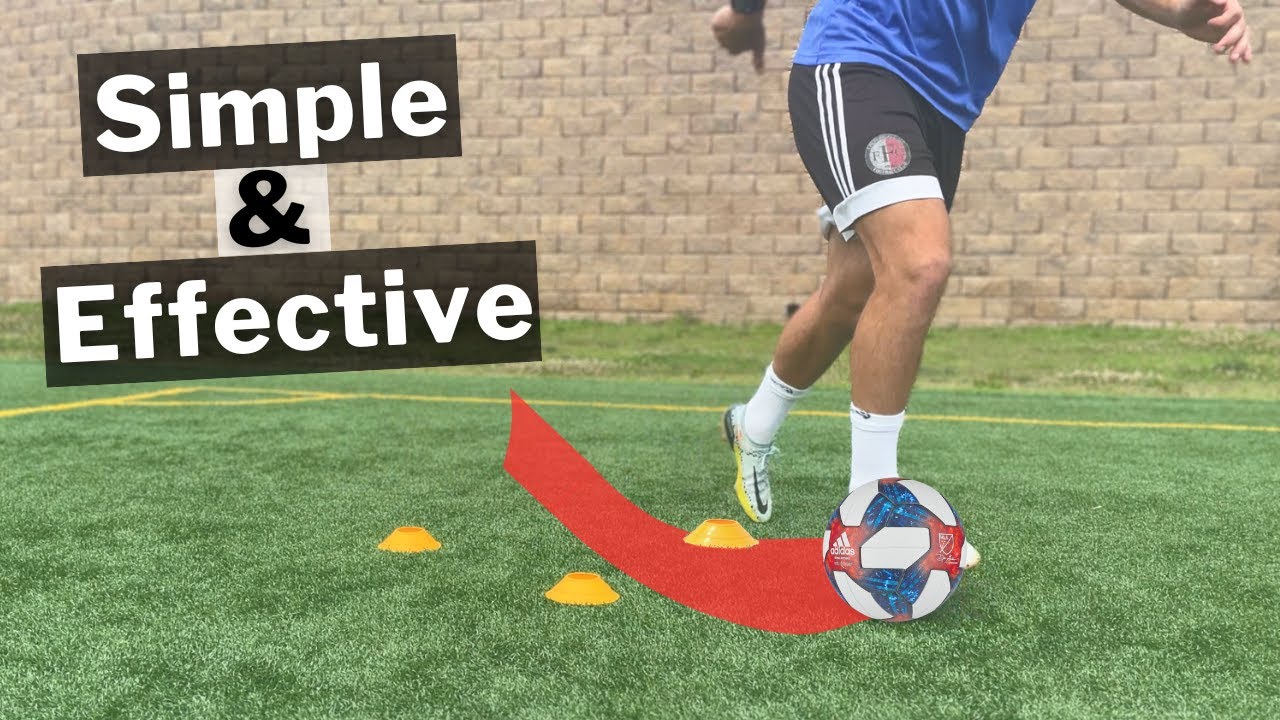
The BEST Dribbling Drills for Young Soccer Players & Beginners — by Kreider Academy on YouTube.
— dribble at pace, change direction on coach’s signal | 10 min | 20×20 yd grid, 1 ball per player | | Small-Sided Activity | 1V1 Attacking Gate Game — attacker scores by dribbling through any of 4 small gates | 12 min | 10×10 yd, pairs, swap roles every 90 sec | | Expanded SSG |
 ▶ Watch on YouTube
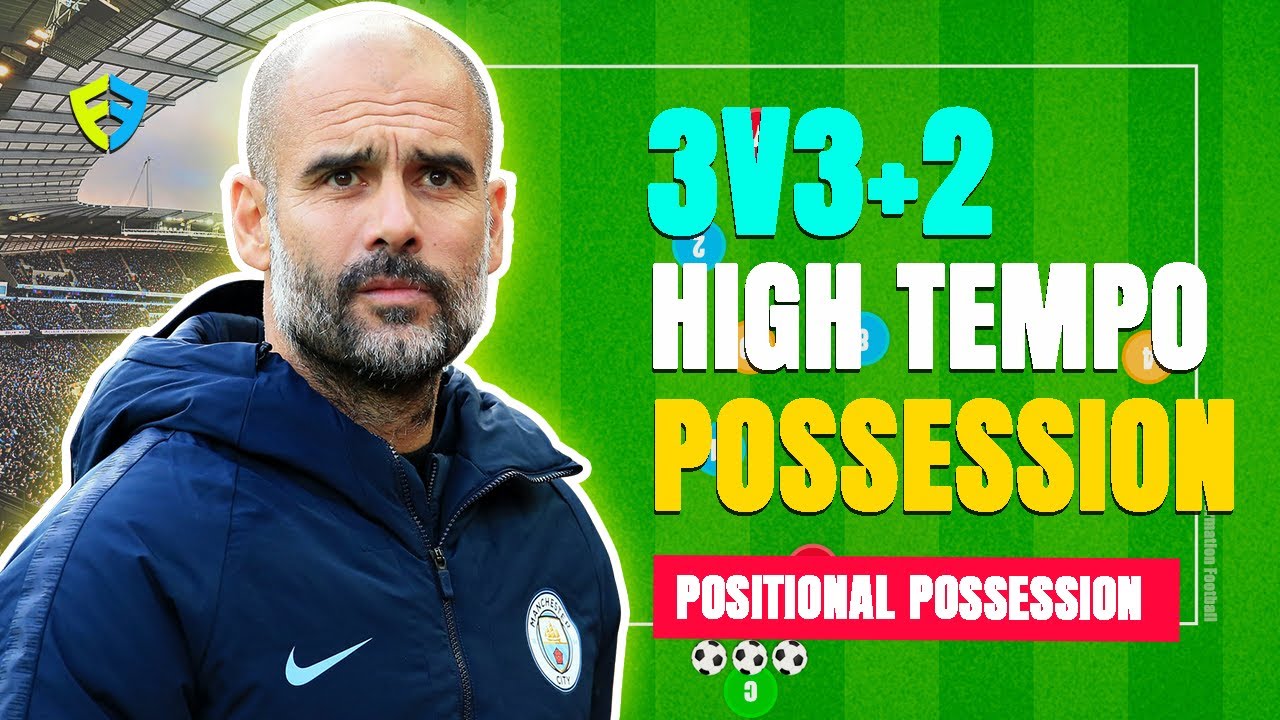
The Ultimate Possession Drill: Conquer The Field With This 3v3+2 Positional Possession Activity — by Formation Football on YouTube.
— teams score by dribbling over the opponent’s end line (not shooting) | 13 min | 25×20 yd, 2 teams of 3, rotate GK every 3 min | | Free Match | 4v4, regular small goals, minimal coaching | 10 min | PDI field dimensions for age group | | Cool-down / debrief | Short sit-down: coach asks 2 questions, not more | 5 min | — |
Session frequency: US Youth Soccer PDM recommends one session per game for U8 (1:1 ratio). For U9 club settings, two sessions per week is reasonable; the US Soccer PDI points toward two to three training sessions per game as players approach U10. Coaches should resist external pressure to stack more games — the PDI sets a hard ceiling of 20 games per calendar year and a minimum of two rest days per week during the season.
Mistakes to avoid
- Running line drills. Cone-dribble-wait-repeat formats cut individual ball contact to a fraction of what’s possible. The Why Small-Sided Games report shows the contact gap between SSGs and lined drills is enormous — replace every line drill with a small-sided game or paired activity.
- Joystick coaching. Narrating every decision in real time (“Pass it! Turn! Shoot!”) strips decision-making from players and undermines the cognitive development that makes game-based training valuable. Use questions. Use silence.
- Teaching adult tactics. Formations, pressing lines, and positional shapes don’t fit the Concrete Operational stage. The Official US Youth Soccer Coaching Manual is explicit: cooperative play is emerging at this age, not established.
- Assigning a permanent goalkeeper. The US Soccer PDI is clear — all players rotate through the goalkeeper position across a season at U8/U9. Locking one child into goal denies them field-play development and can create lasting negative associations with the position.
- Allowing heading. US Soccer’s 2015 policy bans heading in games and training for all players 10 and under. This is federation policy, not a suggestion. Teach chest and thigh control instead — and enforce it consistently.
- Keeping score and standings. The US Soccer PDI specifically states that results and standings should not be recorded at U8. Competitive scorekeeping at this age shifts the environment from developmental to outcome-focused, which undercuts everything the framework is designed to build.
- Treating free play as wasted time. Unstructured arrival play is a deliberate part of the US Soccer session structure. Skipping it or converting it to coach-directed activity removes one of the most developmentally rich moments of the session.
- Skipping the individual ball phase. Jumping from arrival straight into a scrimmage misses the warm-up window when every player can get maximum individual touches. Start every session with one ball per player.
When to advance
These are concrete criteria — not “when they seem ready”:
- Stage 3 → Stage 4: Players can receive a ball and protect it under light defensive pressure in a 1v1 for at least 3 seconds without immediately losing possession.
- Stage 4 → Stage 5 match format: The majority of players in a 3v3 activity make at least one deliberate pass to a teammate per possession (even if unsuccessful) rather than always dribbling out of pressure.
- Seasonal progression (1v1/2v2 → 3v3 → 4v4): Introduce 3v3 when players show basic spatial awareness — moving away from the ball, not crowding the carrier. Introduce the full 4v4 format when 3v3 games show consistent cooperation attempts.
- Goalkeeper rotation: Every player should have rotated through the goalkeeper position at least twice before the season’s midpoint.
Further reading
- Constraints Led Approach — How to modify field, rules, and numbers to shape behavior without lectures
- Game Centered Learning — The research case for using games as the primary teaching tool
- Four Moments Of The Game — Attacking, defending, and both transitions explained for youth coaches
- 1V1 Attacking Gate Game — Full setup, cues, and constraint progressions
- Long Term Athlete Development Sampling Years — Why multi-sport participation matters at this age and what the research says
Sources
- US Soccer Player Development Initiatives (PDI) — 2017 — governing body — https://static.ussdcc.com/users/148963/897090_eng-october2017pdi.pdf
- The Official US Youth Soccer Coaching Manual — governing body — https://www.usyouthsoccer.org/wp-content/uploads/sites/160/2023/09/Official-US-Youth-Soccer-Coaching-Manual-1.pdf
- US Youth Soccer Player Development Model (PDM) — governing body — https://cdn2.sportngin.com/attachments/document/0090/7006/US_Youth_Soccer_Player_Development_Model.pdf
- US Soccer Player Development Framework — Age Group Learning Plans — governing body — https://bigwalnutsoccer.com/wp-content/uploads/2025/03/us-soccer-player-development-framework-age-group-learning-plans.pdf
- Why Small-Sided Games for American Soccer? — governing body — https://www.usyouthsoccer.org/wp-content/uploads/sites/160/2023/09/Why-Small-Sided-Games-for-American-Soccer.pdf
- The Effect of Small-Sided Game Training on Passing Accuracy and Dribbling Ability in 10-Year-Old Junior Soccer Players — practitioner research — http://ijmra.in/v6i8/4.php