
The Jump to 11v11: A Complete Development Guide for U13–U14 Soccer
The move from 9v9 to 11v11 is the biggest structural shift in youth soccer. More players, a full-size field, goalkeepers, real formations, set pieces — the game suddenly looks like the one on TV. That's exciting, but it also creates a trap: coaches and parents can get so focused on…
The Jump to 11v11: A Complete Development Guide for U13–U14 Soccer
The move from 9v9 to 11v11 is the biggest structural shift in youth soccer. More players, a full-size field, goalkeepers, real formations, set pieces — the game suddenly looks like the one on TV. That’s exciting, but it also creates a trap: coaches and parents can get so focused on team shape and results that the individual skill development underneath gets squeezed out. At U13–U14, the tactical picture is finally opening up — but only if the technical foundation holds.
Why this matters at this age
US Soccer’s Player Development Framework officially designates U13–U14 as “Progression Phase I” and places it in the 11v11 format for the first time. That’s not just a logistical change — it’s a signal that players are now cognitively ready to understand positional roles, team shape, and tactical ideas like pressing and switching play. Younger players can’t hold those concepts reliably; this age group can.
But the same window that opens up tactical learning also brings puberty. And puberty is complicated. Boys in U14 can differ in biological maturity by five or six years compared to their birth-year teammates, according to a 2024 Delphi study on maturity-related injury risks in youth soccer. One kid on a U14 team might look and move like a junior varsity starter while his teammate is still in the middle of a growth spurt — and they’re the same age on paper.
Girls hit puberty earlier — typically between 11 and 13 — so many U13 girls are already in the middle of it. That brings specific changes in body composition, movement mechanics, and, critically, ACL injury risk. Serious knee injuries among teen athletes grew 26% from 2007 to 2022, according to analysis from the National ACL Injury Coalition. Girls tear their ACL without contact at a rate of 57.5% — compared to 39.7% for boys — and soccer is a top-three sport for ACL injury in both. This is not a background concern. It’s a front-of-mind coaching priority.
The developmental window here is real, and it’s short. U13–U14 is when technical habits get locked in for good or get lost to positional routines that don’t require both feet, constant scanning, or tight ball mastery. The players who come out of this phase with clean mechanics and tactical awareness are the ones who keep growing. The ones who coast on physical size — or whose coaches coach size instead of skill — tend to plateau.
Core concepts
Scanning and spatial awareness — looking around before and after receiving to read the field — is listed as a core priority in the US Soccer U13–U14 Learning Plan. At this level, the field is bigger and there’s more to see. Players who scan before they receive arrive at the ball already knowing their next action.
Receive with purpose means shaping the body to direct the first touch into space or away from pressure. The cue is open your body — don’t trap the ball and then look up. Arrive at the ball already turned, or already pointing somewhere.
Short combination play — Wall Passes Overlaps Third Man Runs — moves beyond individual technique into connected actions between two or three players. Wall passes, overlaps, underlaps, and third-man runs are the vocabulary. Players should understand these tools, not just execute them on command.
Pressure–cover–balance is the foundational framework for team defending. The closest player pressures the ball. The next player provides cover (backing up the pressurer). The third maintains balance (protecting space elsewhere). This is the step from individual defending to unit defending.
Transition — both directions — is central to the US Soccer game model at this level. Attacking-to-defending transition means counter-pressing immediately after losing the ball. Defending-to-attacking transition means moving forward fast to exploit the space after winning it.
*Relative Age Effect* — players born in January through March are still selected at higher rates than those born later in the year, even under birth-year registration. Coaches should not mistake physical maturity for technical talent.
*Bio Banding* — grouping players by biological maturity rather than birth year — is gaining attention in research and elite academies as a way to challenge both early and late maturers more appropriately. Evidence on wide use is still emerging, but the principle matters: the biggest kid isn’t necessarily the best player.
Progression
Stage 1 — Technical carry-over to the bigger field
Make sure scanning, receiving, and dribbling habits from 9v9 still work on a full-size field. Touch weight for passes changes. Space to cover is larger. Spend early sessions just playing, then reflect: Where did you need more time on the ball? Where did a quick touch get you out of trouble?
Drill anchor:
 ▶ Watch on YouTube
Movement & Scanning - Football Drill with Gates — by The-Football-Hub on YouTube.
— standard rondo (keep-away), but players must call out a color or number from a coach’s visual prompt before they can pass. Builds the habit of looking before receiving.
Stage 2 — Positional role introduction
Start asking: What does a central midfielder do when our team has the ball in our defensive third? Use position-specific small groups (e.g., back four + two central midfielders) in 3v2 or 4v3 exercises. Focus on understanding, not perfection.
Stage 3 — Unit defending (pressure–cover–balance)
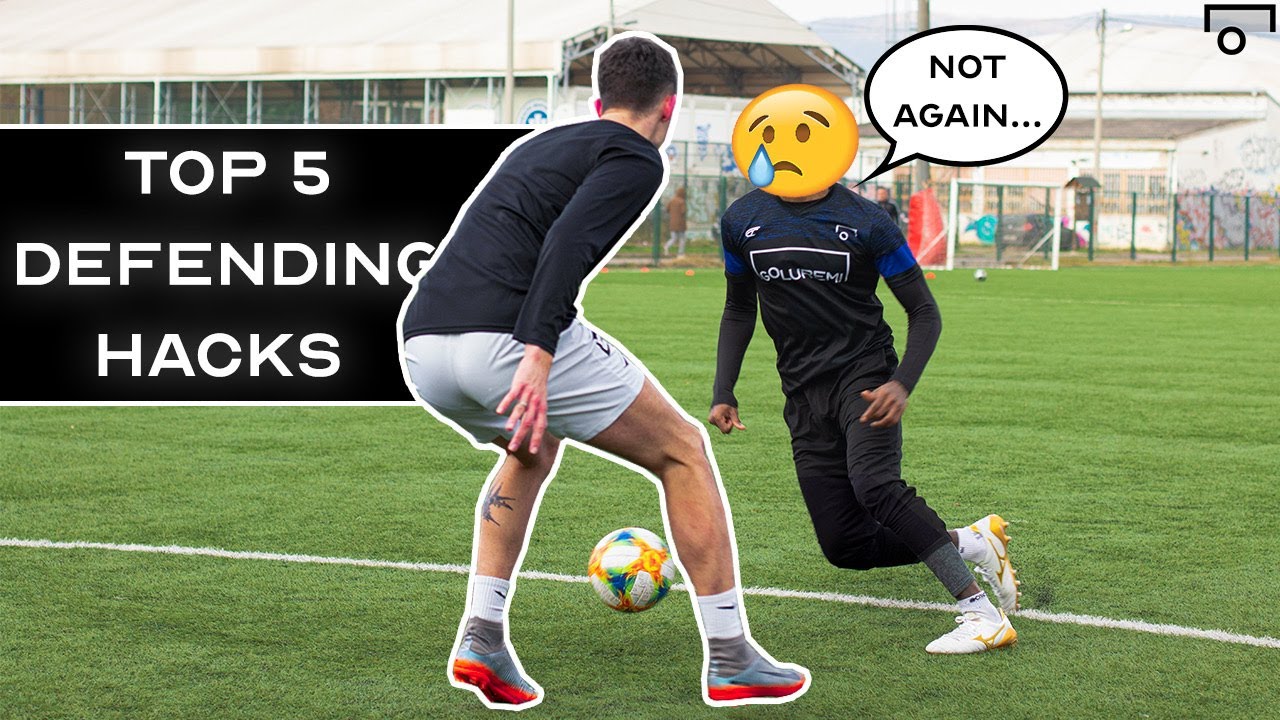
Run 2v1 and 3v2 defensive exercises where the entire drill breaks down if players aren’t connected.
 ▶ Watch on YouTube
5 BASIC DEFENDING SECRETS - How to improve as a defender in soccer FAST — by Will John on YouTube.
— three defenders mirror ball movement across a grid, maintaining pressure/cover/balance shape without engaging until the trigger. Progress to live situations.
Stage 4 — Combination play inside team shape
Wall passes and overlaps practiced inside the team’s positional structure. For example, a winger–fullback overlap drill inside a 4-3-3 shape. The point is not just to complete the combination — it’s to understand why that combination works from that position.
Stage 5 — Transitions as a team concept
Use small-sided games (5v5 or 7v7) with a transition rule: score within six seconds of winning the ball, or possession resets. This builds the counter-pressing habit without lecture. Players figure out the urgency through the game constraint.
Stage 6 — Switching play and wide zones
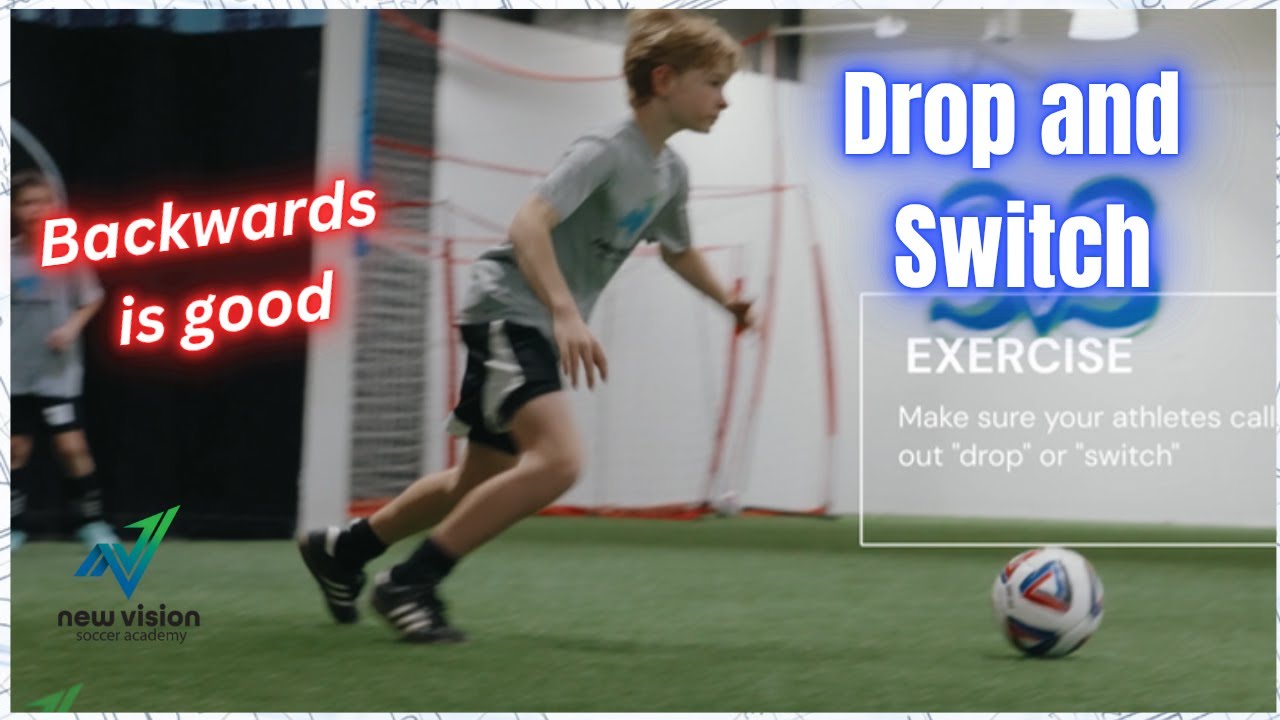
Teach players to find the opponent’s weak side.
 ▶ Watch on YouTube
Drop and Switch – Passing Sequence | Blueprint Soccer Instruction – Phase 1, Step 13 — by New Vision Soccer Academy on YouTube.
— play through one side until the coach signals, then switch the field in one or two passes to the opposite winger, who receives and crosses for a finishing run. Shooting from crosses, volleys, and finishing at angles are all reps worth getting here.
Stage 7 — Set piece basics
Introduce corner kicks and free kicks with simple, movement-based routines. Where possible, let players design their own routines in small groups, then present them to the team. Ownership of set pieces doubles as a leadership exercise and aligns with the US Soccer framework’s emphasis on player-led learning.
Stage 8 — Game understanding and self-coaching
Have players self-referee small-sided games. Run player-led warm-ups. After training and matches, ask tactical questions — Why did we lose the ball there? What would have opened up if you’d switched it earlier? — rather than delivering answers. The US Soccer U13–U14 Learning Plan explicitly calls for player-led warm-ups and self-reflection as deliberate coaching tools, not extras.
Suggested program / schedule
This is a template for a two-days-per-week training schedule, typical of recreational and competitive club teams. Adjust volume based on your team’s total weekly load.
| Day | Focus | Structure | Time |
|---|---|---|---|
| Day 1 | Technical + Combination | Player-led warm-up (ball mastery, both feet) → Rondo with scanning cue → 4v4 combination play exercise → 9v9 small-sided game | 75 min |
| Day 2 | Tactical + Transition | Player-led warm-up (FIFA 11+ structure) → Unit defending 3v2/4v3 → Transition-triggered 7v7 → Full team shape 11v11 scrimmage | 75 min |
| Match day | Full game | Players lead warm-up. Coach gives a single focus cue before kickoff. Debrief with two open questions after. | — |
| Rest | Recovery | At least one full rest day. Encourage cross-training or other sports. | — |
Ball mastery should appear every session, even briefly — both feet, tight space, fast footwork. This is the window where habits from younger ages either get reinforced or fade. Don’t skip it because the session is “tactical.”
Mistakes to avoid
1. Loading tactical complexity onto a shaky technical base. If players can’t receive under pressure or use their weak foot reliably, introducing pressing systems doesn’t fix those gaps — it hides them. The US Soccer PDI is direct: individual technique sits underneath all tactical development.
2. Constant sideline coaching during games. US Soccer’s framework specifically discourages this. When coaches yell every decision, players wait for instructions instead of reading the game. Stop talking. Watch what your players do.
3. Locking players into single positions. A U13 who only ever plays holding midfield doesn’t understand how a striker thinks. Positional understanding — and versatility — comes from playing multiple roles. Early specialization also increases burnout and overuse injury risk.
4. Treating all players the same physically. A player in the middle of a peak growth spurt may look coordinated one month and clumsy the next. That’s normal — fast bone growth can temporarily disrupt movement patterns. The response is patience, not extra drilling.
5. Mistaking size for skill. The Delphi study on maturity-related risks is unambiguous: players the same age can differ in biological maturity by five or six years. The biggest, strongest kid at U13 may be two years ahead physically and plateau early. The late maturer with cleaner technique may catch up and surpass him by U17.
6. Neglecting the weak foot. As team shape takes up more practice time, players default to their dominant foot. U13–U14 is the last clear window to build genuine two-footedness before patterns calcify. Keep it in warm-up every session.
7. Introducing heading without proper preparation. Heading enters the game here, but it requires neck strength and correct technique. Research cited by Columbia University found repetitive heading can damage tissue at the gray-white matter junction in the frontal lobe. Gradual introduction, limited reps, proper mechanics — not heading off the crossbar 20 times because you have a few minutes to fill.
8. Skipping a structured injury-prevention warm-up. Neuromuscular training programs like the FIFA 11+ warm-up have shown 50–80% reduction in injury risk in studies, according to the National ACL Injury Coalition analysis. That’s not a supplement — it’s a standard warm-up. Use it, especially with girls’ teams.
When to advance
Players are ready to move deeper into the next layer of the framework when they can demonstrate:
- Consistent scanning before and after receiving across different field zones, not just in training drills
- First touch directed into space or away from pressure in a live 7v7 or larger game — not just in isolated exercises
- Pressure–cover–balance maintained as a three-player unit during transition, without verbal reminders
- Purposeful combination play (wall pass, overlap, or third-man run) initiated by the player — not called by the coach
- The ability to lead a structured warm-up and contribute meaningfully to a post-training tactical debrief
- At least four to six weeks of clean mechanics at the current stage before loading the next concept
If a player is in the middle of a growth spurt and showing coordination regression, hold the tactical progression and return to technical consolidation. This is normal, documented, and temporary.
Further reading
- Fifa 11Plus Warm Up Protocol
- Relative Age Effect In Youth Soccer
- Bio Banding Maturity Matching
- Pressure Cover Balance Defending
 ▶ Watch on YouTube
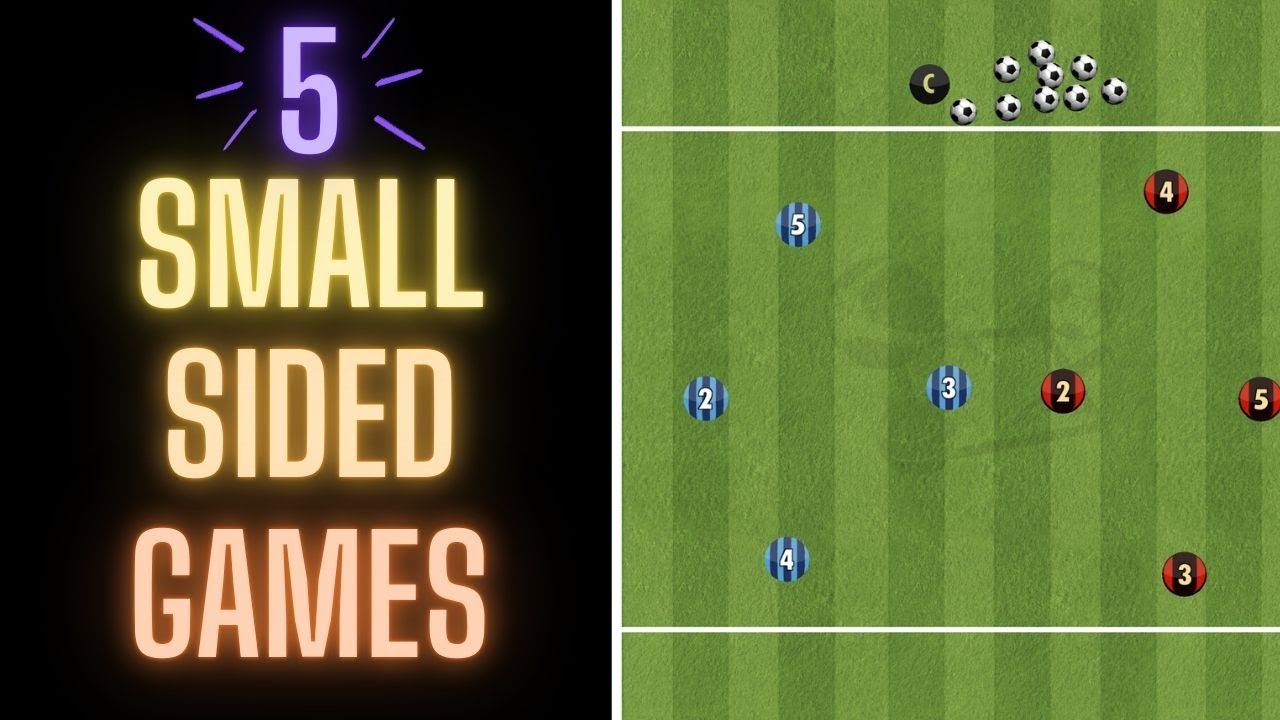
Small Sided Games | 5 Variations | Football/Soccer — by KS Performance on YouTube.
- Acl Injury Prevention Adolescent Athletes
Sources
- U13–U14 Learning Plan: 11v11 — US Soccer Player Development Framework (2023) — governing body — https://cdn3.sportngin.com/attachments/document/2b24-3193718/9-us-soccer-player-development-framework-game-model-and-learning-plan-u13__2_.pdf
- US Soccer Grassroots Player Development Framework: 11v11 (Ages 13+) — governing body — https://static.ussdcc.com/users/227808/458431/us-soccer-grassroots-11v11-player-development-framework.pdf
- Player Development Initiatives — US Soccer (2017) — governing body — https://static.ussdcc.com/users/148963/897090_eng-october2017pdi.pdf
- Five Things to Know About US Soccer Player Development Initiatives — US Soccer (2017) — governing body — https://ussoccer.com/stories/2017/08/five-things-to-know-about-us-soccer-player-development-initiatives
- Consensus on maturity-related injury risks and prevention in youth soccer: A Delphi study (2024) — peer-reviewed — https://pmc.ncbi.nlm.nih.gov/articles/PMC11556685/
- Analysis: Serious Knee Injury Among Teen Athletes Grows 26% — Project Play / Aspen Institute (2023) — academic — https://projectplay.org/news/2023/11/22/analysis-serious-knee-injury-among-teen-athletes-grows-26
- Heading Toward a Change: Shifts in Youth Soccer Safety Rules — Flagler College Gargoyle (2026) — other — https://gargoyle.flagler.edu/heading-toward-a-change-shifts-in-youth-soccer-safety-rules/