
What 4–6-Year-Olds Are Actually Learning at Soccer Practice (And Why It's Not What You Think)
Your kid just ran in three circles, kicked the ball the wrong way, and high-fived a teammate who was on the other team. Congratulations — that was a great practice. Here's why.
What 4–6-Year-Olds Are Actually Learning at Soccer Practice (And Why It’s Not What You Think)
Your kid just ran in three circles, kicked the ball the wrong way, and high-fived a teammate who was on the other team. Congratulations — that was a great practice. Here’s why.
Why this matters at this age
The U6 years are a rare window. Movement patterns laid down now become the physical vocabulary kids draw on for the rest of their athletic lives. The US Soccer Player Development Framework describes this stage as “Movement Exploration and Ball Discovery” — and that framing is deliberate. The word discovery is doing real work. This is not the time to build a technically polished left foot or teach a 5-year-old to track back defensively. It’s the time to make a child fall in love with moving, competing, and chasing a ball.
There’s a direct line from bad early experiences to dropout. Youth sport research consistently points to unpleasant early experiences as a major driver of kids leaving sport entirely. The flip side is equally true: kids who have fun, feel successful, and feel safe at this stage come back next season — and the season after that. The developmental decisions made at U6 are long-term investments, not short-term performance bets.
What also gets underestimated is that social and emotional growth carries equal weight here with motor development. US Soccer’s PDI framework explicitly lists sharing, fair play, managing emotions, and learning “how to play” as formal development targets for this age group. Teaching a 6-year-old to handle a loss graciously is genuinely part of the job.
Finally, the clock is running. Rapid growth from infancy is tapering off, but children are still changing fast. Movement patterns being wired right now will form lasting foundations. Spending this window on adult-style drills with lines and cones means missing what the window is actually for.
Core concepts
*Discovery Phase* — US Soccer splits U6 into two sub-phases. Discovery Phase I (roughly ages 4–5) centers on exploring movement and manipulating a ball with both hands and feet, with parallel or side-by-side play. Discovery Phase II (roughly age 6) introduces basic soccer skills — dribbling and shooting — inside friendly, loosely structured mini-games.
*Fundamental Movement Skills* — Walking, running, skipping, hopping, jumping, landing, and rolling come before soccer technique. US Soccer’s framework names these as the literal foundation on which all soccer skill is eventually built. A 5-year-old who can hop on one foot and change direction confidently is ahead of schedule, even if they’ve never touched a ball.
*Guided Discovery — The teaching style recommended by US Soccer for this age. Instead of demonstrating the “right way” and having kids copy, the coach sets up an environment and a challenge, then lets kids find their own solutions. You ask questions; you don’t lecture. “Can you stop the ball with just* the bottom of your foot?” beats “Here’s how you trap.”
*Small Sided Games* — Fewer players, smaller fields, more touches. The US Soccer PDI mandates 4v4 (some organizations use 3v3) on a field 25–35 yards long by 15–25 yards wide for U6. No goalkeeper. Every child touches the ball many more times per session than they would on a full-sized field with 11 players.
*Eye Foot Coordination* — The wiring between what the eyes see and what the feet do. Discovery Phase II explicitly targets building this through varied, playful ball contact. It’s not about accuracy yet — it’s about getting the brain and feet talking.
Size 3 ball — Required by the US Soccer PDI for U6 and U8. It fits smaller hands and feet, requires less force to move, and makes successful contact far more likely. Using a size 4 or 5 ball at this age pushes kids into compensating mechanics.
Progression
Stage 0 — Movement Exploration (Around Age 4)
Free movement with no ball. Running, jumping, rolling, freezing, changing direction on a signal. The goal is building the movement base everything else depends on. Keep tasks concrete: “Can you jump and land without making any noise?” Sessions of 20–30 minutes. Advance when kids can start, stop, change direction, and hop without falling.
Stage 1 — Ball Discovery (Ages 4–5 / Discovery Phase I)
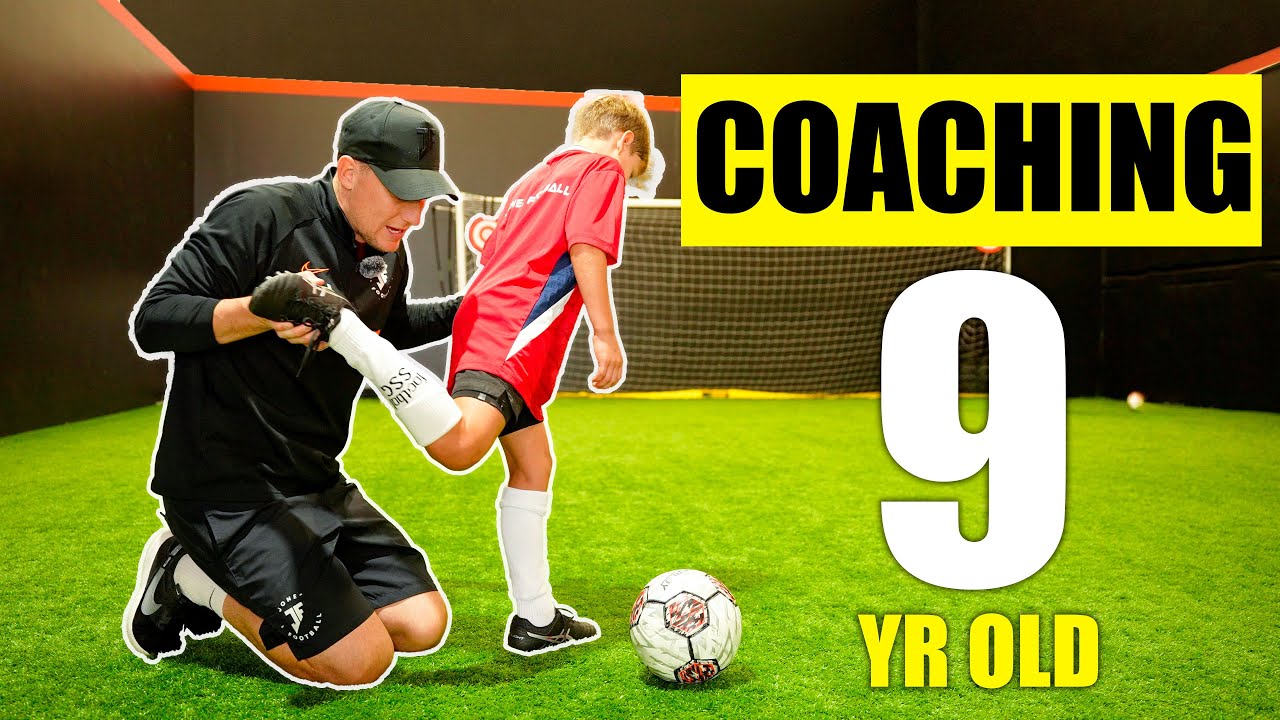
Introduce any ball — it doesn’t have to be a soccer ball yet. Let kids roll it, carry it, throw it, kick it freely. Introduce
 ▶ Watch on YouTube
Loads of Soccer Drills For Beginners: Part 2 ⚽️ 👶 Joner Football — by Joner Football on YouTube.
(dribble anywhere in the space, freeze when the coach calls out). No defined technique. Success looks like a child who is curious about the ball and wants to keep touching it. Both feet should touch the ball from day one — don’t force it, but don’t discourage the non-dominant foot either. Advance when a child reliably moves with the ball without it rolling away completely.
Stage 2 — Dribbling and Shooting Exploration (Ages 5–6 / Discovery Phase II)
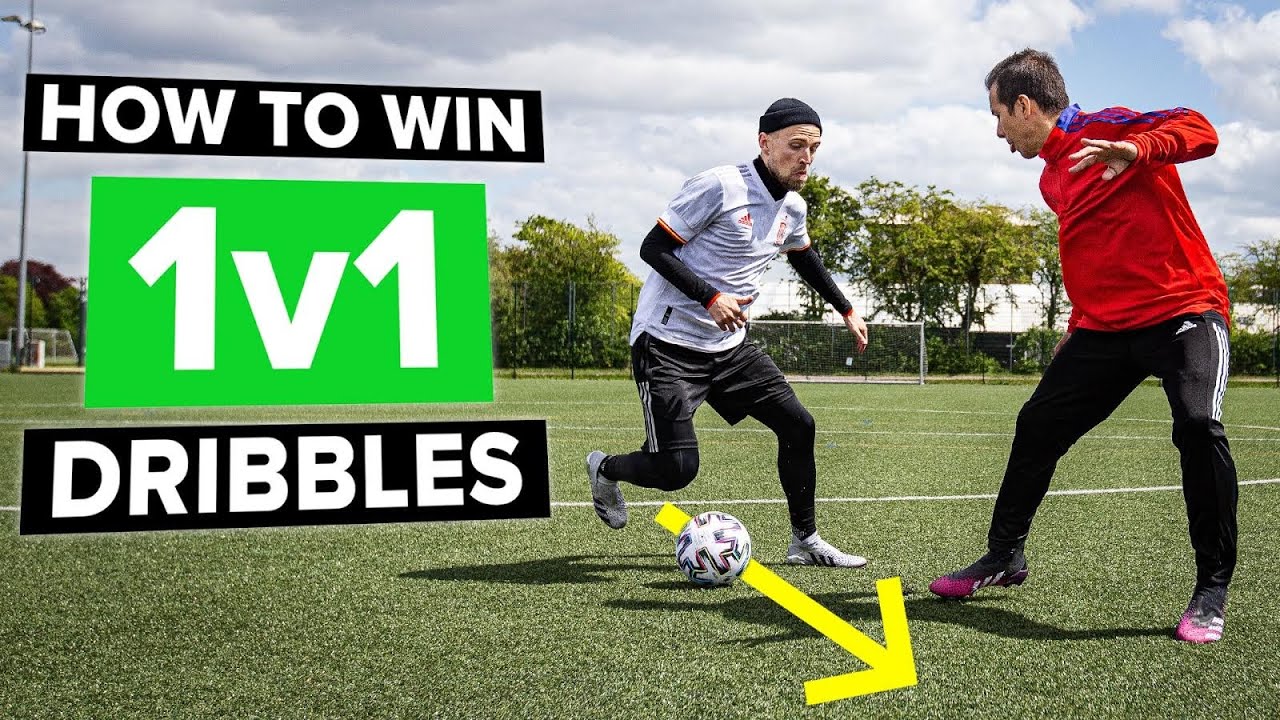
Introduce the size 3 soccer ball.
 ▶ Watch on YouTube
How to win 1v1 situations | dribble the defender — by Unisport on YouTube.
— kids dribble anywhere in the space, stop the ball completely with the sole of the foot on the coach’s signal, then go again. Add
 ▶ Watch on YouTube
Open Goal Misses You Won’t Believe Exist! — by AshStudio7 on YouTube.
— simple shooting at undefended mini-goals from various distances, with no technique instruction beyond “use your foot.” The goal is getting the ball to move somewhere on purpose. Sessions stay 30–40 minutes. Advance when kids are comfortable moving with the ball and making contact toward a target.
Stage 3 — Guided Discovery in Mini-Games (Around Age 6 / Structured U6 Play)
 ▶ Watch on YouTube
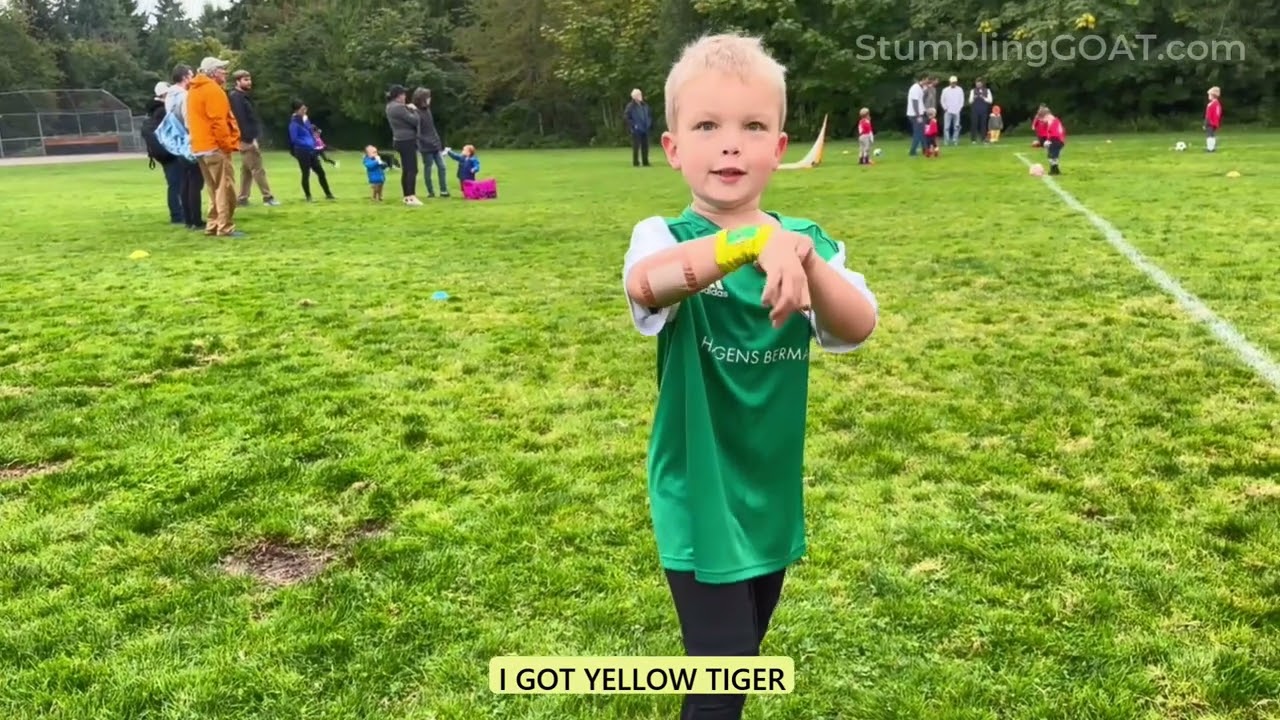
Youth Soccer Breaking up the beehive is fun and easy with Wrist Coaches by The Zu Kru — by The Zu Kru on YouTube.
— 4v4 on the full U6 field (25x15 to 35x25 yards), no goalkeeper. The coach sets up the game, steps back, and lets it run. Brief coaching moments only when play stops naturally — one question or one observation, not a speech. “What happened when everyone ran to the same spot?” is enough. This is the primary format for U6 competitive play per the US Soccer PDI.
Stage 4 — Bridge Toward U7/U8 (Late Age 6)
As a player approaches 7, begin introducing ideas organically through the game: keeping the ball rather than booting it away, noticing open space, looking for a teammate. These are not U6 targets — they’re the entry point to the next phase. Don’t coach them explicitly; let them emerge when you see a child is genuinely ready.
Suggested program / schedule
The following reflects practitioner consensus for U6; US Soccer’s PDI does not formally specify sessions-per-week at this age.
| Day | Session | Duration | Focus |
|---|---|---|---|
| Session 1 | Ball Discovery / Dribble Games | 30–40 min | Free dribble, stop-and-go, freeze games |
| Off day(s) | Free play, other sports | — | Unstructured movement |
| Session 2 | Mini-Games | 30–40 min | 4v4 beehive, guided discovery |
Session structure (30–35 minutes):
- Arrival activity (5 min): Each child has a ball; they explore freely. No instruction.
- Movement game (5–7 min): Tag variant or freeze game with the ball — high movement, no lines, no waiting.
- Skill exploration (8–10 min): One focused challenge (e.g., Stop And Go Dribble). Coach asks questions, doesn’t demonstrate a “right answer.”
- Mini-game (10–12 min): 4v4 beehive. Coach watches; intervenes briefly and positively only at stoppages.
- Cool-down / celebration (3–5 min): Something fun — freeze, a cheer, a quick group activity.
Water breaks every 10–15 minutes. In warm weather, keep total outdoor time at 30–45 minutes maximum.
Mistakes to avoid
Running lines-and-drills practice. When kids wait in lines, ball contacts drop dramatically. At U6, every moment without a ball in play is a wasted moment. Design activities so all kids move at once.
Assigning fixed positions. Telling a 5-year-old they’re “the defender” contradicts how they learn and violates US Soccer PDI principles. Rotate freely and let the game sort itself out.
Introducing heading. US Soccer banned heading in training and matches for players 10 and under in 2015. At U6, there is zero developmental reason to head the ball, and it must not be introduced — full stop.
Tracking score and standings. Keeping standings and emphasizing scorelines at U6 has no developmental value and can attach negative emotions to the sport early. Let games end without ceremony.
Using adult-sized equipment. A size 4 or 5 ball pushes small kids into compensating mechanics and can be physically risky. Shin guards and cleats must fit — oversized shin guards are a trip hazard.
Long verbal explanations. Kids ages 4–6 have attention spans of 2–5 minutes for a focused task. Multi-step verbal instructions lose them immediately. Show; don’t tell.
Coaching team tactics. Width, defensive shape, support angles — none of these belong at U6. The US Soccer PDI doesn’t target them here. Spending time on tactics frustrates kids and wastes the developmental window.
Sessions over 45–60 minutes. Quality drops fast after 45 minutes at this age. A tight, energetic 35-minute session beats a dragging 75-minute one every time.
When to advance
A child is ready to bridge toward U7/U8 content when they can:
- Move with a size 3 ball in a straight line without losing it for 10–15 yards
- Stop the ball under control with the sole of the foot on demand
- Participate in a 4v4 mini-game for 10+ minutes, engaging with the play (not just watching)
- Kick a stationary ball toward an open goal with intent (doesn’t have to be accurate)
- Complete a full session without significant emotional dysregulation
These are not audition criteria — no child gets cut. They’re signals that the next stage’s ideas will land.
Further reading
- Discovery Phase — Deep dive into US Soccer’s Phase I and Phase II framework
- Small Sided Games — How field size, player count, and goalkeepers change with age
- Guided Discovery — The coaching style behind the PDI and how to use it on the sideline
- Beehive 4V4 — Full setup guide for the U6 mini-game format
- Fundamental Movement Skills — The movement ABCs that underpin all sport skill development
Sources
- Player Development Initiatives (PDI) — US Soccer Federation (2017) — governing body — https://static.ussdcc.com/users/148963/897090_eng-october2017pdi.pdf
- Small-Sided Games: A New Reality — US Youth Soccer — governing body — https://www.usyouthsoccer.org/wp-content/uploads/sites/160/2023/09/Small-Sided-Games-A-New-Reality.pdf
- US Soccer Player Development Framework — Age Group Learning Plans (2024, distributed via BASA) — governing body — https://dt5602vnjxv0c.cloudfront.net/portals/768/docs/basa%20player%20development%20framework%202024.pdf
- Creating a Pathway of Development — US Youth Soccer — governing body — https://www.usyouthsoccer.org/wp-content/uploads/sites/160/2023/09/Creating-a-Pathway-of-Development.pdf
- Small Sided Games — Coaching American Soccer — practitioner resource — https://coachingamericansoccer.com/tactics-and-teamwork/soccer-small-sided-games/