
What Your 10–12-Year-Old Should Actually Be Learning in Soccer This Season
The U11/U12 years are a pivotal window — not because this is the age to identify future pros, but because it's one of the last seasons when skill patterns are absorbed most efficiently. Get this phase right and you're setting a player up for years of confident, adaptable soccer. Rush…
What Your 10–12-Year-Old Should Actually Be Learning in Soccer This Season
The U11/U12 years are a pivotal window — not because this is the age to identify future pros, but because it’s one of the last seasons when skill patterns are absorbed most efficiently. Get this phase right and you’re setting a player up for years of confident, adaptable soccer. Rush past it chasing wins, and you may spend the next five years trying to repair habits that didn’t need to be broken.
Why this matters at this age
Motor learning researchers and long-term development frameworks consistently point to ages 8–12 as a “skill-hungry” phase when movement patterns form efficiently and carry over into adult performance. The US Youth Soccer Small-Sided Games coaching education materials describe this window as the ideal period for developing technique and coordination. Work done here is not just for this season — it’s foundational.
At the same time, this group is starting to change physically. Most 10–12-year-olds are pre-pubertal or in early puberty, but the variation within a single team can be enormous. A 2024 scoping review published in Human Movement found that earlier-maturing youth soccer players cover significantly more total distance and high-speed running in small-sided games. That means a physically advanced player can look like a better soccer player without actually being one. Coaches who evaluate talent by game output alone are measuring bodies, not skills.
The format is also changing. US Soccer’s Player Development Initiatives (PDI) require 9v9 for U11/U12 players, up from 7v7 at U10. That’s a wider field (70–80 yards by 45–55 yards), more positional surface area, and more complex passing geometry. It’s a genuine transition — not just “add two more players and go.” Coaches who don’t teach that transition explicitly are skipping one of the most important coaching moments of the age group.
Finally, there’s the dropout risk. Kids 10–12 are forming their identities as athletes. A mistake-punishing environment, a coach who yells instructions every 10 seconds, or the experience of being cut because you happen to have a late-September birthday — any of these can end a soccer career before it starts. The US Youth Soccer Small-Sided Games Manual is direct: player enjoyment must take priority over parent and coach preferences for results.
Core concepts
*Ball Mastery* — The ability to receive, control, and redirect the ball cleanly with either foot, in real game situations. At this age, quality of touch is the coaching target, not just number of touches. Players should be handling inside-foot rolls, outside-foot cuts, and directional changes in warm-ups every single session.
*1V1 Attacking* — Dribbling with a defined purpose: beating an opponent, opening a shooting angle, escaping pressure. This means introducing specific moves — the Cruyff turn, step-over, and scissors — not just “dribble past them.”
*Body Orientation — How a player sets themselves to receive the ball. At U11/U12, players learn to receive on the half-turn*: body angled so they can already see pressure and play forward rather than defaulting to a square or backward pass.
*Pressure Cover Balance* — The first layer of team defending. One player presses the ball (pressure), a teammate provides defensive support behind them (cover), and a third player adjusts their position to protect space (balance). This is introduced at 9v9.
*Small Sided Games — Structured scrimmages in reduced-player formats (1v1, 2v1, 3v2, 7v7, 9v9). Research published in PMC (2025)* confirms SSG training produces measurable gains in dribbling, passing, and first touch, making them the primary training tool at this age — not a reward at the end of practice.
*Relative Age Effect* — The tendency for players born earlier in the registration year to be mistaken for more talented players because they’re physically older. US Soccer’s PDI shifted to a January 1 birth-year cutoff partly to reduce this effect, but within-year gaps of up to 11 months still exist. Coaches should not confuse a November birthday with limited potential.
Progression
Stage 1 — Ball Mastery Foundation
What: Solo and paired work — inside-foot rolls, outside-foot taps, toe-tap sequences, sharp directional changes. Equal reps with both feet. This belongs in every warm-up, not just when a player is new to the group.
Key cues: “Eyes up, not at the ball.” “Push it — don’t tap it.” “Change direction on a touch, not after it.”
Duration: 10–15 minutes integrated into every session warm-up.
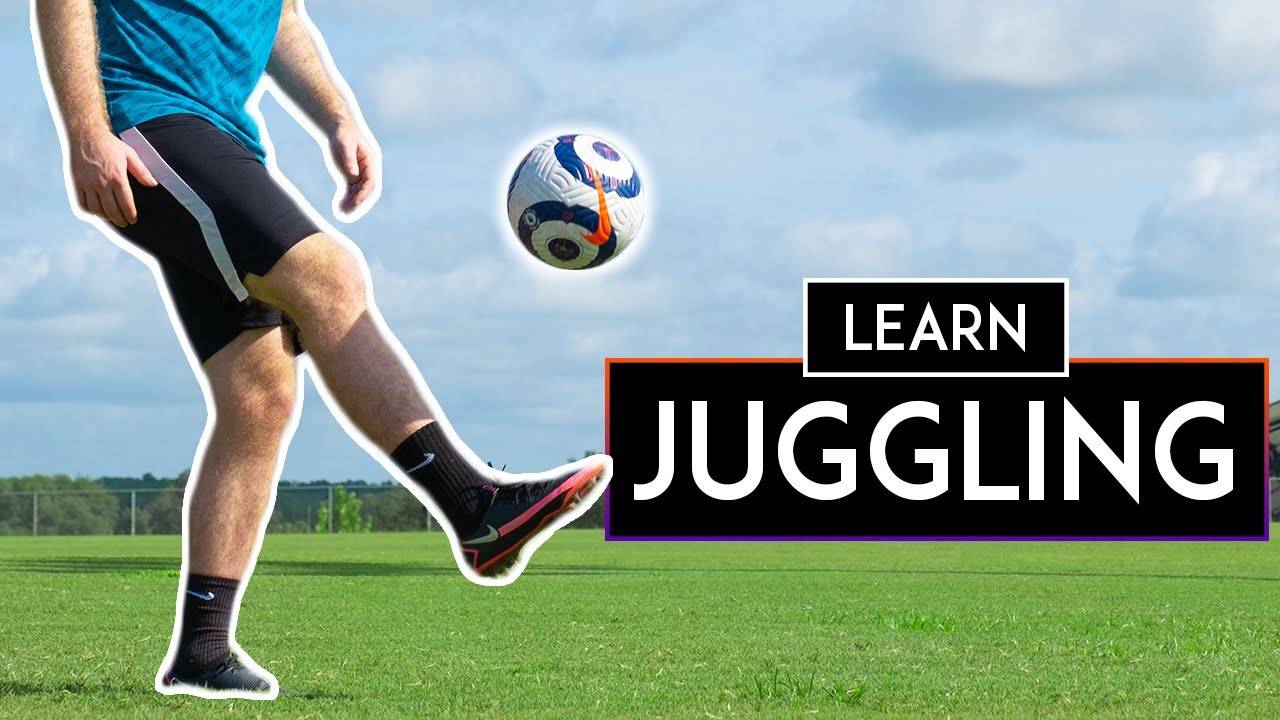
Advance when: Player can complete
 ▶ Watch on YouTube
How to JUGGLE a Soccer Ball for Beginners — by AllAttack on YouTube.
fluently with both feet at game speed, without looking down.
Stage 2 — 1v1 Attacking
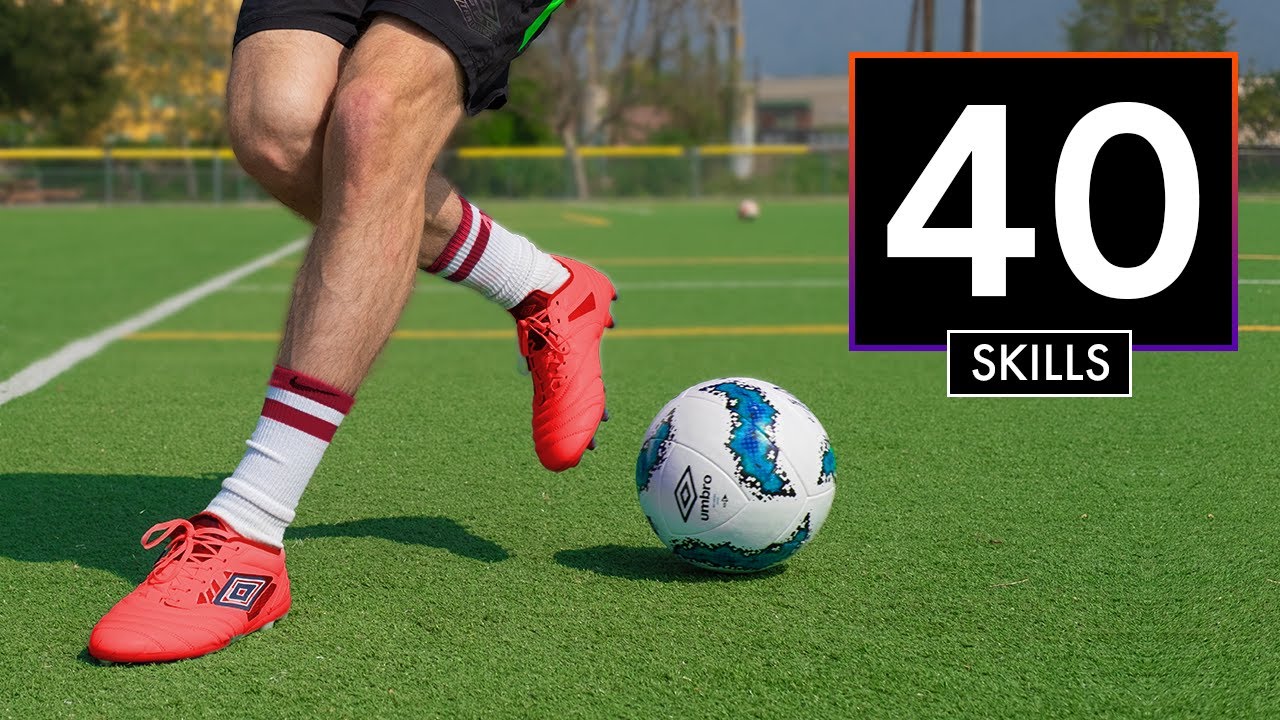
What: Introduce the Cruyff turn, step-over, and scissors in isolation first. Then
 ▶ Watch on YouTube
EVERY 1v1 SKILL MOVE From Beginner to Advanced — by AllAttack on YouTube.
with a passive defender, progressing to active defense.
Key cues: “Sell the fake — commit your weight.” “Accelerate after the move, not during it.” “Use the move to create space, then look up.”
Duration: 2–3 weeks on each move before moving to live 1v1.
Advance when: Player can successfully beat an active defender with at least one move, 3 out of 5 attempts, in a 1v1 channel.
Stage 3 — 1v1 Defending
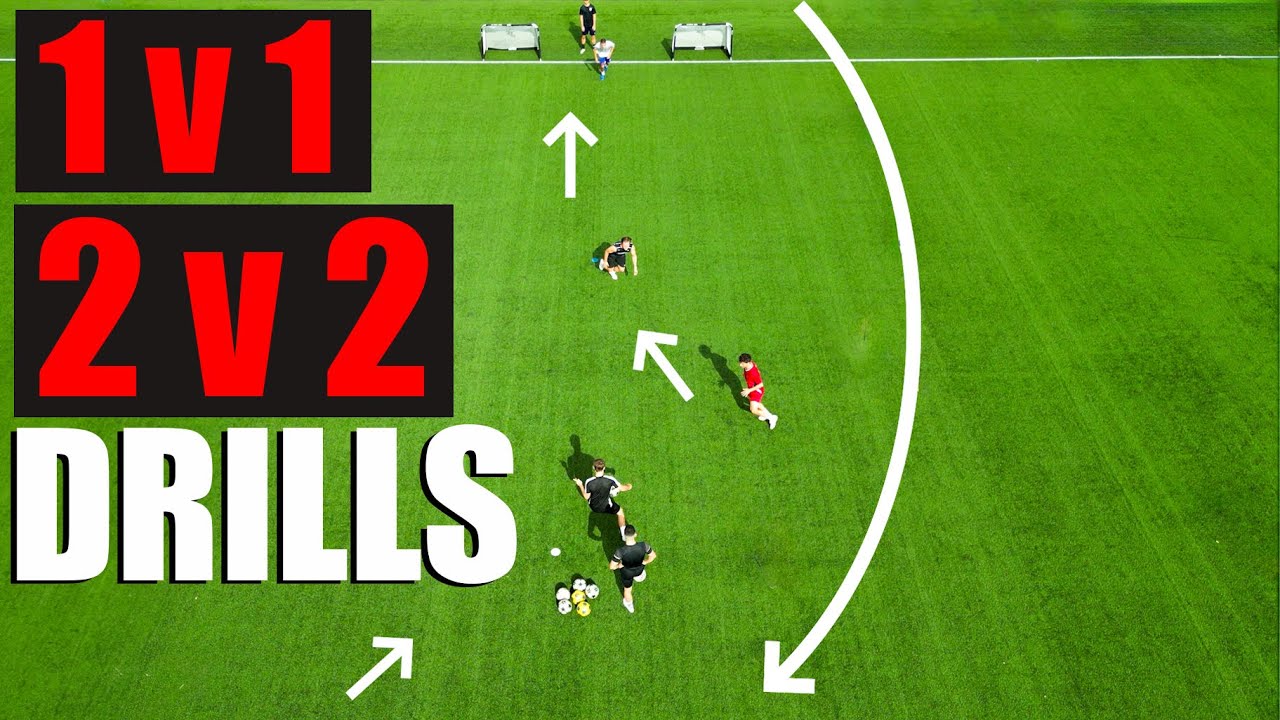
What: Teach approach angle (come in at a diagonal to cut off the goal side), jockeying (stay on your feet, stay patient), and the decision of when to engage vs. when to delay. Practice in narrow
 ▶ Watch on YouTube
4 1v1 DRILLS🔥 TIPS to Improve your Defending & Attacking❗️Joner Football ⚽️ — by Joner Football on YouTube.
grids before opening it up.
Key cues: “Get goalside first.” “Small steps, weight forward.” “Don’t dive in — wait for the touch.”
Advance when: Player consistently shows correct approach angle and body shape in a live 1v1 before graduating to Stage 4 scenarios.
Stage 4 — Combination Play (2v1, 2v2, 3v2)
What: Short passing with movement after the pass — the give-and-go. Body orientation to receive on the half-turn. At the advanced end: overlapping runs and third-man combinations.
Key cues: “Pass and move — don’t watch it.” “Open your hips before the ball arrives.” “Find the third man.”
Advance when: Players are consistently playing on the half-turn and completing give-and-go combinations in 2v1 and 3v2 settings.
Stage 5 — 7v7 Game Application
What: Apply Stages 1–4 in 7v7 games. Use freeze-and-discuss moments to connect technique to game situations. No fixed positional assignments — rotate players through different roles across sessions.
Key cues during freezes: “What did you see?” “Where was the open player?” “Why did that touch work?”
Stage 6 — 9v9 Transition and Basic Shape
What: Introduce team shape (3-2-3 or 4-3-1 as frameworks) while continuing position rotation. Teach pressure-cover-balance explicitly for the defensive unit. Add shooting from wider angles and introduce corner kicks and free kicks.
Coach this directly: Walk through the spatial differences between 7v7 and 9v9 on the field. The US Soccer PDI explicitly warns coaches not to assume players will figure out this transition on their own.
Advance when: Players understand basic shape roles without being locked into one position, and the defensive unit can execute pressure-cover-balance in a structured 3v3 defending exercise.
Stage 7 — Advanced Technical Refinement
What: Driven passes over 20+ yards, instep shooting under pressure, receiving out of the air (chest trap, thigh trap). Goalkeeper angle play and footwork. Reserve this for players who handle Stages 1–6 consistently.
Suggested program / schedule
This is a two-session-per-week training model, typical of a U11/U12 club or competitive recreational team.
| Day | Session Focus | Key Activities | Duration |
|---|---|---|---|
| Tuesday | Technical + 1v1 | Ball mastery warm-up (10 min) → Stage 2 or 3 drill progression (20 min) → 1v1 to 3v2 small-sided (25 min) | 55 min |
| Thursday | Combination + Game | Ball mastery warm-up (10 min) → Passing with movement, 2v1/3v2 (20 min) → 7v7 or 9v9 scrimmage with 2–3 coaching freezes (30 min) | 60 min |
| Weekend | Match | Apply the week’s focus in game; coach briefly at halftime, not constantly from the sideline | Per match |
Notes:
- Fitness is developed through the small-sided games, not separate running drills.
- Sessions should account for cognitive load — mental fatigue affects SSG quality, as noted in recent PMC research. Don’t pack too many new concepts into one session.
- Ball size: No. 4 only. The US Youth Soccer Small-Sided Games Manual is explicit on this.
Mistakes to avoid
Coaching 9v9 like an 11v11 adult game. Assigning rigid positions (“you’re the striker — stay up top”) teaches kids to stand in a spot rather than read the game. The US Soccer PDI calls for position rotation through at least U12.
Penalizing technical risk-taking. If a player tries a Cruyff turn, loses the ball, and gets benched or yelled at, they’ll stop trying. A player who never risks the 1v1 never gets better at it.
Violating heading restrictions. For U11/U12 players (ages 11–12), heading in training is capped at 30 minutes per week with a maximum of 20 headers per week. US Youth Soccer coaching education is explicit: no heading at all for players 10 and under in training or matches. Some coaches aren’t aware of these limits — that’s not an excuse.
Using a No. 5 ball. Still showing up in some recreational settings. An adult-sized ball at this age reinforces poor kicking mechanics during one of the most important technical development windows in a player’s life.
Running fitness drills without the ball. Lap runs and suicides have no place in a U11/U12 training plan. US Youth Soccer coaching education is clear that aerobic and speed-endurance work at this age should be ball-integrated — possession games, small-sided games under time pressure, conditioned scrimmages.
Constant sideline coaching. Calling out “pass it!” or “get back!” on every possession removes the decision-making that is literally the developmental goal. The US Soccer PDI recommends guided questions and brief stoppages — not a running commentary.
Rewarding early maturers as more talented. The 2024 Human Movement scoping review is direct: physical dominance in small-sided games at this age correlates with maturation, not soccer skill. Cutting a late-maturing player at U12 is a well-documented talent identification error.
Locking a player into goalkeeper. Permanent goalkeeper assignment at U11/U12 removes outfield development during one of the highest-value motor learning windows. All players benefit from experiencing multiple roles at this age.
When to advance
Don’t advance based on age, time in the program, or physical size. Advance based on demonstrated ability:
- Stage 1 → Stage 2: Completes inside/outside foot roll sequences at game speed, both feet, without looking down, for three consecutive sessions.
- Stage 2 → Stage 3: Successfully beats an active defender with a trained move (Cruyff, step-over, or scissors) in a 1v1 setting at least 3 of 5 attempts across two sessions.
- Stage 3 → Stage 4: Demonstrates correct approach angle and patient jockeying in a live 1v1 channel — no lunging, body shape correct — consistently over two sessions.
- Stage 4 → Stage 5: Completes give-and-go combinations in 3v2 settings and receives on the half-turn at least 60% of receiving opportunities.
- Stage 5 → Stage 6: Player performs assigned and rotating roles in 7v7 without needing position-specific reminders; demonstrates one trained 1v1 move in live play.
- Stage 6 → Stage 7: Handles team shape concepts in 9v9 without confusion and shows consistent technical execution under pressure before layering in advanced technical demands.
Further reading
- Small Sided Game Design — How to structure SSG constraints to target specific technical or tactical outcomes
- Long Term Athlete Development — The LTAD framework and what it means for U6 through U14 programming
- Relative Age Effect — How birth-date bias affects team selection and what coaches can do about it
- 1V1 To Mini Goals — Full drill progression: passive defense → active defense → conditioned game
- Pressure Cover Balance — Teaching the first defensive shape to 9v9 players
Sources
- US Soccer Player Development Initiatives (PDI) — Official Document, October 2017 — governing-body — https://static.ussdcc.com/users/148963/897090_eng-october2017pdi.pdf
- Small-Sided Games: A New Reality — US Youth Soccer Coaching Education — governing-body — https://www.usyouthsoccer.org/wp-content/uploads/sites/160/2023/09/Small-Sided-Games-A-New-Reality.pdf
- US Youth Soccer Small-Sided Games Manual — governing-body — https://cdn3.sportngin.com/attachments/document/0024/5432/US_Youth_Soccer_Small_Sided_Games_Manual.pdf
- Effects of small-sided games and dribbling circuit training on physical and technical skills in youth soccer players — PMC — peer-reviewed — https://pmc.ncbi.nlm.nih.gov/articles/PMC12800094/
- Role of Maturation on Small-Sided Games in Youth Soccer: A Scoping Review — Human Movement — peer-reviewed — https://hummov.awf.wroc.pl/Role-of-maturation-on-small-sided-games-in-youth-soccer-a-scoping-review,205321,0,2.html
- Effects of Pitch Size on Soccer Players’ Responses During Small-Sided Games: A Meta-Analytical Comparison — PMC — peer-reviewed — https://pmc.ncbi.nlm.nih.gov/articles/PMC9806761/
- Small-Sided Games in Youth Football: Advancing Technical–Tactical Performance and Social Inclusion — Sustainability (MDPI, 2025) — peer-reviewed — https://www.mdpi.com/2071-1050/17/21/9563