
Your Complete 60-Minute U6 Soccer Session: What Great Looks Like (and What to Watch Out For)
Your four-year-old just joined a soccer program. Or maybe you've just been handed a whistle and a roster of six kindergartners. Either way, you've got a reasonable question: what is this hour supposed to actually accomplish?
Your Complete 60-Minute U6 Soccer Session: What Great Looks Like (and What to Watch Out For)
Your four-year-old just joined a soccer program. Or maybe you’ve just been handed a whistle and a roster of six kindergartners. Either way, you’ve got a reasonable question: what is this hour supposed to actually accomplish?
The answer from US Soccer’s own framework is both simpler and more counterintuitive than most parents expect. At U6, the best session looks a lot like supervised recess — and that’s entirely intentional.
Why this matters at this age
The US Youth Soccer Player Development Model labels the U6 phase “Me and My Ball.” That’s not a cute nickname. It’s a precise developmental statement. Children ages four to six are still wiring the foundational motor skills — balance, coordination, spatial awareness, basic agility — that every athletic skill they’ll ever learn sits on top of. A soccer ball isn’t a distraction from that work. It’s the most motivating tool you have for that work.
At this age, personal motivation and fun are what bring kids back. The US Youth Soccer Player Development Model is direct about this: outside pressure — parents shouting from the sideline, coaches barking corrections, standings boards — actively damages long-term participation. The goal at U6 is not to produce soccer players. It’s to produce kids who love moving and want to come back next week.
Kids four to six are also cognitively self-centered — not selfishly, but developmentally. The idea of deliberately passing to a teammate requires holding another person’s perspective in mind simultaneously with controlling a ball. That’s genuinely beyond most four- and five-year-olds. Expecting it, or correcting them for not doing it, is asking for something their brains aren’t built to deliver yet.
Finally, this age falls squarely in what the Player Development Model calls the “FUNdamental” stage: multi-movement, play-based, no specialization, no positions. Locking a six-year-old into a goalkeeper role, entering them in a tournament, or running two structured practices per week isn’t ambitious — it’s misaligned with how kids this age actually develop.
Core concepts
*Game Centered Learning* Game-centered learning — teaching that happens through play, not isolated drills — is the foundational design principle for U6. Instead of stopping the group to explain a skill, you design activities that make the desired movement the obvious choice.
*Constraints Led Approach* Constraints-led approach (CLA) — changing the field size, player numbers, or a scoring rule to invite a particular behavior rather than prescribing it. For example, if you want players to drive forward, shrink the field width so there’s always open space ahead. The Perception & Action Podcast’s resources on CLA describe the coach’s role as “ecology designer”: structure the environment, then step back.
*Ball To Player Ratio* Ball-to-player ratio — every child has their own ball during every non-match activity. No lines. No waiting. This is a hard requirement in the US Soccer PDI framework for U6, not a suggestion.
*Small Sided Games* 3v3 (small-sided game format) — US Soccer’s Player Development Initiatives mandate 3v3 with small goals and no goalkeepers as the U6 game format. The logic is straightforward: a six-year-old in an 11v11 game touches the ball a handful of times. In 3v3, they touch it constantly and face real decisions every minute.
*Free Play* Arrival free play — unstructured ball exploration when kids arrive is a required part of every session, not a buffer while you wait for everyone to show up. The coach watches. The coach does not direct.
Progression
Think of a U6 session as four distinct stages. Each is short on purpose.
Stage 0 — Arrival Free Play (5–10 minutes)
Every child gets a ball the moment they arrive. No instructions. No organization. Let them explore. Your job is to watch, smile, and make sure no one wanders off. This is developmentally real work — kids are building spatial awareness and experimenting with the ball without the pressure of being watched.
Stage 1 — Warm-Up / Soccernastics / Movement Education (10–15 minutes)
Coach-led but child-paced. Every player still has a ball. Keep each task under three minutes and move on. Good activities include:
- **
 ▶ Watch on YouTube
Soccer Drills for Kids to Teach Aggression (Intensity & Effort) — by Progressive Soccer on YouTube.
Freeze tag with a ball — dribble inside a grid; if tagged, freeze in place until a teammate taps your ball. Builds spatial awareness, changes of direction, and the habit of keeping the ball close. - ** Body-part challenges — “Touch the ball with your knee! Now your elbow! Now sit on it!” Simple body-awareness tasks that double as rest and refocusing between active bouts. - **
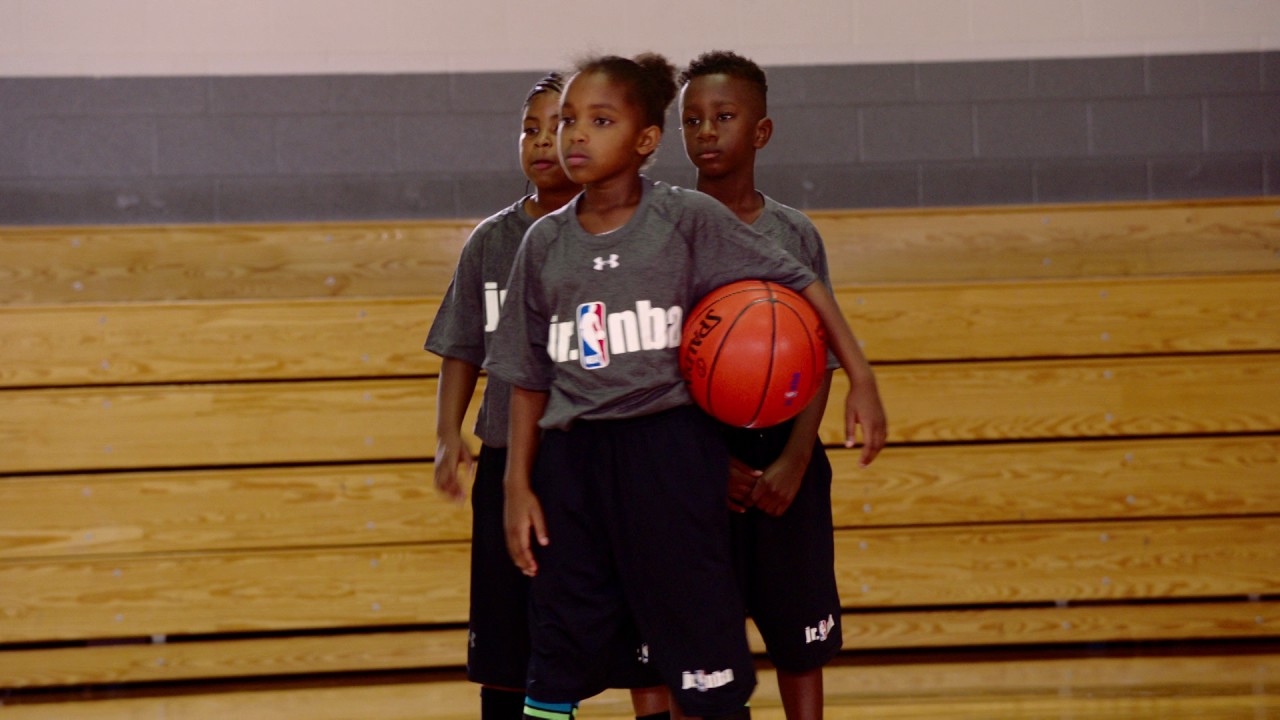 ▶ Watch on YouTube
Cone Dribble Drill — by NBA India on YouTube.
Dribble through a cone grid** — set 8–10 cones randomly in a 15-yard square. Players dribble without bumping other players or cones. Adjust density to control difficulty.
Keep your cues short and positive. “Wow, look how close you’re keeping the ball!” beats a technical breakdown every time.
Stage 2 — Game-Like Activities (10–15 minutes)
Now you raise the decision-making demand slightly. Run bouts of 2–3 minutes and rotate. Good formats:
- **
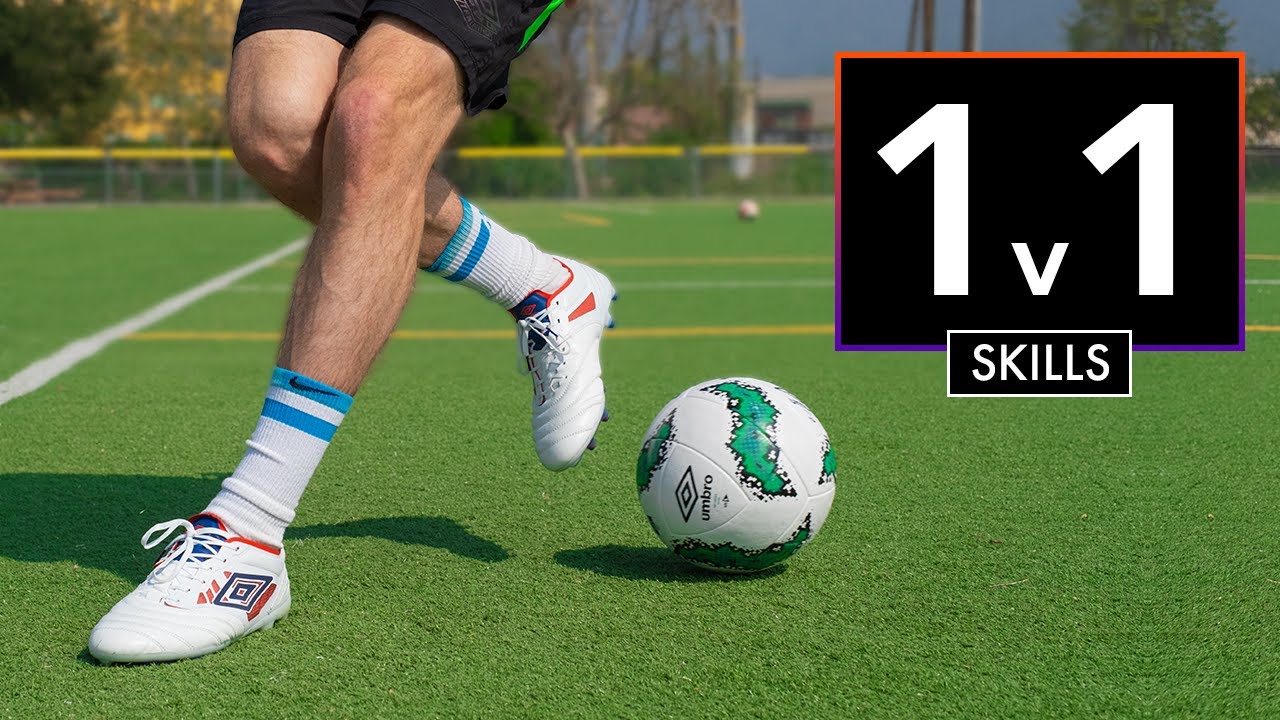 ▶ Watch on YouTube
The 10 Best 1v1 Skills in Football / Soccer — by AllAttack on YouTube.
1v1 gate game** — scatter pairs of cones (gates) around a grid. Each player scores a point by dribbling through any gate. Defense tries to stop them. Pure 1v1. No lineup, no waiting. - **
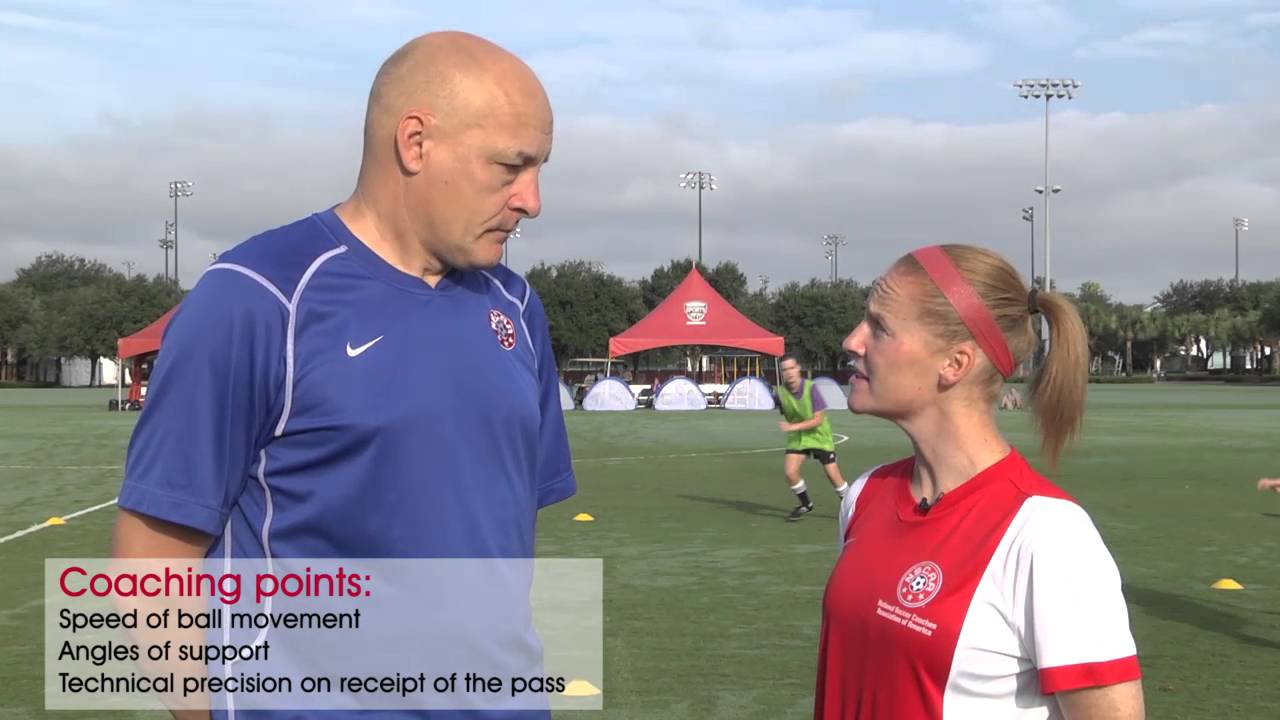 ▶ Watch on YouTube
NSCAA/Kwik Goal Training Activity: 3v1 Keep Away — by United Soccer Coaches on YouTube.
2v1 keep-away** — two players try to keep the ball from one defender in a small box. Passing will emerge occasionally on its own. Don’t demand it. If you want to see more of it, try adding a constraint: “a goal only counts if two people touched the ball before it crosses the line.” - **
 ▶ Watch on YouTube
1005005064481254 10 20Pcs Soccer Football Maze Game For Kids Early Educational Toy Part — by USA Goods on YouTube.
Maze/space-awareness game** — all players dribble in a shared grid and try to avoid bumping each other while keeping the ball moving. Add a task like “find open space” or “change direction every time you hear a clap.”
Brief positive freeze-frames work here. Stop play for 10 seconds, ask one question (“Where was the open space?”), then restart. That’s it.
Stage 3 — 3v3 Match (15 minutes)
Two small goals. No goalkeeper. Let it run. The US Youth Soccer Applied Summary is clear: the match belongs to the players. Your job is to let it happen and use it to teach rules informally and conversationally (“that went out — your kick!”). If you need to intervene, use a freeze-frame: pause the game, ask one question, restart. Resist the urge to coach continuously. The US Youth Soccer PDM specifically identifies adult narration as a force competing directly with a child’s concentration on ball control.
Suggested weekly schedule
The US Youth Soccer Player Development Model recommends a 0:1 ratio — one combined activity-and-game session per week, no separate practice. That’s the right call at this age.
| Time Slot | Activity | Duration |
|---|---|---|
| Arrival | Free play — every player gets a ball | 5–10 min |
| Warm-Up | Soccernastics / movement challenges | 10–15 min |
| Activities | 1v1 and 2v1 game-like activities | 10–15 min |
| Match | 3v3, two small goals, no GK | 15 min |
| Total | 45–60 min |
Use a size 3 ball throughout. US Soccer PDI requires this for U6–U8.
Mistakes to avoid
Lining kids up to take turns at a skill station. Every second a child is standing in line is a second of zero ball contacts and fading attention. Design for simultaneous activity.
Assigning a goalkeeper. The US Soccer PDI explicitly bans this at U6. It also means one child stands still and disconnected from play for long stretches. No position assignments, period.
Entering tournaments or tracking standings. US Soccer PDI discourages this outright. US Youth Soccer’s Player Development Model even has a name for the pattern — “Tournamentitis” — and identifies it as actively harmful to long-term development.
Coaching during the 3v3 match. Constant verbal instructions don’t help. Research cited by the Ecological-Dynamic Approach study (2024) found that less directive coaching — brief feedback, then silence — outperforms constant narration for skill development.
Deliberately teaching passing as a tactic. Cognitively, it’s too early. The fix: use a constraint (a scoring rule that rewards two-player combinations) and let passing emerge.
Running long drills with multi-step instructions. Children four to six cannot reliably process complex sequences. Keep every task description to one sentence.
Introducing heading — ever, at this age. The 2015 US Soccer Concussion Initiative absolutely prohibits heading in practice and games for all players 11 and under. If a player heads the ball during a U6 game, award an indirect free kick to the other team. There’s no referee — coaches enforce this.
Ignoring what parents are doing on the sideline. The US Youth Soccer Applied Summary is explicit: children this age cannot focus on ball control and adult instructions simultaneously. Set quiet-sideline expectations with parents before the session starts, every time.
When to advance
Because U6 sessions are non-competitive and structurally simple, “advancing” means moving into the U8 framework — which introduces 4v4, slightly more structured positional awareness, and a modest increase in session complexity. A player is ready for that transition when they:
- Consistently keep the ball close while moving in a shared space (no more chasing it 10 yards away)
- Occasionally look up from the ball while dribbling
- Show brief moments of awareness of where teammates or opponents are
- Can sustain a 3v3 game for 10–15 minutes without losing interest or withdrawing
These aren’t test criteria. They’re observational signs. The calendar matters too — most players are simply in U6 for one season and U8 the next.
A note on safety
If any player takes a knock to the head, they come off immediately. Return to play requires clearance from a licensed healthcare professional or certified athletic trainer — that is not a decision for a coach or a parent. If your child has any head pain, confusion, or seems “off” after contact, consult a medical professional before they return to activity.
Further reading
- Constraints Led Approach What is the constraints-led approach, and how do coaches use it?
- Small Sided Games Why small-sided games develop better players faster
- Game Centered Learning Game-centered learning: the philosophy behind play-based coaching
- Freeze Tag With Ball Full drill guide: Freeze Tag with a Ball
- Long Term Athlete Development Long-term athlete development and the FUNdamental stage
Sources
- US Youth Soccer Player Development Model (2014) — governing-body — https://cdn2.sportngin.com/attachments/document/0090/7006/US_Youth_Soccer_Player_Development_Model.pdf
- US Youth Soccer Player Development Model for U-6 (Applied Summary) — governing-body — https://www.msjsl.com/Default.aspx?tabid=1182086
- US Soccer Player Development Initiatives (PDI) — October 2017 — governing-body — https://static.ussdcc.com/users/148963/897090_eng-october2017pdi.pdf
- US Club Soccer — Head Injuries & Concussion Initiative — governing-body — https://usclubsoccer.org/headinjuries/
- Ecological-Dynamic Approach vs. Traditional Prescriptive Approach in Improving Technical Skills of Young Soccer Players (2024) — peer-reviewed — https://pmc.ncbi.nlm.nih.gov/articles/PMC11417948/
- Constraints-Led Approach (CLA) Resources — The Perception & Action Podcast — academic — https://perceptionaction.com/cla/