
Youth Soccer Goalkeeping Fundamentals: A Parent and Coach Guide by Age
Goalkeeping is the one position in soccer where a five-year-old and a fifteen-year-old need completely different things — not just different drills, but fundamentally different relationships with the role. Get it right and you build a confident, well-rounded player who might love the…
Youth Soccer Goalkeeping Fundamentals: A Parent and Coach Guide by Age
Goalkeeping is the one position in soccer where a five-year-old and a fifteen-year-old need completely different things — not just different drills, but fundamentally different relationships with the role. Get it right and you build a confident, well-rounded player who might love the position for life. Get it wrong early and you can create fear or burnout that’s hard to reverse. Here’s what the research actually says, age by age.
Why this matters
Goalkeeping is the only position where every single mistake is visible, scoreboard-adjacent, and public. That psychological reality alone means the developmental stakes are high. But there’s a deeper issue: governing bodies and sports medicine organizations agree that locking a young player into any single position — including goalkeeper — before adolescence carries real risks of overuse injury, burnout, and lost athletic development. The US Youth Soccer Player Development Model and the AOSSM Early Sport Specialization Consensus Statement both make this explicit. How you introduce this position in the early years shapes not just whether a child becomes a good goalkeeper, but whether they stay in the game at all.
How the picture shifts with age
At ages 4–6, “goalkeeping” isn’t a position — it’s a movement experience. The only legitimate outcome is that a child learns to track and stop a ball, associate it with fun, and not develop fear. Nothing about formal technique belongs here.
At 7–9, basic catching mechanics and a ready stance can be meaningfully introduced — but the key word is meaningfully. The US Youth Soccer Player Development Model notes that visual tracking acuity isn’t fully adult-like until around age 10, which directly limits what a young keeper can actually do with a ball struck from distance. Short distances, soft balls, and partner games are the correct delivery vehicle.
At 10–12, the window opens for real technical foundations. The LTAD framework’s “Learning to Train” stage — roughly ages 9–12 — is when fundamental soccer-specific movement patterns become instinctual. Diving technique, angle play, and distribution can all be introduced now, but only with correct safety progressions. One child playing every minute in goal every game is still wrong at this age.
At 12 and beyond, the picture shifts from skill acquisition toward decision-making under pressure. The modern goalkeeper is explicitly a team function in both attacking and defending phases, as the UEFA Goalkeeper Coaching Manual frames it. Foot skills, cross-claiming, verbal leadership, and sweeper-keeper positioning are now genuinely trainable — and increasingly essential.
What stays constant across every age: rotation, psychological safety, and the understanding that a goalkeeper is a soccer player first.
Age-specific guidance
Ages 4–6: Everyone Is the Goalkeeper
What to know. US Youth Soccer’s 4v4 game format for this age intentionally includes no designated goalkeeper. This isn’t an oversight — it’s policy. The US Youth Soccer document Development of a Goalkeeper describes U6–U8 keepers as “timid, quiet, scared, unsure, nervous, uninterested” and is explicit that the correct coaching response is reassurance and low-pressure fun, not technique instruction.
Cognitively, 4–6-year-olds are present-focused, egocentric, and learn through imitation. Attention spans run roughly 2–5 minutes per activity. Fine motor control — the kind needed for precise hand shaping — is still maturing. Expecting a “W” catch grip from a five-year-old isn’t just premature; it creates anxiety without any developmental return.
What to do instead. Run activities where every child stops the ball sometimes, in the natural flow of play. Good options from the US Youth Soccer guide:
- Ball tag: Players dribble in a grid; one player tries to stop balls by jumping on them with two feet — teaches body-behind-ball instinct with zero instruction
- Guard the target: Each player protects a small cone “goal” against rolling shots — introduces blocking and lateral movement through play
- Partner catch: Standing 3–4 feet apart, rolling and catching a soft ball back and forth — builds eye-hand coordination and ball comfort
- Bowling knock-down: Set up cones, players roll the ball to knock them over — develops rolling accuracy and receiving
Use play cues (“be ready!”, “wide feet!”) rather than formal coaching points. If a child falls down stopping a ball, cheer it. Never put a child “in goal” under competitive pressure without support.
What to avoid. Do not designate one child as the goalkeeper for a season. Do not teach diving of any kind. Do not use the goal as a management tool for a less-skilled player — the Health Consequences of Youth Sport Specialization review notes that positional specialization before adolescence carries the same burnout and overuse risks as single-sport specialization. A five-year-old assigned permanently to goal is being denied their field player development and being exposed to a psychologically loaded role they have no tools to handle.
When to advance. When your program moves into a 6v6 or 7v7 format (typically around age 9), not before.
Ages 7–9: Shot Blocker, Not Specialist
What to know. Formal goalkeeping enters the picture in 6v6 format at age 9, per the US Youth Soccer Player Development Model. Before that, U8 training can begin introducing catching technique and a basic ready position — but every outfield player should rotate through. No child is “the goalkeeper” yet.
Two catches cover almost everything at this age:
- Basket/scoop catch (for low balls): hands low and forward, knees outside elbows, scoop the ball into the chest. The MSYSA U9 & U10 Goalkeeper Curriculum coaching cue: land on elbows and flatten hips — this protects the head and secures the ball.
- Contour/W catch (for mid-to-high balls): thumbs close together behind the ball, fingers spread, catch slightly in front of the face and bring to chest. For smaller-handed players — which is most 7–8-year-olds — a “diamond” or “window” hand shape with fingers spread and thumbs angled is a more appropriate alternative than a strict W. Practitioner coaches in the SoccerCoachResources community thread on U8 training note this adaptation is widely used by experienced youth GK coaches.
The set position is the single highest-leverage habit to establish at this age. The cue from the Guam Football Association Goalkeeping Coaching Handbook: weight slightly forward, knees flexed, hips square, “nose in front of toes,” hands in front at roughly hip-to-chest height. The keeper must be still and balanced as the shot is struck — a moving keeper is a slower reactor. One practitioner source notes that coaches who miss this habit window find players guessing early on shots for the rest of their careers.
Progression for 7–9:
- Partner catch at 2–3 yards — coach or partner rolls the ball to alternating sides; keeper shuffles, scoops, and secures; gamify with a points target rather than drilling mechanically
- **
 ▶ Watch on YouTube
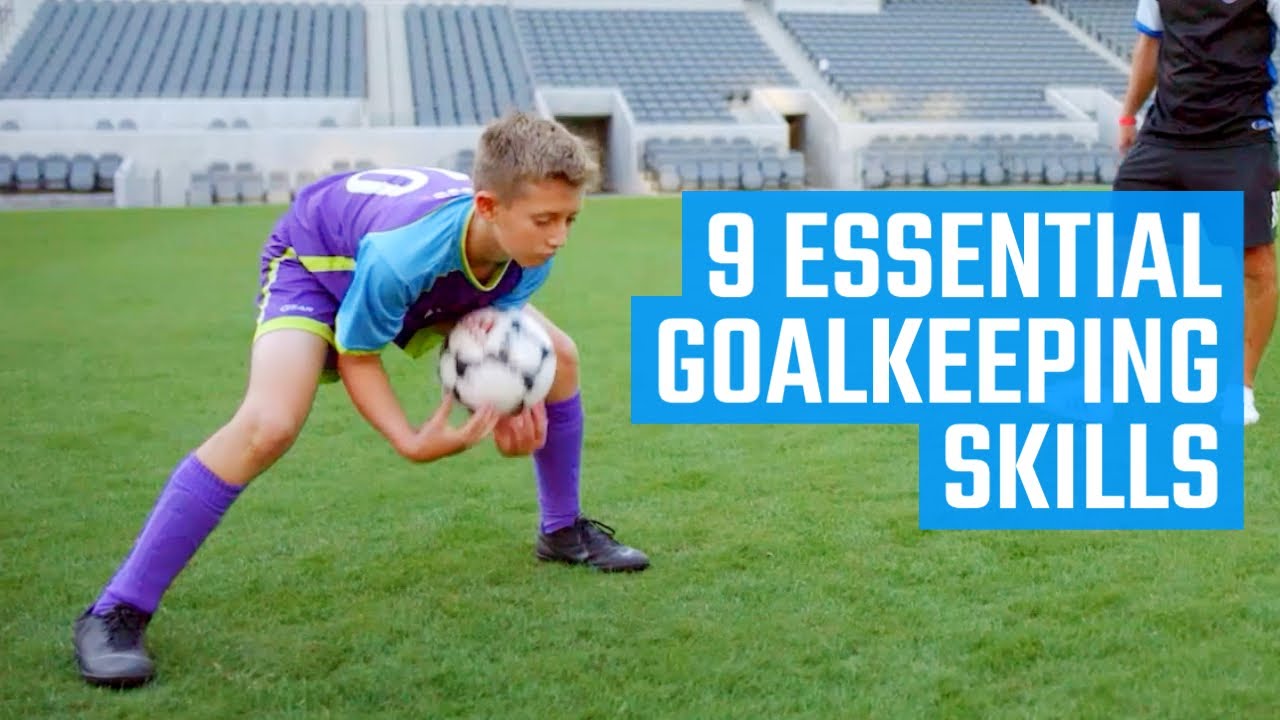
9 Essential Goalkeeping Skills | Soccer Skills by MOJO — by yougotmojo on YouTube.
** — coach rolls to left, right, straight at feet; keeper calls “mine!” and scoops to chest; 5–6 reps, then switch 3. **
 ▶ Watch on YouTube
The 3 MOST IMPORTANT Cone Drills for Football — by CAB Training on YouTube.
** — two cones set 4–5 feet apart; keeper shuffles between them and catches a tossed ball at waist height; introduces lateral footwork without formal instruction 4. Collapse-to-ground introduction — extend the contour catch sideways: “turn the catch on its side,” landing on the hip, not hands; begin on soft grass only
Distribution: Rolling the ball along the ground — a “ground pass from the hands” — is all that’s needed at 7–9. The SoccerCoachResources practitioner thread frames it simply as “just another ground pass,” connecting it to outfield skills the child already has.
What to avoid. Never put 7–9-year-olds in an adult-sized goal and criticize conceded shots. The Guam Football Association handbook is direct: the goal is typically too large for the child to protect effectively. Goals conceded are structural, not errors. Never introduce diving before collapse-to-ground technique is safe and established on soft surfaces.
When to advance. When a player can consistently get body behind the ball on the scoop catch, hold the set position before each repetition without a reminder, and shuffle laterally between cones without crossing feet — then Stage 3 concepts (angle awareness, rolling distribution) are appropriate.
Ages 10–12: Technical Foundations, Not Specialization
What to know. The US Youth Soccer Coaching Manual notes improved coordination and growing confidence with balls above the waist at U12 — this is the developmental timing that makes W-grip and diving introduction appropriate now, not earlier. The LTAD “Learning to Train” stage (roughly 9–12) is described as the optimal window to build fundamental soccer-specific movement patterns that become instinctual.
The US Youth Soccer Skills School Manual (referenced via Arlington Soccer Club’s coaching guide) lays out the age-banded skill introduction clearly: - U9/U10 prerequisites: Ready stance, diamond grip, basic catching, goal kick, overarm throw - U11/U12 new introductions: W-grip for chest/head-height balls, forward dive and low lateral dive on soft ground, bowling distribution, back-pass receiving with the feet, basic angle positioning, vocal leadership cues
The W-grip technique: thumbs and index fingers form a W behind the ball; catch with fingertips, not palms; absorb with a deep elbow bend and secure to the chest. Still use the diamond grip for players with smaller hands — assess individually, not purely by age.
Angle play becomes trainable at this age. The concept: stepping off the goal line toward the ball narrows the shooter’s visible target. Begin with cone-and-post walk-throughs — no live shots required at first. Have the keeper walk from goal to ball, feel how the posts “close,” then progress to slow service.
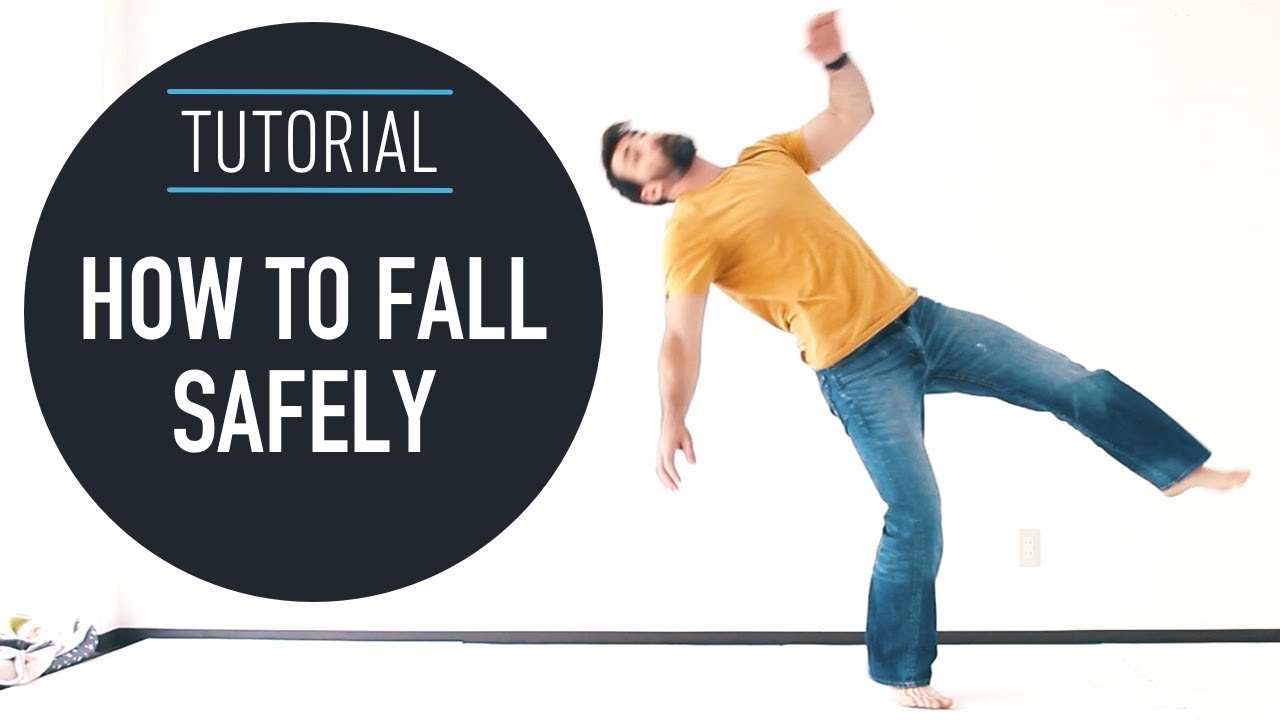
Diving progression: 1. From standing, fall sideways onto the hip on soft grass — no ball — ingraining the landing pattern (hip, then ribcage, NOT flat back or outstretched arm) 2.
 ▶ Watch on YouTube
How to Fall Safely - 3 Breakfall Techniques — by GMB Fitness (Praxis) on YouTube.
— arms out, controlled tipping to the ground-side hip; repeat 6–8 times each side 3. — coach rolls a slow ball 2–3 feet wide; keeper steps toward the ball and collapses to ground with correct landing, securing ball to chest 4. Gradually increase service speed and distance only once landing mechanics are consistently safe
What to avoid. The most common injury mechanism at this age is landing flat on the back or on an outstretched arm — both must be corrected immediately when seen. Locking one player into goal every game is explicitly contrary to US Youth Soccer development policy through U14. And don’t push distribution through the center of the field near the own goal — train wide channels.
When to advance. When a keeper can execute a low lateral dive with correct side-landing mechanics for 5 consecutive reps on soft ground without cuing, holds the set position before every save attempt in small-sided games, and can successfully roll/distribute to a moving target at 10–15 yards — Stage 4 concepts (medium lateral dive, sweeper-keeper basics, cross-claiming) are within reach.
Ages 12+: Decision-Maker, First Attacker, Vocal Leader
What to know. The UEFA Goalkeeper Coaching Manual frames the goalkeeper explicitly as a team function in both attacking and defending phases — not a last line of defense waiting to react. That framing is the right mental model for this age group.
Peak Height Velocity is the critical variable here. Rapid growth spurts can temporarily disrupt motor coordination — expect and accept technique regression during growth spurts. The LTAD Methodology document is clear: do not label a growing keeper as low-potential because their footwork falls apart for a few months. Reduce technical demands briefly and rebuild. Two 13-year-olds can differ by 2–3 years of biological age; performance gaps do not reflect talent.
The highest-leverage technical corrections at 12+:
- Step first, dive last. The most common mistake at this age: collapsing sideways immediately rather than taking a step toward the ball. Footwork must bring the keeper to a set position before the save attempt, not during it. Build this with
 ▶ Watch on YouTube
5 Exercises For Fast Feet | Improve Your Speed, Agility, and Quickness | Soccer/Football Training — by Prolific Soccer on YouTube.
— serve balls to alternating sides, requiring the keeper to step and set before committing to a save. - Cross-claiming. The Veo coaching guide notes that realistic cross-claiming (with a challenging striker) is appropriate from U12 when physical coordination is sufficient. The decision rule: claim (two hands) when confident of position and space; punch with two fists when contact is contested. Practice both outcomes. - Playing out from the back. An FA-aligned practitioner source recommends a roughly 50/50 hands/feet training split for this age group. Back-pass receiving, composure under pressure, and distributing to fullbacks should be integrated into every handling drill, not treated as a separate module. A keeper who panics on a back-pass and hoofs it disrupts build-up and signals a training gap. - Verbal leadership. Communication must be coached explicitly, not assumed. Build “keeper!”, “away!”, and “hold!” as automatic habits by making them drill conditions — no communication, repeat the rep.
Sweeper-keeper positioning — reading through-balls and stepping out to deal with balls played behind the defensive line — is now trainable. Begin with coach-guided walk-throughs of positioning scenarios, then progress to small-sided games where the keeper actively reads and steps.
Mental skills are appropriate to introduce now. The US Youth Soccer document Lifetime Development of a Goalkeeper recommends log books tracking where shots were conceded, breathing cues after goals, and pre-game routines. Conceding a goal is a psychologically unique event in sport — it must be addressed in coaching, not left for the keeper to manage alone.
What to avoid. A static keeper parked on the goal line. Distribution back into pressure. Diving as a first movement. Neglecting foot skills. And still — at U13/U14 — locking one player exclusively into goal: the LTAD methodology document is explicit that selection for specialized roles should not begin until U13 at the earliest, and US Youth Soccer extends the “no specialization” guidance through U14.
When to advance. Readiness for a full dedicated goalkeeper training program is indicated when a keeper can execute low and medium lateral dives with consistent safe landings, calls “keeper!” reliably on all cross attempts in small-sided games, receives and distributes a back-pass under light pressure without panic, and can articulate their angle positioning before a shot in a walk-through context.
Core concepts that apply across ages
Ready Set Position — The stance a keeper takes before every action: weight forward on the balls of the feet, knees soft, hips square, hands live in front of the body. Everything else compounds from here.
Long Term Athletic Development Ltad — The framework that maps which skills are developmentally appropriate at which ages and defines windows of accelerated adaptation.
Early Positional Specialization — Assigning one role — including goalkeeper — to a child before adolescence; associated with overuse injury, burnout, and reduced long-term development across multiple governing-body and sports medicine sources.
Set Position Timing — Being balanced and stationary as the shot is struck; one of the highest-leverage habits in goalkeeping and one of the most commonly skipped in youth coaching.
Stretch Shortening Cycle — The muscle-loading mechanism underlying explosive lateral movement and dives; why correct footwork generates more power than raw athleticism alone.
Peak Height Velocity — The period of maximum growth rate during puberty; associated with temporary coordination disruption that can look like technical regression.
Common mistakes (any age)
Permanently assigning one child to goal. This denies field player development, accelerates burnout, and contradicts the US Youth Soccer development model at every age through U14. Rotate.
Teaching the W-grip before hands are large enough. For players younger than 11 or with small hands at any age, the diamond/window variation is more effective and safer; forcing adult grip mechanics onto small hands creates awkward compensations.
Introducing diving without landing mechanics groundwork. The most common injury mechanism in young keepers — landing flat on the back or on an outstretched wrist — is almost always the product of skipped progressions on hard surfaces.
Criticizing goals conceded. Especially in undersized keepers defending oversized goals, goals are structural. Public criticism from coaches or sideline parents damages the willingness to play the position and is functionally irreversible in young children.
Using “technique” instruction at ages where it’s developmentally inappropriate. Shouting “W-shape!” at a six-year-old creates anxiety. It does not create a catch.
Keeping the goalkeeper standing still while the rest of the team trains. Keepers must be active in every drill at every age.
Overloading a single session with multiple techniques. One or two focused technical concepts per session with high repetition is far more effective than a survey of six skills covered once each.
Ignoring foot skills until 14+. Modern goalkeeping demands comfort on the ball from 12 onward at minimum. Distribution and back-pass receiving must be integrated into training from the moment a player enters the position seriously.
When and how to advance
The transition benchmarks across age groups follow this logic:
- 4–6 → 7–9: Program adopts 6v6 or 7v7 format with a designated position; child demonstrates ball comfort and no fear response with balls coming toward them at close range.
- 7–9 → 10–12: Consistent body-behind-ball positioning on scoop catches; set position held without reminders before each service; lateral shuffle footwork without crossing feet; ready to receive W-grip and collapse-dive introduction on soft ground.
- 10–12 → 12+: Low lateral dive executed safely (side-landing, no outstretched arm) for 5 consecutive reps; set position maintained in live small-sided game context; rolling distribution to moving targets accurate at 10–15 yards; angle walk-through understanding demonstrated.
- 12+ dedicated training: Consistent safe diving under game-speed service; reliable cross-claiming calls; back-pass reception and distribution under light defensive pressure; vocal cues used without prompting in small-sided play.
No athlete should advance based on age alone. Biological maturity, surface availability, and individual confidence all matter — and any concern about joint pain during training should go to a sports medicine professional, not be coached through.
Further reading
Ready Set Position Early Positional Specialization Basket Catch Partner Roll Step And Set Shadow Footwork Peak Height Velocity
Sources
- Development of a Goalkeeper: The Progression from a Beginning Goalkeeper to a College Goalkeeper — governing body — https://www.usyouthsoccer.org/wp-content/uploads/sites/160/2023/09/Development-of-a-Goalkeeper-The-progression-from-a-beginning-goalkeeper-to-a-college-goalkeeper.pdf
- US Youth Soccer Player Development Model — governing body — https://cdn2.sportngin.com/attachments/document/0090/7006/US_Youth_Soccer_Player_Development_Model.pdf
- Lifetime Development of a Goalkeeper — governing body — https://www.usyouthsoccer.org/wp-content/uploads/sites/160/2023/09/Lifetime-Development-of-a-Goalkeeper.pdf
- The Official US Youth Soccer Coaching Manual — governing body — https://www.usyouthsoccer.org/wp-content/uploads/sites/160/2023/09/Official-US-Youth-Soccer-Coaching-Manual-1.pdf
- How to Coach – Goalkeeping (Excerpt from US Youth Soccer Skills School Manual) — governing body — https://www.arlingtonsoccerclub.org/how-to-coach-goalkeeping
- MSYSA U9 & U10 Goalkeeper Curriculum — Introducing the Position — governing body — https://realsoccerclub.org/wp-content/uploads/2019/05/goalkeeper-drills.pdf
- Guam Football Association Goalkeeping Coaching Handbook — governing body — https://guamfa.com/wp-content/uploads/2020/10/GFA-Goalkeeping-Coaching-Handbook.pdf
- UEFA Goalkeeper Coaching Manual — governing body — https://editorial.uefa.com/resources/0285-190a81f7e091-323e8bfbc968-1000/uefa_goalkeeper_coaching_en.pdf
- England Football Learning — Foundation/Play Phase Sessions — governing body — https://learn.englandfootball.com/sessions
- Long-Term Athlete Development: Trainability in Youth Sport — academic — https://mostblessedsacramentschool.com/app/uploads/2021/04/LTAD-Methodology.pdf
- Health Consequences of Youth Sport Specialization — peer-reviewed — https://pmc.ncbi.nlm.nih.gov/articles/PMC6805065
- AOSSM Early Sport Specialization Consensus Statement — peer-reviewed — https://ncaaorg.s3.amazonaws.com/ssi/injury_prev/SSI_AOSSMEarlySportSpecializationConsensusStatement.pdf
- Youth Soccer Goalkeeper Drills: A Coaching Guide — practitioner — https://www.veo.com/en-us/article/soccer-goalkeeper-training-youth
- 7 Essential Skills for a Youth Soccer Goalkeeper — practitioner — https://barcaresidencyacademyusa.com/7-essential-skills-for-a-youth-soccer-goalkeeper
- Youth Coach: Goalkeeper — practitioner — https://ussoccerplayers.com/soccer-training-tips/youth-coach-goalkeeper
- Goalkeeping: Beginning Training for U8 (SoccerCoachResources practitioner thread) — practitioner — https://www.reddit.com/r/SoccerCoachResources/comments/1k6tdxs/goalkeeping_beginning_training_for_u8
- Modern Goalkeeper Training: Drills for Distribution and Defence — practitioner — https://footballgpt.co/guides/modern-goalkeeper-training-drills-for-distribution-defence